.webp)
Quick answer: Kedarkantha is cold from October to April. In December–February, days are about -2 to 8°C and nights drop to -10 to -15°C, with snow on most of the trail. In October–November, days are 5 to 18°C and nights -2 to -8°C. March–April is milder, with nights of -2 to -6°C and patchy snow higher up.
Temperature decides how you pack, how well you sleep and how hard summit day feels. Below is a month-by-month view of Kedarkantha weather, based on the ranges on Trekkaro's Kedarkantha trek page, with honest notes on what changes year to year.
Kedarkantha temperature by season
These are typical ranges at the campsites (Juda Ka Talab at 9,100 ft and Base Camp at 11,250 ft). The 12,500 ft summit at dawn is colder still, and wind can make it feel much colder.
| Season | Day | Night | Snow on trail | Trekkaro batches |
|---|---|---|---|---|
| Sep–Nov (autumn) | 5 to 18°C | -2 to -8°C | Usually little to none until late November; early snowfall possible | October and November |
| Dec–Feb (winter) | -2 to 8°C | -10 to -15°C | Most of the trail above Juda Ka Talab, depth varies | December, January, February |
| Mar–Apr (spring) | 5 to 15°C | -2 to -6°C | Partial, melting from lower slopes | Check the trek page |
| May–Jun (pre-monsoon) | 10 to 20°C | 2 to 5°C | Rare | Check the trek page |
| Jul–Aug (monsoon) | Wet and cloudy | None | Closed | |
Kedarkantha weather month by month
October
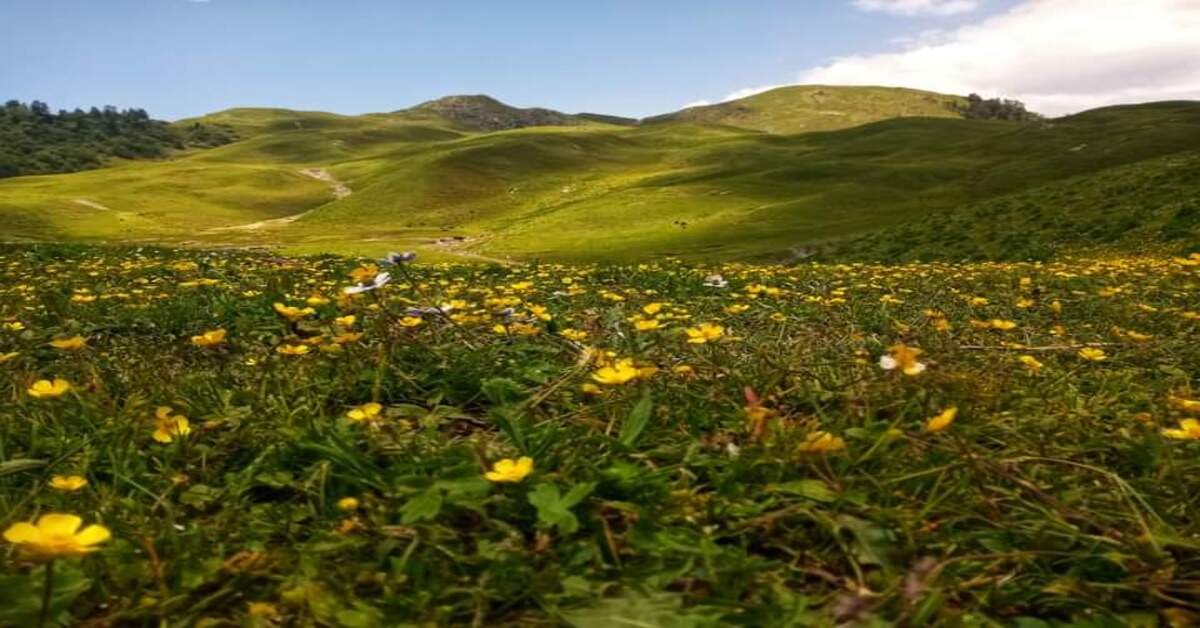
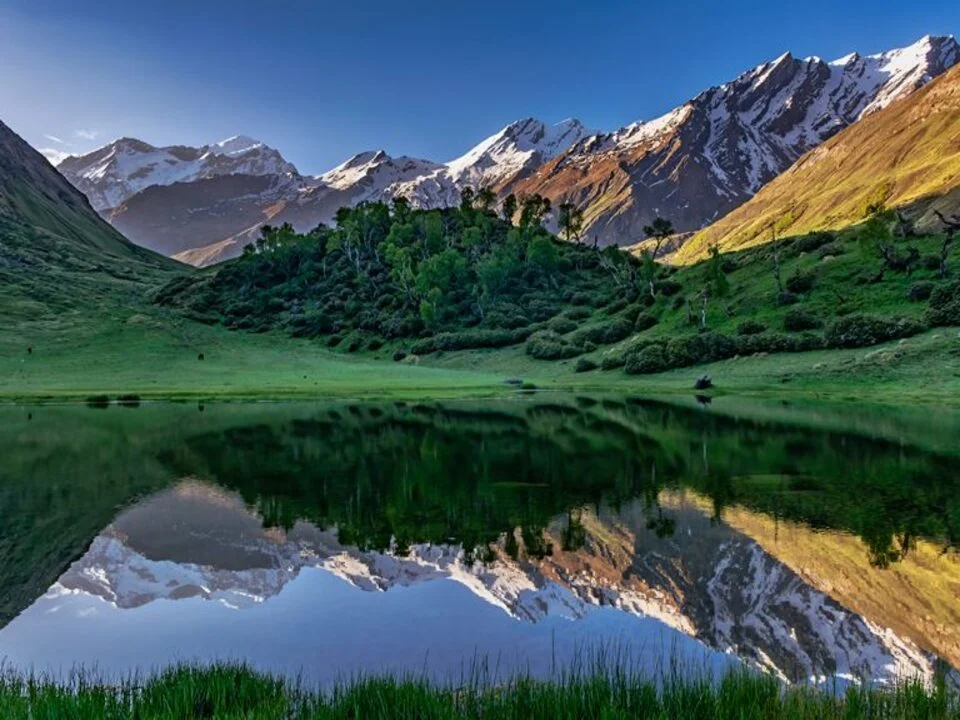
Clear skies and long views are the reward of October. Days are pleasant for walking, but nights at Base Camp fall below freezing. Expect little or no snow on the trail. A good month if you want views and dry ground more than snow.
November
Colder, especially at night, with crisp, stable weather on most days. The first snow sometimes arrives in the second half of the month, but it is not guaranteed. This is often the most comfortable month for first-timers who dislike deep snow.
December
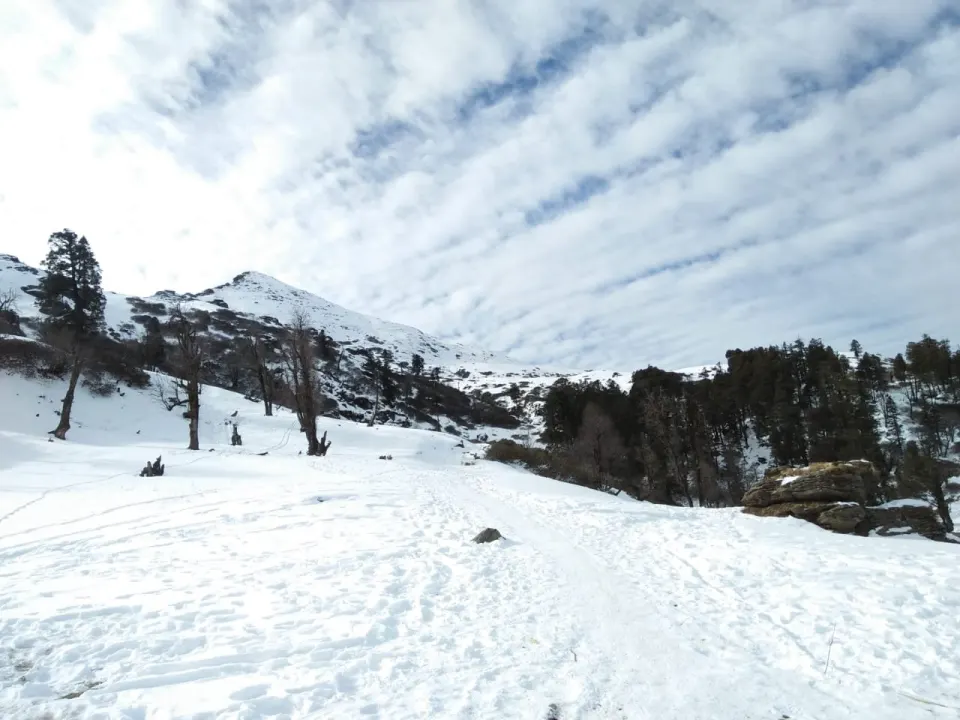
Proper winter begins, and snow usually reaches the upper trail, though early December can be fairly dry in a low-snow year. For batch-by-batch conditions, read our Kedarkantha trek in December guide.
January
Usually the coldest and snowiest month, and the hardest version of the trek. The details are in our Kedarkantha trek in January guide.
February
Still full winter, often with fresh snowfall, and slightly longer days than January. Snow is often at its deepest in February, which makes it beautiful but slower going.
March and April
Temperatures climb and snow melts from the lower slopes first, so you may walk through slush and mud lower down and firm snow higher up. Nights are still sub-zero at Base Camp.
Which is the best month for Kedarkantha?
It depends on what you want from the trek. There is no single best month, only the best month for you:
| If you want | Go in | Why |
|---|---|---|
| Clear views, dry trail, easier summit | October or November | Stable weather and milder nights (-2 to -8°C) |
| A good chance of snow without peak cold | December | Snow usually arrives, but the depth varies by year |
| Deep snow and a full winter experience | January or February | Coldest nights (-10 to -15°C), most snow |
| Milder weather with some snow higher up | March or April | Warmer days, melting lower slopes |
Is snow guaranteed on Kedarkantha?
No. Snow depends on western disturbances, and the amount changes a lot from year to year and week to week. In some years the trail is white by early December; in others the big snowfall comes only in January. If snow is the main reason you are going, choose a January or February batch. If you want stable weather and clear views with less effort, October or November is the better bet.
What should you wear for Kedarkantha weather?
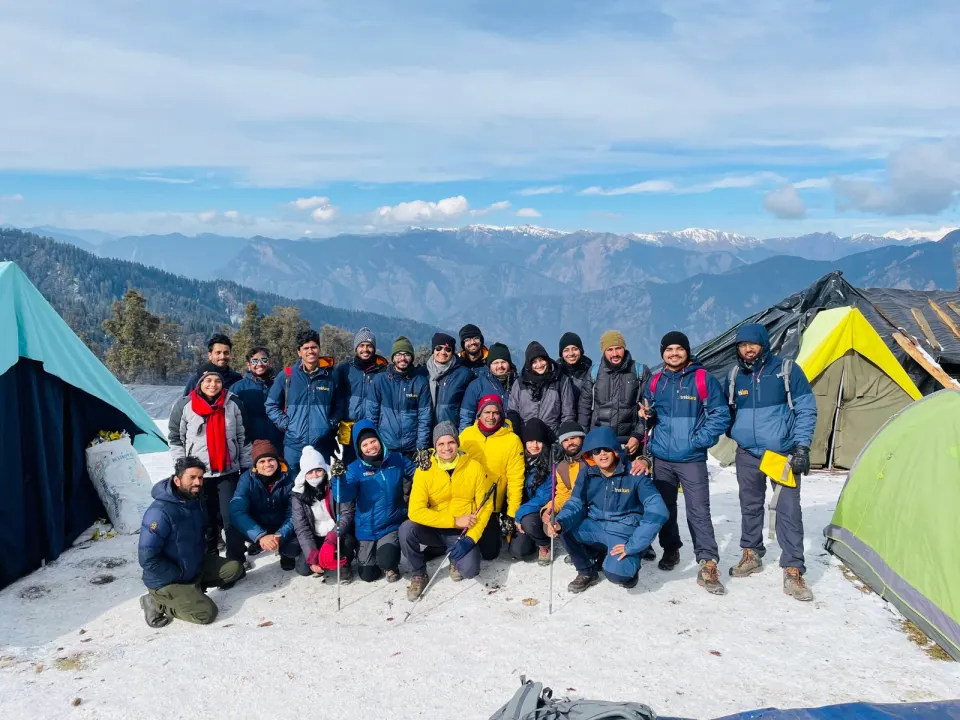
Dress in layers, so you can add or remove warmth as the day changes. A typical winter set:
- Base layer: thermal top and bottom (not cotton).
- Mid layers: 2 fleece or wool layers for the top.
- Outer layer: a down or synthetic jacket. Trekkaro's Free Trekking Gear includes a -10°C rated jacket.
- Legs: trek pants, plus waterproof over-pants in snow months.
- Extremities: woollen cap, balaclava or buff, fleece gloves with waterproof outer gloves, 3–4 pairs of wool socks.
- Snow kit: gaiters and microspikes, both part of Free Trekking Gear, and UV sunglasses for snow glare.
Sleeping bags on Trekkaro's Kedarkantha batches are rated to -20°C, and tents are shared three to a tent. For the full list, see our winter trek packing list.
Trek leader Kushal Bisht's tip: the coldest moment is not the summit, it is the first hour after waking up. Sleep with tomorrow's base layer and gloves inside your sleeping bag so they are warm when you put them on.
Trek leader Kushal Bisht's tip: on sunny winter afternoons you will want to strip down to a fleece. Keep sunscreen and sunglasses on even when it feels cold; snow glare is strong.
What it costs
The Trekkaro Kedarkantha trek runs as a 5-day trip, Sankri to Sankri, for ₹9,000 per person plus 5% GST: ₹9,450 in total, or EMI from about ₹463 per month over 24 months. The cold-weather essentials that people often rent or buy (Decathlon trek shoes, a -10°C jacket, poles, gaiters and microspikes) come free with every batch against a ₹3,000 refundable deposit and a ₹200 washing charge. Dehradun–Sankri transport is extra: about ₹6,500 one way per 5–6 seat shared vehicle, split among trekkers. Batches have up to 20 trekkers and one leader or guide for every 8. Cancellation: 70% refund 30+ days before departure, 50% at 15–29 days, or a free reschedule or 100% TrekCash voucher (valid 1 year) up to 7 days before departure.
See Kedarkantha batches from October to February.
See Kedarkantha dates and book | Kedarkantha trek in December guide | Kedarkantha trek in January guide
Frequently asked questions
What is the coldest month on Kedarkantha?
January is usually the coldest, with December and February close behind. Across these winter months, days are about -2 to 8°C and nights -10 to -15°C at the campsites, and the summit at dawn feels colder because of wind.
When does snow start on Kedarkantha?
Usually in December, sometimes in late November. It varies a lot by year, so January and February are the safest months if snow matters to you.
Is Kedarkantha too cold for beginners in winter?
Not if you are well prepared. With proper layers, a -20°C sleeping bag and a -10°C jacket, beginners complete mid-winter batches. It is harder than an autumn batch, so train well.
Does it rain on Kedarkantha?
July and August are monsoon months and the trek is closed then. In winter, precipitation comes mostly as snow; carry a rain cover or poncho for occasional wet days.
Which month has the best weather for Kedarkantha?
For clear skies and comfort, October and November. For snow, January and February. December is a middle ground, with conditions that depend on the year.