Valley of flowers
Inclusion:
Meals on the Trek
All Permits
Expert Trek Leader & Guide
Valley of flowers — Guide, Dates & Cost
Region: UttarakhandDistrict: Chamoli
Duration: 6 Days
Difficulty Level: Easy–Moderate
Highest Altitude: 4,329 m / 14,200 ft
Trekking Distance: 50 Km
Temperature: In the Valley of Flowers, summer temperatures range from 8°C to 15°C during the day and 0°C to 7°C at night. Winters are harsh, with daytime temperatures between -2°C and 5°C and nights dropping to -12°C.
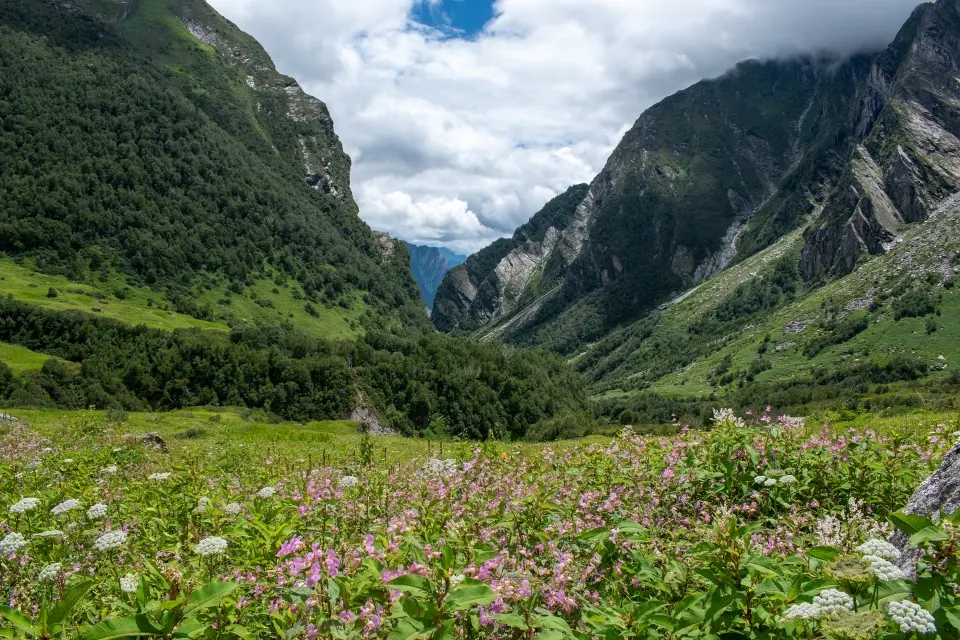
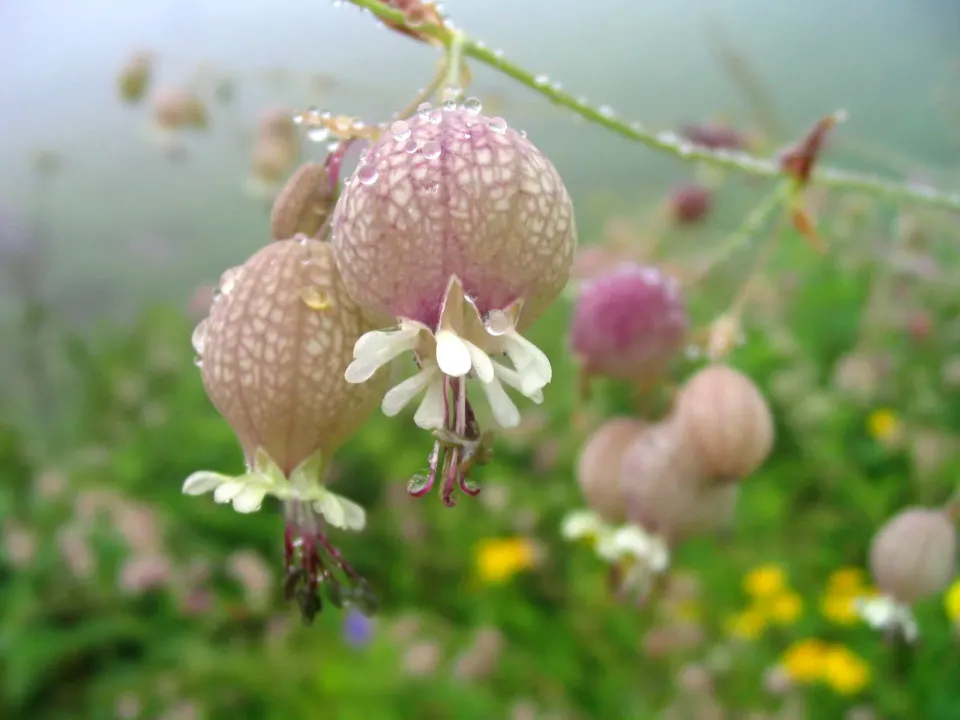
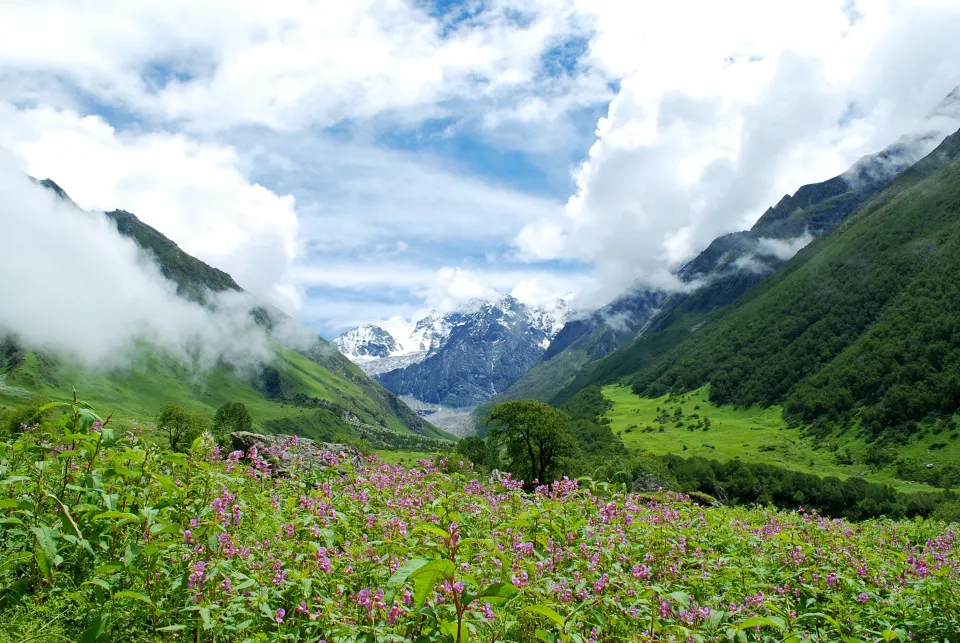
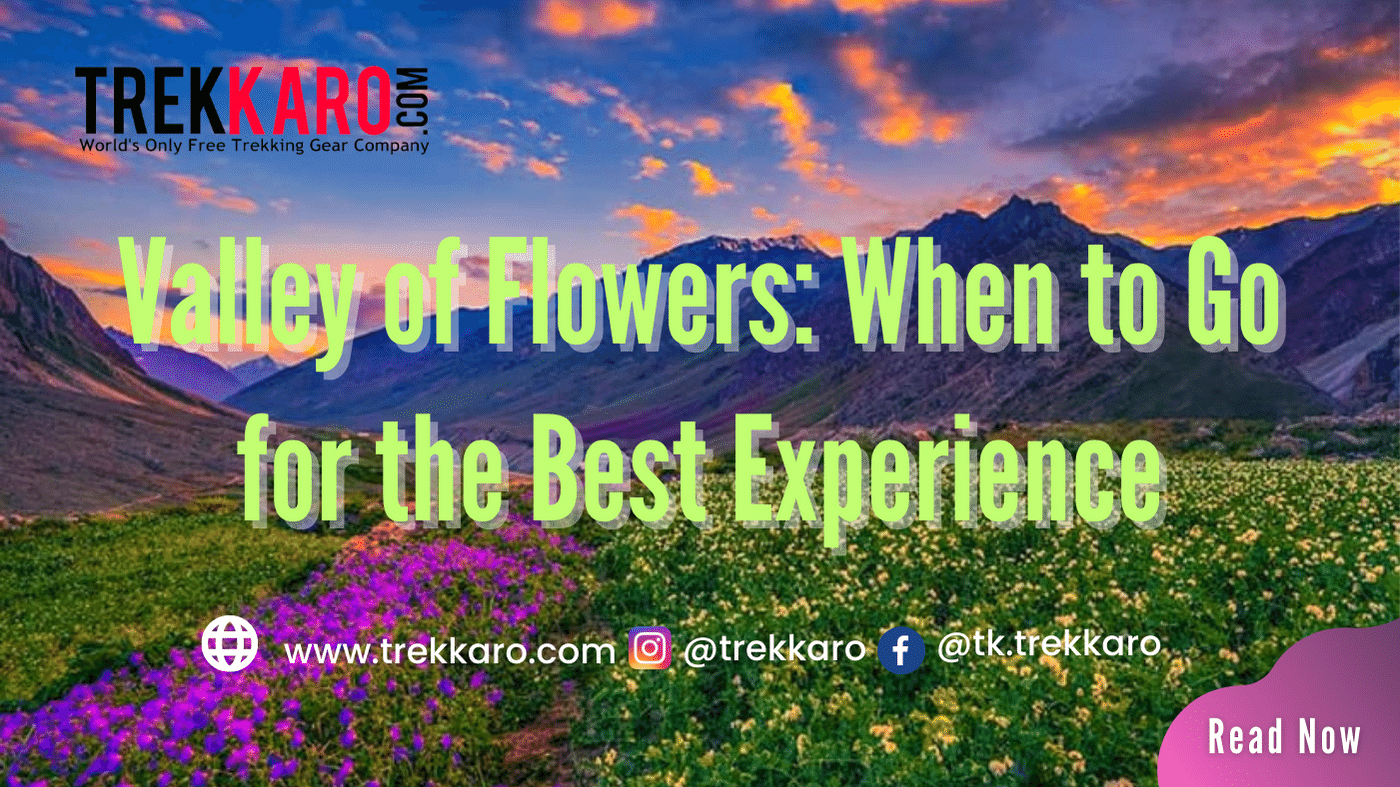
There is no trek in the Indian Himalayas quite like the Valley of Flowers. Not because it is the hardest, or the highest, or the longest; it is none of those things. It is the only trek in India where you walk into a UNESCO World Heritage Site that is, for a brief window of weeks each year, covered from end to end in Himalayan wildflowers in densities and varieties found nowhere else on the subcontinent. Over 300 species of alpine flora bloom simultaneously in the valley between July and September: Brahmakamal, Blue Poppy, Cobra Lily, Himalayan Balsam, and Marsh Marigold, in a colour display that photographers, botanists, and ordinary trekkers describe in terms that consistently exceed the language available to them.
The Valley of Flowers National Park sits in the Chamoli district of Uttarakhand at the head of the Pushpawati River valley. It is accessed on foot from Ghangaria, the last inhabited settlement before the valley, reached via the Bhyundar Gorge trail from Poolna. In six days, the Trekkaro team takes you from Rishikesh to Joshimath, up the gorge trail to Ghangaria, into the valley for a full exploration day, to Hemkund Sahib, a glacial Sikh pilgrimage lake at 4,329 m, and back to Rishikesh. Joshimath serves as the gateway and night-halt both on the approach and the return, making this a well-paced and logistically clean route.
The Valley of Flowers trek begins and ends at Govindghat (1,828 m / 5,997 ft), the roadhead on the Badrinath National Highway in Chamoli district, Uttarakhand, approximately 275 km from Rishikesh by road. The route follows the Pushpawati River through the Bhyundar Gorge to Ghangaria (3,048 m / 10,000 ft), the last permanent settlement before the valley, with guesthouses, a Gurudwara, and basic medical facilities. From Ghangaria, the route branches in two directions: northeast to the Valley of Flowers National Park (3,352–3,658 m) and northwest to Hemkund Sahib (4,329 m / 14,200 ft), a glacial lake of Sikh religious significance. The total trekking distance is approximately 50 km across four trekking days.
The Valley of Flowers – A UNESCO World Heritage Site
UNESCO declared the Valley of Flowers National Park, a World Heritage Site, in 2005 as part of the Nanda Devi Biosphere Reserve. The valley is approximately 8 km long and 2 km wide, lying at altitudes between 3,352 m and 3,658 m, enclosed by high ridges to the north and south and fed by meltwater and glacial streams from the surrounding peaks. It is one of the most botanically significant alpine meadows in the Himalayas, supporting over 300 species of wildflower, including several that are rare, endangered, or endemic to this ecosystem. The bloom season runs from mid-July through mid-August at peak density, tapering into September. The valley is closed to all visitors from October to May to protect the flora during the dormant winter period. Entry is restricted to daytime visits only; no camping is permitted inside the valley.
Hemkund Sahib – The Lake at 14,200 Feet
Hemkund Sahib is one of the holiest sites in Sikhism. The Gurudwara Hemkund Sahib stands at the edge of a glacial lake at 4,329 m (14,200 ft), surrounded by seven peaks, at the terminus of a steep trail that climbs approximately 1,200 m in 6 km from Ghangaria. The word ‘hem’ means snow, and ‘kund’ means pool or lake. The Gurudwara is open from June to October and serves langar (community meal) to all visitors regardless of faith or background. For Sikh pilgrims, reaching Hemkund Sahib is an act of deep religious devotion. For trekkers, it is one of the most physically demanding and visually extraordinary day walks accessible without technical climbing skills in the Indian Himalayan system.
Who Is This Trek For?
The Valley of Flowers trek is graded easy to moderate. Unlike higher-altitude Trekkaro routes, it does not involve glacier crossings, sustained altitude above 14,200 feet, or technical terrain that requires specialist training. The trail from Govindghat to Ghangaria is well-graded and wide and walked by pilgrims of all ages during the open season. The valley itself is a gentle walk across open meadow. The Hemkund Sahib ascent is the most demanding element, a steep 1,200 m gain over 6 km, and requires solid fitness and a night of acclimatisation at Ghangaria before attempting. This trek is suitable for first-time Himalayan trekkers with reasonable base fitness, for families with teenagers, and for trekkers drawn more by botanical immersion than by altitude. Minimum recommended age: 12 years. Maximum: 65 years. Daily trekking hours: 3 to 6 hours. Best season: July to mid-September.
Key Highlights of the Valley of Flowers Trek
- 300+ species of alpine wildflowers blooming simultaneously – Brahmakamal, Blue Poppy, Cobra Lily, Marsh Marigold, Himalayan Balsam, and more
- UNESCO World Heritage Site designation – the valley is botanically and ecologically unique within the Indian Himalayan system
- Hemkund Sahib (4,329 m / 14,200 ft) – a glacial Sikh pilgrimage lake ringed by seven snow-capped peaks
- Bhyundar Gorge trail – a lush river valley walk through dense Himalayan forest and waterfalls
- Ghangaria base camp (3,048 m / 10,000 ft) – the quiet Himalayan settlement where all routes converge
- Two full valley days – unhurried exploration of the flower fields with the Trekkaro naturalist guide
- Open during the monsoon – uniquely trekked in July–September when most Himalayan trails are closed
- Certified trekkaro trek leader & guides, twice-daily health monitoring
Best Time to Visit Valley of Flowers
The Valley of Flowers trekking season is shaped by a single factor unlike any other Himalayan route: the monsoon is not a reason to avoid this trek; it is the reason to do it. The valley blooms because of the monsoon. The wildflower season runs from mid-July through mid-September, with peak bloom density in late July and early August. Outside this window, the valley is either snow-covered (November through June) or in late-season wind-down (late September). Trekkaro operates Valley of Flowers batches exclusively within the bloom window, from mid-July to mid-September.
Late July to Mid-August - Peak Bloom Window (Most Recommended)
This is the heart of the Valley of Flowers season and Trekkaro’s most recommended window. In late July, the valley floor is already covered in blooms by early August; the concentration of species is at its maximum, with Brahmakamal, Blue Poppy, and Himalayan Balsam visible simultaneously across the full length of the valley. Rain is present in this window in the form of brief daily monsoon showers, typically in the afternoon, which clear quickly at this altitude. The light after rain on the flowers is extraordinary. Waterproofs are essential, but the showers themselves are part of the experience. The Bhyundar Gorge trail in the monsoon is lush and waterfall-laden in a way that the drier seasons cannot replicate.
- Temperatures: Haridwar: 25°C to 35°C | Ghangaria: 10°C to 18°C | Valley: 8°C to 15°C | Hemkund: 2°C to 8°C
- Trail conditions: Wet trail. Brief daily showers. Flowers at maximum density. Lush gorge.
- Best for: Peak bloom, Brahmakamal and Blue Poppy, post-rain light, and the fullest botanical experience.
Mid-September to Late September - Late Season Window
By mid-September, the monsoon begins to withdraw, and the daily showers reduce in frequency. The wildflower density is lower than peak season, but the valley takes on a different visual character, with richer tones of amber, rust, and late-season purple as the flora transitions. The trail is drier, and the days are clearer. Hemkund Sahib is fully accessible, and the views of the surrounding peaks are sharper than in the July-August cloud window. The valley is less crowded. This is a valid alternative for trekkers who prefer clear skies over peak bloom and cannot manage the July–August monsoon timing.
- Temperatures: Ghangaria: 8°C to 16°C | Valley: 5°C to 12°C | Hemkund: 0°C to 5°C
- Trail conditions: Drying trail. Reducing showers. Late-season bloom. Clearer mountain views.
- Best for: Clearer skies, Hemkund Sahib peak views, and a less crowded valley.
October to June - Closed Season
The Valley of Flowers National Park is closed by Forest Department order from October to May. The route above Ghangaria is under deep snow from November through June. No Trekkaro batches operate in the closed season. The trail from Govindghat to Ghangaria is also typically closed from late October due to snow on the higher sections.
- Status: CLOSED. No Trekkaro batches operate October–June.
Trekkaro Recommendation
For the full Valley of Flowers experience with maximum bloom density, book a late July to early August batch. For drier conditions and sharper mountain views on the Hemkund ascent, mid- to late September is the better window. Both deliver an unforgettable experience; the deciding factor is whether you want peak bloom or peak clarity.
🏃 Am I ready for the Valley of flowers? Take the free 2-minute fitness test and get your readiness score and a personal training plan.
Take the test →Trek Itinerary
Transport will be arranged at an additional cost from Rishikesh (Jumping Heights) to Joshimath. This will cost approximately ₹7,500 one way per 5–6 seat vehicle. You will have to share this value with the other trekkers.
Transport will be arranged at an additional cost from Joshimath to Rishikesh (Jumping Heights). This will cost approximately ₹7,500 one way per 5–6 seat vehicle. You will have to share this value with the other trekkers.
Day 1: Rishikesh to Joshimath
Route Details:
Drive: Rishikesh → Joshimath (1,890 m / 6,200 ft) | Distance: ~250 km | Duration: ~7–8 hrs | Activity: Arrival, gear check, health baseline, acclimatisation walk | Overnight: Joshimath
The drive from Rishikesh to Joshimath is one of the most scenic road journeys in the Garhwal Himalaya. The route follows the Ganges and then the Alaknanda River upstream through a succession of sacred confluences: Devprayag (where the Bhagirathi and Alaknanda merge to form the Ganga), Rudraprayag (where the Mandakini joins the Alaknanda), and Vishnuprayag (above Joshimath, where the Dhauliganga and Alaknanda converge). Each prayag is a temple town nested at the base of a steep gorge, with the river churning through rock below and the high ridges closing in above. The visual character of the Alaknanda Valley changes continuously as altitude increases: the subtropical vegetation of Rishikesh gives way to broadleaf oak and pine, which gives way to the more open, rock-faced upper valley around Chamoli and Pipalkoti.
Joshimath (1,890 m) is the administrative centre of the upper Chamoli district and the most significant town in the Garhwal Himalaya above Srinagar. It is the base for Auli, the skiing destination; the gateway for the Kuari Pass, Pangarchulla, and Nanda Devi treks; the wintering place of the Badrinath idol; and the departure point for the road to Govind Ghat. It has proper hotels, restaurants, a district hospital, ATMs, pharmacies, and mobile connectivity, making it the last place on this itinerary where comprehensive logistics and personal needs can be addressed before the trail begins. The evening walk along the Joshimath ridge with views of the Hathi Parbat and Kuari massif at last light is a quiet introduction to the scale of what lies ahead.
Trekkaro’s health baseline is recorded at Joshimath: SpO2, pulse, and blood pressure for every trekker. The trek briefing covers the full route, daily structure, valley entry permit protocol, AMS awareness for the Hemkund Sahib ascent (the highest point of the trek at 14,200 ft), and gear review. Sleep early. The road to Govind Ghat and the trail to Ghangaria begin tomorrow morning.
What to Expect:
- Scenic drive through the Alaknanda Valley – Devprayag, Rudraprayag, and Vishnuprayag confluences
- Arrival in Joshimath (1,890 m / 6,200 ft) – the Garhwal Himalaya’s premier gateway town
- Health baseline: SpO2, pulse, and blood pressure recorded for every trekker
- Trek briefing: route overview, AMS protocol for Hemkund altitude, valley permit structure, daily plan
- Evening acclimatisation walk on the Joshimath ridge with Himalayan peak views
- Overnight: Joshimath (1,890 m / 6,200 ft) – last night at mid-altitude before the trail
Day 2: Joshimath to Govind Ghat to Poolna, Trek to Ghangaria
Route Details:
Drive: Joshimath → Govind Ghat (1,828 m) → Poolna (2,050 m) (~30 mins + shared jeep) | Trek: Poolna → Ghangaria (3,048 m) | Distance: ~11 km | Duration: 4-5 hrs | Ascent: ~1,000 m | Overnight: Ghangaria
From Joshimath the road descends briefly to Govind Ghat (1,828 m) on the Badrinath highway, where the Laxmanganga river joins the Alaknanda at the base of the gorge. Govind Ghat is the roadhead and the site of the Gurudwara Govind Ghat, a large Sikh shrine that serves as the gateway for both Hemkund Sahib pilgrims and Valley of Flowers trekkers. From Govind Ghat, a 3 km road or shared jeep ride brings you to Poolna (2,050 m), the actual trailhead where all motorised access ends and the Bhyundar Gorge trail begins.
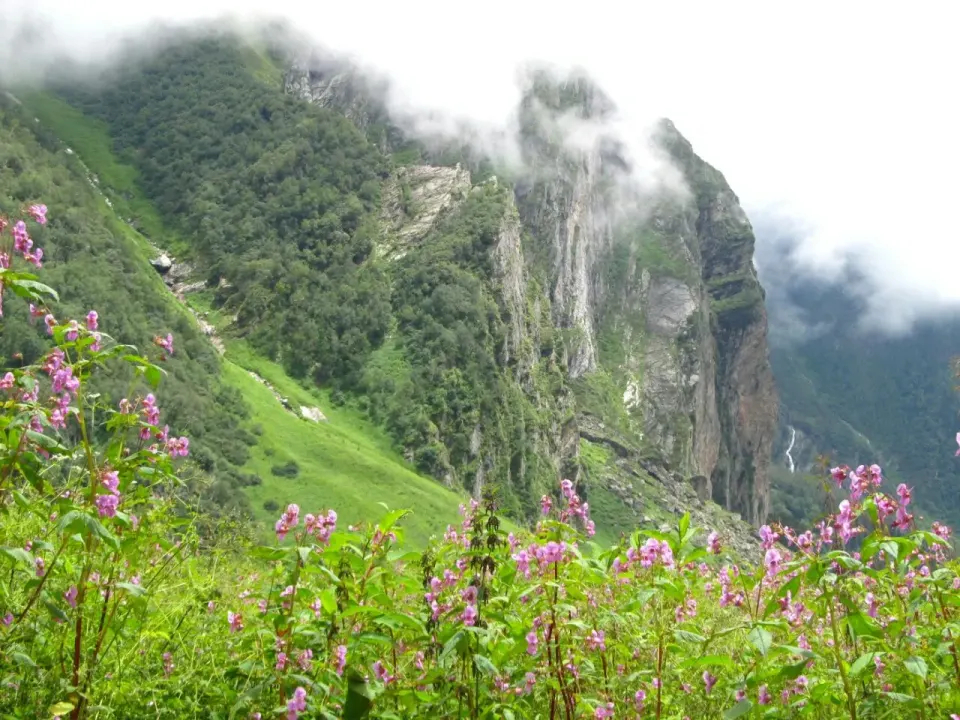
The 11 km trail from Poolna to Ghangaria follows the Pushpawati River upstream through the Bhyundar Gorge, one of the most botanically rich and visually layered approach valleys in the entire Garhwal range. The trail is wide, well-maintained, and continuous alongside the river for much of its length. The gorge walls close in overhead in the narrower stretches, with waterfalls dropping from ledges that can’t be seen from below. The forest changes character every few hundred metres of altitude, from subtropical broadleaf at Poolna through oak and rhododendron at mid-gorge to the silver birch groves that announce the approach to Ghangaria. In the monsoon season the trail is lush beyond description, the river is loud and powerful, and the waterfalls multiply.
Ghangaria (also written Gangria) sits at 3,048 m at the confluence of the Bhyundar Gorge and the two routes beyond, northeast to the Valley of Flowers and northwest to Hemkund Sahib. It has guesthouses, tea shops, a Gurudwara serving free langar, a Forest Department post where valley permits are checked, and a basic medical facility. It is the base camp for all exploration on this trek. The evening arrival at Ghangaria, with the sound of both rivers and the ridge visible above the settlement, is the moment the trek begins to feel genuinely high.
What to Expect:
- Short drive from Joshimath to Govind Ghat (~30 mins) and jeep or walk to Poolna trailhead
- Gurudwara Govind Ghat (1,828 m) – landmark Sikh shrine at the confluence of Laxmanganga and Alaknanda
- Trek through Bhyundar Gorge – 11 km, ~1,000 m ascent, forest trail with river alongside
- Waterfalls and forest ecology – subtropical to birch, continuous ecological transition
- Forest Department permit check at Ghangaria for Valley of Flowers National Park entry
- Arrival at Ghangaria (3,048 m / 10,000 ft) – base for valley and Hemkund exploration
- Overnight: Ghangaria (3,048 m / 10,000 ft) – acclimatisation night before valley entry
Day 3: Ghangaria to Valley of Flowers & Back
Route Details:
Start/End: Ghangaria (3,048 m / 10,000 ft) | Valley: 3,352–3,658 m | Distance: ~16 km round trip (full valley to glacier base) | Duration: 6–7 hrs | Overnight: Ghangaria
The 4 km trail from Ghangaria to the Valley of Flowers entry gate climbs through forest and open meadow before the valley floor opens abruptly and completely. There is a precise moment on the trail where the tree cover ends and the full panorama of the valley becomes visible: a long, wide, flat-floored basin stretching ahead, flanked by high ridges, with the Pushpawati glacier visible at the far end. In July and August, the floor of that basin is not green; it is every colour. The wildflowers at peak bloom cover the valley so densely that underlying grass is not visible in stretches, and the variety of simultaneous blooms is unlike any alpine environment accessible to recreational trekkers anywhere in India.
The Valley of Flowers is strictly managed by the Forest Department. No camping is permitted inside. Entry is from the permit gate at the valley mouth, and all visitors must exit by evening. Trekkaro enters early in the morning to make maximum use of the morning light, which is at its most dramatic in the first two hours after dawn before the daily cloud builds. The Trekkaro naturalist guide leads the group along the valley floor, identifying species by name, the sacred Brahmakamal (Saussurea obvallata), the distinctive Blue Poppy (Meconopsis aculeata), Cobra Lily, Himalayan Balsam, Marsh Marigold, and dozens of others, explaining the ecological context of the Nanda Devi Biosphere Reserve and the conditions that make this specific valley botanically unique.
The route covers the full length of the valley to the Pushpawati glacier base and returns along the north bank, a different flora profile from the morning outward route. The walk back to Ghangaria in the afternoon, with the valley behind and the gorge forest below, is a particular quality of the experience. An early start is important on this day: the best light and the clearest air are before 9 am, and in the monsoon season a shower often arrives by early afternoon. Rest well in the evening; the Hemkund Sahib ascent begins tomorrow.
What to Expect:
- Full Valley of Flowers traverse – entry gate to Pushpawati glacier base and return on north bank trail
- Naturalist-guided walk identifying Brahmakamal, Blue Poppy, Cobra Lily, Himalayan Balsam, Marsh Marigold, and 300+ species
- UNESCO World Heritage Site entry – Forest Department permit checked at valley gate
- Peak bloom panoramas – wildflower cover from valley wall to valley wall in late July and August
- Pushpawati glacier visible at the valley head on clear mornings
- Post-rain light – the valley is most intensely colourful in the 30–60 minutes after a monsoon shower
- Overnight: Ghangaria (3,048 m / 10,000 ft) – rest before Hemkund Sahib ascent
Day 4: Ghangaria to Hemkund Sahib & Back
Route Details:
Start/End: Ghangaria (3,048 m / 10,000 ft) | Hemkund Sahib: 4,329 m / 14,200 ft | Distance: ~12 km round trip | Duration: 6–7 hrs | Ascent: ~1,280 m | Overnight: Ghangaria
The trail to Hemkund Sahib is one of the most relentlessly ascending day walks in accessible Indian trekking. From Ghangaria at 3,048 m, the path climbs 1,280 m in 6 km, an average gradient exceeding 20%, first through the upper Bhyundar forest, then above the treeline on an exposed stone trail that switches back up the valley headwall. The path is wide and well-maintained for pilgrimage traffic, but at this altitude and gradient, the pace requires careful management. The night at Ghangaria before this ascent is a deliberate acclimatisation day in the Trekkaro itinerary, and Trekkaro’s twice-daily health checks on this morning are the most critical of the entire trek.
The transition above the treeline marks the point where the landscape shifts completely. A dense humid forest gives way to open, wind-exposed alpine terrain, and the full sweep of the Bhyundar Valley headwall becomes visible behind and below. In the monsoon season, morning clouds often fill the gorge while the peaks above remain clear; the sensation of ascending out of cloud into high blue sky and white summits is one of the most striking transitions on this route. The final approach crosses a rock-strewn basin before the lake appears: still, cold, partially frozen at the edges, enclosed on three sides by a natural ring of seven peaks.
The Gurudwara Hemkund Sahib serves langar throughout the day and is open to all visitors. The lake, according to Sikh scripture, is where Guru Gobind Singh meditated in a previous life. Regardless of faith, the quality of stillness at Hemkund, at 14,200 feet in a glacially carved bowl, with no sound beyond wind, water, and distant prayer, is one of the most profound experiential qualities of this trek. The descent back to Ghangaria takes approximately 2.5 to 3 hours on the same trail. Rest well this evening: tomorrow the descent to Joshimath begins.
What to Expect:
- Steep ascent of 1,280 m in 6 km – the most demanding day on the trek
- Above-treeline trail with full Bhyundar Valley panorama and seven-peak ridge enclosure
- Hemkund Sahib Lake (4,329 m / 14,200 ft) – glacial, partially frozen, ringed by seven snow peaks
- Gurudwara Hemkund Sahib – Sikh pilgrimage site and langar open to all visitors
- Cloud inversion views in monsoon season – ascending out of gorge cloud into clear alpine sky
- Twice-daily health monitoring – most critical day of the trek; highest altitude at 14,200 ft
- Overnight: Ghangaria (3,048 m / 10,000 ft) - return by mid-afternoon
Day 5: Ghangaria to Govind Ghat, Drive to Joshimath
Route Details:
Trek: Ghangaria (3,048 m) → Poolna (2,050 m) → Govind Ghat (1,828 m) | Distance: ~11 km + 3 km | Duration: ~3–4 hrs trek + drive to Joshimath (~30 mins) | Overnight: Joshimath
The final morning in Ghangaria carries a particular quality; two days of the valley and Hemkund Sahib are behind you, and the gorge trail descends ahead. Breakfast at the guesthouse or Gurudwara, a last look at the ridge above Ghangaria, and the trail begins to descend into the Bhyundar Gorge for the last time. The descent covers the same 11 km from Ghangaria to Poolna that was climbed on Day 2, but in the opposite direction the ecology reads differently: birch gives way to oak, oak to mixed broadleaf, broadleaf to the riverine vegetation near Poolna, and the sound of the Pushpawati River follows all the way down.
The descent is notably faster than the ascent; most trekkers reach Poolna in 2.5 to 3 hours from Ghangaria. From Poolna, a shared jeep or short walk of 3 km brings you back to Govind Ghat and the Badrinath highway. The Trekkaro vehicles wait at Govind Ghat for the drive back to Joshimath, a 30-minute journey that climbs back up the highway to the town on the ridge. Joshimath on the evening of Day 5 carries the specific comfort of a warm room, hot food, and mobile connectivity after three nights at altitude. Trek completion certificates are presented at Joshimath. The drive to Rishikesh begins tomorrow morning.
What to Expect:
- Descent of 11 km through Bhyundar Gorge from Ghangaria to Poolna – ecology in reverse
- Altitude drops ~1,000 m from Ghangaria to Govind Ghat on the descent
- Short jeep or walk of 3 km from Poolna to Govind Ghat roadhead
- Drive to Joshimath (~30 mins) – return to the gateway town with full facilities
- Trek completion certificates issued at Joshimath
- Overnight: Joshimath (1,890 m / 6,200 ft) – last mountain night before the return drive
Day 6: Joshimath to Rishikesh
Route Details:
Drive: Joshimath (1,890 m) → Rishikesh (356 m) | Distance: ~250 km | Duration: ~7–8 hrs | Drop: Rishikesh
The drive from Joshimath back to Rishikesh reverses the approach journey Vishnuprayag, Chamoli, Rudraprayag, Devprayag, and Rishikesh, the same landmarks in the same valley, seen differently after four nights in the mountains. The altitude drops from 1,890 m at Joshimath to 356 m at Rishikesh over seven hours, passing through all the same gorge sections and confluence towns that marked the arrival. By Devprayag, the temperature has risen significantly, the valley has widened, and the proportion of the landscape that is rock versus green has gradually reversed. By Rishikesh, the Himalayan range has receded behind you, visible only as a white profile on the northern horizon on clear afternoons.
The Trekkaro vehicle drops trekkers at Rishikesh, from where train, bus, and taxi connections to Delhi, Dehradun, and other destinations are readily available. Rishikesh itself, with its riverside ghats, cafes, yoga centres, and Ganga views, is a natural place to spend an additional evening if connections allow. Many Trekkaro trekkers extend their Rishikesh stop by a day simply to decompress after the trek before the return to city life.
What to Expect:
- Drive through the Alaknanda Valley – Vishnuprayag, Chamoli, Rudraprayag, and Devprayag confluences in reverse
- Altitude drops ~1,530 m from Joshimath to Rishikesh over ~250 km
- ~7–8 hour drive with scenic gorge sections and river views throughout
- Drop at Rishikesh for onwards travel connections to Delhi, Dehradun, and other cities
- Rishikesh Ghat for an optional evening extension before the return journey home
How To Reach
Nearest airport: Jolly Grant Airport, Dehradun (DED), about 20–25 km and around 45 minutes from Rishikesh, with direct flights from Delhi and other metros. Fly in the day before and stay in Rishikesh, so a delayed flight does not cost you the drive.
From Rishikesh to Joshimath: about 250 km via Devprayag and Rudraprayag, a 7–8 hour drive. Transport is arranged at an additional cost from Jumping Heights, Rishikesh; it costs approximately ₹7,500 one way per 5–6 seat vehicle, shared with the other trekkers.
Return: on the last day you drive about 250 km (7–8 hours) from Joshimath back to Jumping Heights, Rishikesh. Hill roads can be slow in the monsoon, so book onward travel for late night or the next day.
Nearest railway station: Haridwar Junction, about 25–30 km (around 1 hour) from Rishikesh, has trains from Delhi and most major cities, while Yog Nagari Rishikesh (YNRK) has only a few trains. Check current timings and plan to reach Rishikesh the day before the drive.
- Haridwar Junction – trains from Delhi including the Shatabdi, Jan Shatabdi and overnight trains; then a cab or bus to Rishikesh
- Yog Nagari Rishikesh – useful only if one of its few trains suits your dates
From Rishikesh to Joshimath: about 250 km via Devprayag and Rudraprayag, a 7–8 hour drive. Transport is arranged at an additional cost from Jumping Heights, Rishikesh; it costs approximately ₹7,500 one way per 5–6 seat vehicle, shared with the other trekkers.
Return: on the last day you drive about 250 km (7–8 hours) from Joshimath back to Jumping Heights, Rishikesh. Hill roads can be slow in the monsoon, so book onward travel for late night or the next day.
Bus route: buses from Delhi ISBT Kashmere Gate reach Rishikesh in about 6–7 hours, including overnight Volvo and Uttarakhand Roadways buses. Haridwar (about 230 km and 5–6 hours from Delhi) also has regular buses and is about 1 hour from Rishikesh; reaching Rishikesh the evening before is the safest plan.
From Rishikesh to Joshimath: about 250 km via Devprayag and Rudraprayag, a 7–8 hour drive. Transport is arranged at an additional cost from Jumping Heights, Rishikesh; it costs approximately ₹7,500 one way per 5–6 seat vehicle, shared with the other trekkers.
Return: on the last day you drive about 250 km (7–8 hours) from Joshimath back to Jumping Heights, Rishikesh. Hill roads can be slow in the monsoon, so book onward travel for late night or the next day.
Things To Carry
Valley of Flowers is a monsoon trek with wet, muddy trails and a steep climb to Hemkund Sahib (4,329 m), so bring waterproof, broken-in gear of your own.
- Backpack – 50–60 L with a fitted rain cover; line the inside with a plastic bag as well
- Day pack – 20–30 L with a rain cover, for the day walks into the Valley and up to Hemkund Sahib
- Trekking shoes – bring your own: waterproof, with ankle support and broken in before the trek; wet feet are the main cause of blisters
- Trekking poles – bring your own; they help on the steep climb to Hemkund Sahib and the long descent to Govindghat
- Gaiters – bring your own; recommended to keep mud, slush and small stones out of your shoes
- Headlamp – with spare batteries, for early starts to Hemkund Sahib before the afternoon weather sets in
- Water bottles – 2 bottles of 1 L each
- Lunch box – reusable, for packed lunches on the trail
July–September brings frequent heavy rain in the valley and cold wind and mist at Hemkund Sahib, so pack full rain gear and 3 warm layers, with no cotton next to your skin.
- Rain jacket and rain pants, or a good poncho – essential; heavy monsoon rain is common in the Valley
- Thermal innerwear – moisture-wicking, top and bottom, 2 sets so one is always dry
- Fleece jacket – a 200–300 gm mid-layer for rest stops and cool mornings
- Padded jacket – bring your own down or synthetic jacket; it gets very cold at Hemkund Sahib in the wind and mist
- Trek pants – 2 pairs, quick-dry (one can be fleece-lined for cold mornings); no jeans
- T-shirts – 3 quick-dry collared T-shirts
- Socks – at least 4 pairs of wool or synthetic trekking socks, plus 1 woollen pair for the night; keep dry spares sealed in a bag
- Caps – a sun cap and a warm woollen cap that covers your ears for Hemkund Sahib
- Buff or neck gaiter – against cold wind and sun
- Gloves – fleece liner gloves plus waterproof outer gloves for the cold, windy lake at Hemkund Sahib
Even in the monsoon the high-altitude UV is strong between showers, and the Valley is a protected national park and UNESCO World Heritage site, so pack light and leave no trace.
- Sunglasses – UV-protected (category 3–4)
- Sunscreen – SPF 50+, reapplied every 2 hours at altitude
- Lip balm – with SPF
- Quick-dry towel – dries far faster than cotton in the damp weather
- Toiletries – biodegradable only, to protect the national park; no wet wipes, as they are not biodegradable
- Plastic or ziploc bags – several, to keep clothes, phone and documents dry and to separate wet clothes
- Personal medical kit – blister plasters, ORS and your regular medicines; consult your doctor before the trek
ATMs are few in the hills and cards are not accepted in the mountains, so plan cash and small comforts before you leave Rishikesh.
- Snacks – nuts, energy bars, dark chocolate and dates, especially for Hemkund Sahib day
- ORS or electrolyte sachets – add to your water daily
- Power bank – with enough capacity for the trek days
- Cash – enough in small notes for your share of the transport and small expenses
- Reusable waste bag – Trekkaro follows a zero-waste policy on the trail, so carry out all your packaging
- Camp slippers or sandals – lightweight, to rest your feet in the evenings
- Earplugs – optional, useful in shared accommodation
- Government photo ID – original and a photocopy (Aadhaar, passport, voter ID or driving licence)
- Trekkaro booking confirmation – your e-ticket / tax invoice
- Medical fitness certificate – strongly recommended
- Travel insurance – policy document with emergency evacuation cover; mandatory
- Disclaimer form – with your emergency contact details filled in
- Passport – for international trekkers, required for forest entry permits and in case of medical evacuation
Frequently Asked Questions
Valley of flowers is a 6-day easy–moderate trek in Chamoli, Uttarakhand, reaching 4,329 m (14,200 ft). It covers about 50 km on foot and starts and ends at Joshimath. Best time: July to September. Trekkaro price: ₹7,500 per person + 5% GST. Next batch: 3 Jul 2027 (24 upcoming batches).
Updated
Terms & Conditions
- All meals on trek: breakfast, lunch, evening snacks, and dinner from Day 1 dinner to Day 5 dinner
- Accommodation: 5 nights in a hotel/guest house on a triple or quad sharing basis
- Certified trek leader and guide throughout all 5 days
- Trekkaro naturalist guide for both valley days – species identification and botanical briefings
- Valley of Flowers National Park entry fees and forest permits – fully arranged by Trekkaro
- Daily SpO2, pulse, and blood pressure health monitoring at every hotel
- Portable oxygen cylinder and emergency stretcher – standard on every Trekkaro batch
- Trek completion certificate on successful completion of the full circuit to Joshimath
- Food During Transit Meals during travel to and from the base camp
- Transport – Basecamp Transfers Shared taxi transfers from Rishikesh to Joshimath and from Joshimath back to Rishikesh upon trek completion are not included in the package. Trekkaro can arrange these transfers on your behalf; the cost is approximately ₹7,500 (one way) per vehicle (5-6 seater, tentative), shared equally among trekkers in the same vehicle.
- Travel to/from Rishikesh: flights, trains, buses – arranged independently by trekker
- Accommodation in Rishikesh before or after the trek
- Personal trekking gear: clothing, backpack, sunglasses, etc. (including trekking shoes, jacket and poles)
- Travel insurance: mandatory for this route. Must include high-altitude cover and helicopter evacuation.
- Personal expenses: tips, calls, laundry, additional snacks
- Backpack Offloading: ₹2,000 + 5% GST for the entire trek (max. 9 kg). No suitcases, trolleys, or duffel bags allowed. Charges may be higher for last-minute offloading requests made at Joshimath
- Costs from early exit, evacuation, or itinerary change due to weather or medical reasons
- Anything Not Mentioned Under Inclusions
Free rescheduling up to 7 days before · TrekCash voucher · refunds — tap to read
We know that cancelling a trek can be genuinely disappointing. Plans change, life intervenes, and sometimes the mountains have to wait. That is why Trekkaro has designed one of the most trekker-friendly cancellation policies in the industry — to reduce the financial impact on you and give you real options when things do not go as planned.
Important: Bookings made on trekkaro.com are cancelled online from My Bookings. Bookings made offline with our team must be cancelled in writing by e-mail by the person who originally booked the trek. Requests over the phone, via WhatsApp, or through third parties are not accepted.
How to Cancel Your Trek
Booked online on trekkaro.com:
- Log in and open My Bookings.
- Choose Cancel Booking on the trek you want to cancel.
- Pick a refund (as per the charges below) or Get TrekCash Voucher instead — the voucher is issued instantly and appears under My TrekCash Vouchers.
Booked offline with our team:
- Compose an e-mail from the registered e-mail ID used at the time of booking.
- Attach a copy of your tax invoice to the e-mail.
- Send both to info@trekkaro.com.
- Your cancellation is effective from the date Trekkaro receives and acknowledges your e-mail.
How to Reschedule Your Trek (Free)
- Once per booking, to another batch of the same trek, free of charge. A request we decline doesn’t count.
- Up to 7 days before departure — both your current and new batch must be at least 7 days away.
- Subject to seat availability for every trekker on the booking.
- Not available for bookings paid fully or partly with a TrekCash Voucher.
- No fee or price difference; add-ons and the number of trekkers stay as booked.
Booked online: My Bookings → Reschedule free → pick a batch. Our team confirms by e-mail and your booking moves once approved. Booked offline: e-mail info@trekkaro.com.
Cancellation Charges
| Cancellation Timeline | Refund | Details |
|---|---|---|
| 30 days or more before departure | 70% Refund | 30% cancellation charge |
| 15 to 29 days before departure | 50% Refund | 50% cancellation charge |
| Within 14 days / No-Show | No Refund | Free rescheduling (once per booking), transfer of booking, or a TrekCash Voucher (100% value, 1-year validity) — available until 7 days before departure |
Free rescheduling or a 100% voucher instead of a refund. At any time from the date of booking until 7 days before departure, you can reschedule to another batch free of charge (once per booking, subject to seat availability), transfer your booking to another trekker, or take a TrekCash Voucher worth 100% of the amount paid, valid for 1 year — whichever refund slab would otherwise apply. Online bookings take the voucher themselves from My Bookings → Cancel Booking (issued instantly); offline bookings request it by e-mail to info@trekkaro.com.
Cancellation of Voucher-Based Bookings
- The standard cancellation policy applies to voucher-based bookings in the same way it applies to direct bookings.
- Any remaining balance after the applicable cancellation charge has been deducted will be credited back to your Trekkaro account as a new voucher.
- If your voucher has already expired at the time of cancellation, no refund, credit, or extension will be issued under any circumstance.
- If a voucher is set to expire on a Sunday or public holiday, it must be redeemed before the expiry date.
Additional Terms
- Free Rescheduling: Switching to a different batch of the same trek is free of charge once per booking, up to 7 days before departure, subject to seat availability. Not available for bookings paid with a TrekCash Voucher. See “How to Reschedule Your Trek” above.
- Trek Transfers: Transferring your booking to another person is permitted, subject to Trekkaro's eligibility criteria. The new trekker must meet the fitness, age, and documentation requirements for that particular trek.
- No Refund Post-Commencement: Once the trek has commenced from Day 1 of your confirmed itinerary, no refunds or TrekCash Vouchers will be issued for any reason, including early exit, illness, or dissatisfaction with services.
- Policy Changes: Trekkaro reserves the right to amend or withdraw this cancellation policy at any time without prior notice. The version in effect at the time of your booking confirmation governs your booking.
Early Exit or Removal from Trek
A trekker may be required to leave the trek before completion for health concerns (AMS, hypertension, cardiac symptoms, or fitness that poses a safety risk), rule violations (alcohol or non-prescribed drugs on trail, smoking in prohibited zones, reckless behaviour, or misconduct), or by their own decision. In all cases of early exit or removal, no refund, partial refund, or TrekCash Voucher will be provided, and any additional transport or exit expenses are the trekker's responsibility. The trek leader's decision on health and safety grounds is final.
If Trekkaro Cancels Your Trek
In rare circumstances beyond our control — natural disasters (extreme snowfall, avalanche, floods, landslides, earthquakes) or unforeseen civil events (government curfews, lockdowns, political unrest) — Trekkaro will issue a TrekCash Voucher for the full trek fee paid, valid for 12 months on any trek listed on Trekkaro.com. If the new trek costs more, the difference is payable by the trekker. The voucher is sent to your registered e-mail within 10 working days and may be transferred to another person who meets Trekkaro's eligibility requirements.
Refund Processing
Refunds are processed within 10 working days of cancellation approval and credited to the original payment method only (credit card, debit card, net banking, UPI, or wallet). Your bank may take another 3–5 business days. Office hours: Monday to Saturday, 10:00 AM to 7:00 PM IST.
The full policy is part of our Terms & Conditions (Section 09).
Oxygen, first aid, daily SpO₂ checks, trained leaders — tap to read
Why Trekking With Trekkaro Just Hits Different
Let’s skip the romanticising for a second.
The Himalayas are brutal, beautiful, and brutally expensive. Before you have even laced up for Day 1, you have already bled out on boots that actually grip ice, a jacket that won’t quit at -10°C, and poles that won’t snap on a ridge at 14,000 feet. For most people, the gear bill alone is enough to bury the dream.
We built Trekkaro to kill that excuse.
1. Your Health Gets Checked – Every Single Day. No Exceptions.
The mountain doesn’t care about your fitness routine or your iron will. Altitude sickness doesn’t negotiate. It hits the first-timer and the seasoned trekker the same way – quietly, then all at once.
That’s why we don’t wait for symptoms. We track.
- Daily vitals: Pulse and blood oxygen (SpO2) checks for every trekker, every day
- Early detection over emergency reaction: A dip in your SpO2 is caught and addressed before it becomes Acute Mountain Sickness (AMS)
- Guides trained to make hard calls: If you’re not 100%, we don’t push you. We have the medical backup to act on the mountain, not after you’ve come down
Prevention isn’t cautious. It’s what separates a great trek from a dangerous one.
2. Real Safety Infrastructure – Not a Bag of Band-Aids
Most operators carry a first-aid kit. We carry a system.
- Portable oxygen cylinders – moving with the group at all times
- Emergency stretchers – staged at every campsite, not just the base
- Radio communication across all camps – because mobile signal disappears the moment the real terrain begins
Our camps are always in contact. A weather change, a medical flag, a gear issue – our team knows before it becomes a crisis. When you’re with Trekkaro, you’re never truly off-grid where it matters.
3. Technical Muscle on the Hard Sections
Icy ridges. Steep snow slopes. The sections that look straightforward on a map and feel anything but underfoot.
We don’t just warn you and move on. We deploy a dedicated technical team to the sections that demand it — fixing ropes, cutting steps, and physically supporting trekkers through exposed terrain. This isn’t hand-holding. It’s the difference between a team that prepares for the mountain and one that just shows up to it.
A Word Before You Book
We’ll carry the gear and the safety infrastructure. But the mountain still asks something from you.
Start training at least 3 weeks out. Cycling, running, swimming – anything that works your cardiovascular system. At 12,000 feet, your lungs become the limiting factor, not your legs. The trekkers who put in the work before the trek are the ones who arrive at the summit with enough breath left to actually take it in.
The Himalayas are for everyone. But they reward the prepared.
That’s what Trekkaro is built on.
TREKKARO vs. THE INDUSTRY
A Transparent Feature Comparison
We believe transparency builds trust. Here's how Trekkaro stacks up against the rest of the market – across safety infrastructure, gear provision, and actual cost to the trekker. No fluff, no fine print.
|
Feature / Criteria |
TREKKARO |
Budget Operators |
Mid-Range Operators |
Premium Operators |
|
Daily SpO2 & Pulse Monitoring |
Yes |
No |
~ Limited |
~ Limited |
|
AMS Early Detection Protocol |
Yes |
No |
No |
~ Limited |
|
Portable O2 Cylinders on Trek |
Yes |
No |
~ Limited |
Yes |
|
Emergency Stretchers at Camps |
Yes |
No |
No |
Yes |
|
Radio Communication Network |
Yes |
No |
~ Limited |
Yes |
|
Technical Rope-Fixing Team |
Yes |
No |
No |
~ Limited |
|
-20°C Rated Sleeping Bags |
Yes |
No |
~ Limited |
Yes |
|
High-Altitude Tents (Own Kit) |
Yes |
No |
~ Limited |
Yes |
|
Transparent Gear Breakdown |
Yes |
No |
No |
No |
|
Gear Cost to Trekker |
No rental fee |
₹1K - 2K+ |
₹2K - 3K+ |
₹4K - 5K+ |
Legend: Yes = Fully available | ~ Limited = Partially available / inconsistent | No = Not offered
The numbers tell the story. No other operator in the industry combines free premium gear, daily medical monitoring, full safety infrastructure, and technical on-trail support at any price point — let alone at Trekkaro's.
What a day on the trek feels like — tap to read
What to Expect When You Trek with Trekkaro
Most people spend more time researching a laptop purchase than they do choosing who they hand their safety to at 13,000 feet. We think that deserves to change.
When you trek with Trekkaro, you’re not buying a package. You’re entering a relationship with a team that has thought carefully, sometimes obsessively, about every variable between the trailhead and the summit. This section is our honest, specific answer to the question every serious trekker should be asking before they book: what actually happens when I’m up there?
What You Can Expect From Us
1. Safety That Goes Beyond Reassurance
We’ve said it elsewhere on this page, and we’ll say it again here because it bears repeating: safety at altitude is not a vibe. It is a system.
Our guides don’t just “know the mountains". They hold NIM (Nehru Institute of Mountaineering) certification or equivalent accreditation, which means their training covers casualty assessment, high-altitude medical response, rope mechanics and anchor building, and multi-team evacuation coordination specific to the terrain we operate in. They’ve been trained to make difficult calls, including the one no trekker wants to hear: you need to descend now.
On the trail, safety looks like this: twice-daily SpO2 and pulse checks at every camp. Portable oxygen cylinders carried with the group in motion, not staged at basecamp. An emergency stretcher is pre-positioned at every campsite before the trekking group arrives. HF radio contact is maintained between the trek leader, sweep guide, and base operations at all times because mobile signal above 10,000 feet is not a plan.
The calm, professional demeanour you’ll notice in our guides isn’t composure for its own sake. It is the result of training and preparation thorough enough that very few situations on the mountain come as a surprise. That is what you feel. That is what lets you actually enjoy the trek.
2. Personalised Attention – Not Group Management
Trekkaro caps every batch at a maximum of 20 trekkers. This is not a selling point. It is a structural decision that makes everything else on this list possible.
At a 1:8 guide-to-trekker ratio, your trek leader knows your pace by Day 2. They know whether you tend to push too hard on the ascent and fade in the afternoon. They know whether you’re someone who needs encouragement on technical sections or someone who needs to be quietly reined in. They know what you ate at breakfast and whether you filled your water bottle before leaving camp.
Altitude acclimatisation, gear fit, meal timing, and hydration monitoring – these aren’t items on a checklist. They are the continuous, low-key background work of a trekkaro guide throughout every day on the trail. You don’t have to ask for most of it. It simply happens, and you notice its absence only if you’ve ever trekked without it.
3. Guides Who Are Leaders, Not Just Route-Knowers
There’s a version of a trekking guide who walks fast, knows the path, and assumes everyone is keeping up. That is not the Trekkaro guide.
Our guides understand that a group of twelve people at 12,000 feet are experiencing twelve different physiological experiences simultaneously. One trekker is managing a blister they haven’t mentioned. Another is slightly dehydrated and doesn’t know it yet. A third is having the single best day of their life and just needs to be left in it. A guide who can read all three of those simultaneously and respond to each of them differently is the difference between a trek that is merely completed and one that is genuinely unforgettable.
Our guides are trained motivators, yes. But more fundamentally, they are trained observers. The moment your stride changes, the moment your breathing pattern shifts, the moment you start answering questions with fewer words than usual, they notice. That attentiveness is what keeps you safe. It also, incidentally, makes for extraordinary mountain companionship.
4. An Itinerary Built Around How the Body Actually Works at Altitude
There is a temptation in trek design to maximise distance, minimise days, and push the daily elevation gain as high as the trail allows. The result is an itinerary that looks efficient on paper and feels brutal in practice.
Trekkaro itineraries are built around the golden rule of altitude acclimatisation: climb high, sleep low, and give the body time to adapt before demanding more of it. The daily elevation gains on our routes are calibrated to physiological reality, not to route efficiency. Rest and acclimatisation time is built into the schedule as a non-negotiable, not as padding that gets cut when groups run late.
Campsite selection is similarly intentional. We choose sites for their drainage, their shelter from prevailing winds, their proximity to clean water sources, and, where possible, views that make the effort of getting there feel immediate and earned. Some campsites will simply take your breath away, and not because of the altitude.
5. Real Value – Which Means Transparency, Not Discounts
We are not the cheapest trekking company in India. We’re also not trying to be. What we are is genuinely transparent about what your money funds.
The cost of a Trekkaro trek covers all meals on trail (breakfast, lunch, snacks, and dinner, planned for both caloric density and palatability at altitude), accommodation at all campsites, -20°C rated sleeping bags, NIM-certified leadership, medical infrastructure including portable oxygen and emergency stretchers, HF radio communication, and forest permits.
We do not charge separately for things that should be standard. We do not add line items after booking. And we do not cut corners on the things that determine whether your trek is safe and memorable. The value in trekking with Trekkaro is not in paying less. It is in knowing exactly what you are getting and getting all of it.
What We Expect From You
Trekkaro will prepare you, equip you, monitor you, and carry the weight of your safety across every metre of trail. But the Himalayas are not a theme park, and a trek is not a performance staged for your benefit. You are a participant in something genuinely serious and genuinely extraordinary, and your contribution matters.
1. Show Up With a Willing Attitude
The Himalayas will not always cooperate. A weather window will close. A campsite will be windier than expected. A stream crossing will be colder than the photographs suggested. A summit morning will begin in darkness at temperatures that test every layer in your pack.
None of this is failure. All of it is the trek. The trekkers who look back on their Valley of flowers trek experience as transformative are almost always the ones who met discomfort with curiosity rather than resistance. They leaned into the hard morning. They asked questions at camp. They were present for the difficult parts as well as the spectacular ones and discovered reliably that the difficult parts often become the stories they tell most.
Bring flexibility. Bring patience with yourself and with the group. Bring the version of yourself that is willing to be surprised.
2. Prepare Your Body Honestly
You do not need to be an athlete to trek with Trekkaro. You do need to be honest with yourself about your current fitness level and put in the preparation that brings you to the trailhead in a condition to enjoy the experience, not merely endure it.
The single most important thing you can do is cardiovascular training over a sustained period, not a crash fitness programme in the final two weeks. Start six weeks out. Run, cycle, swim, or hike – any sustained aerobic activity that elevates your heart rate for 45 minutes or more, four to five days per week. Add stair climbing and uphill walking in the final three weeks. Introduce strength work for your quads and ankles, which will carry the real load on the descent.
3. Trust Your Guide’s Judgement – Including the Decisions You Don’t Want to Hear
Our guides make decisions based on complete information: your health readings, current weather data from base operations, the condition of the trail ahead, and five or more years of specific mountain experience. You make decisions based on how you feel and how badly you want to reach the summit.
These two information sets will occasionally conflict. When they do, the guide’s judgement takes precedence, not because we are authoritarian, but because the mountain has no interest in how determined you are.
If your guide adjusts the departure time, changes the route, slows the group’s pace, or recommends you descend rather than continue, it is because something in their complete picture warrants it. Pushing through that recommendation does not make you brave. It makes the situation harder for everyone, including the trekkers who are depending on the group moving as a coordinated unit.
Trust is not passive on a Trekkaro trek. It is an active choice you make every morning when you lace up your boots, and it is the foundation on which everything else – the safety, the experience, the memories – is built.
We are genuinely excited to be on the trail with you. The mountains will do the rest.
Last ATM and phone network on the route — tap to read
Important Pre-Trek Information
Last ATM – Joshimath is your last reliable ATM stop. Withdraw sufficient cash here, as ATMs beyond this point are either unavailable or unreliable.
Mobile Network – Joshimath is also your last point of stable mobile connectivity. Make all important calls here and inform your family about limited or no network coverage once you move towards Govind Ghat.
Tip: Carry extra cash for snacks, tips, or unforeseen emergencies, and ensure your loved ones are informed before you head into the wilderness.
Related Treks You May Like



Valley of flowers Trek Guides
What Our Trekkers Say
Recent reviews left on trekkaro.com by trekkers who booked with us.
"Trekkaro did a great job organising Kuari Pass Trek. Food was awesome"
"Winter Kuari Pass trek with the team of Trekkaro. Food was amazing for breakfast, lunch and diner. Views on top and during the track are amazing. Trek in total was completely amazing. Big thanks to all of hard work from trek leader, superhuman cooks, the mule team, our driver."
"I have trek with Trekkaro for kuari pass and it was an amazing experience ,food was excellent and experience trek trainer."
"Trekkaro was simply amazing from the guidance to food to stay everything was very good!!! Local guides and trek leaders where always motivating, fun and made sure entire group had always been together and interacted with each other!!!"
"Had an amazing experience! Thanks for making this an amazing experience - Trekkaro Team"
"Trekkaro has a amazing team capable of leading anyone over a trek. Had an amazing experience!"
Why Trekkaro?
Leaders in providing Free Trekking Gear for 8+ years — redefining the way everyone must trek.

Up to 7 days before departure, reschedule to another batch for free or take a TrekCash Voucher worth 100% of your amount — valid for 1 year on any future trek.

Rated 4.9/5 on Facebook & 4.7/5 on Google — India's most trusted trekking company by thousands of happy trekkers.

We keep you safe from the moment you book to the moment you head home — certified leaders, first aid & emergency support.

Well-planned itineraries balanced with the freedom to make the experience your own — no matter the trek difficulty.

Every decision we make is guided by our commitment to making trekking a force for good — for people and the planet.
Welcome to Trekkaro
Login or create an account to manage your bookings and profile
Login Create AccountTalk to an Expert
Enter your number — we'll call you back shortly.
*Free to use on the trek, returned after · refundable deposit
AI can make mistakes · don’t share personal details · Talk to a person