Winter Treks in India
2026–27 batches · 17 treks · live dates & prices · Updated 15 Nov 2026
Winter treks (December to February) are about snow: white trails, frozen lakes and summit sunrises over the Himalaya.
17 treks in winter
Looking for winter treks? Trekkaro runs 17 Himalayan treks in winter across Uttarakhand and Ladakh, priced from ₹3,600 to ₹25,500 per person + 5% GST. The easiest is the Benog Tibba Trek (easy, 2 days); the longest is the Chadar Trek (Frozen River) at 9 days. Each price covers stay, meals, permits and trek leaders trained in wilderness first aid, and 16 of these treks include free trekking shoes, a jacket and poles. Pick a trek below for live batch dates, or see the next departures further down.
Live prices and the next departure for each trek. Tap a trek for the full itinerary, dates and booking.
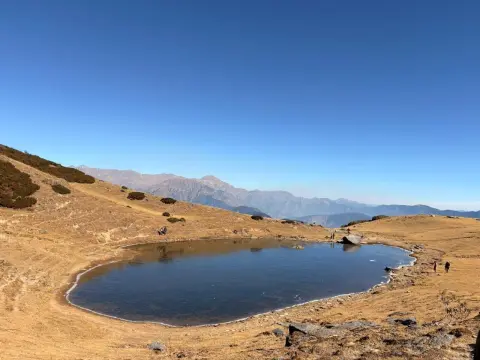 Easy–Moderate
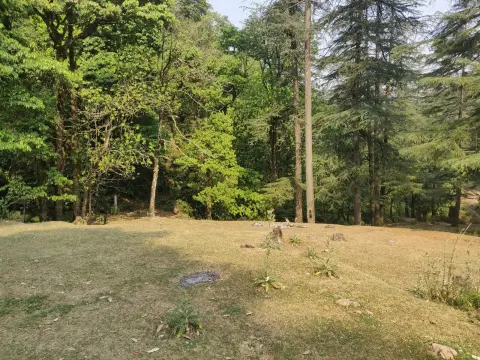 Easy
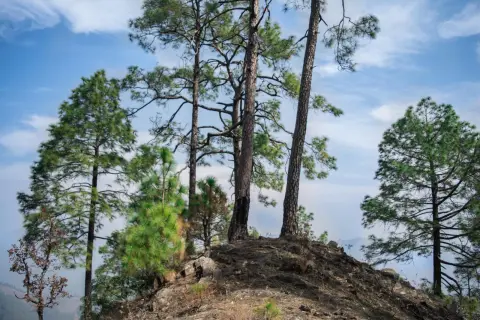 Easy
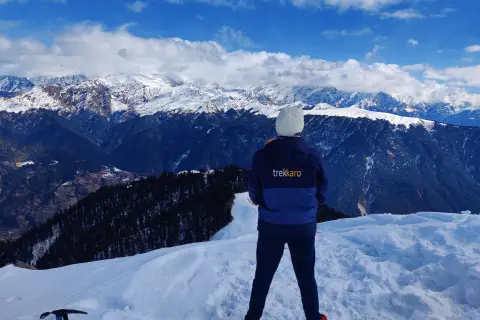 Easy–Moderate
 Difficult
 Moderate
 Easy–Moderate
 Easy
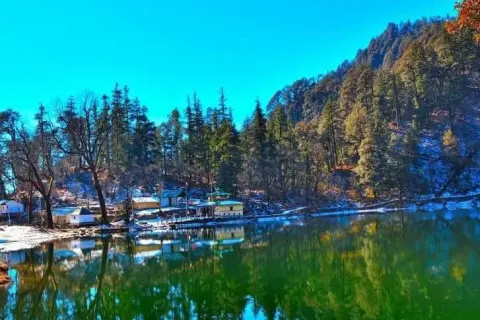 Moderate
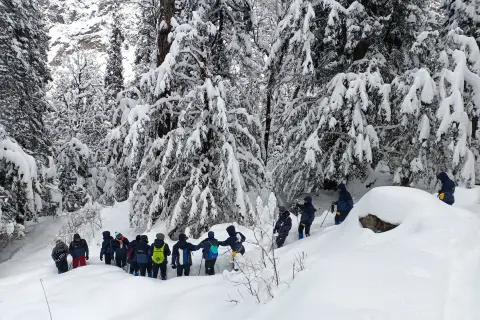 Easy–Moderate
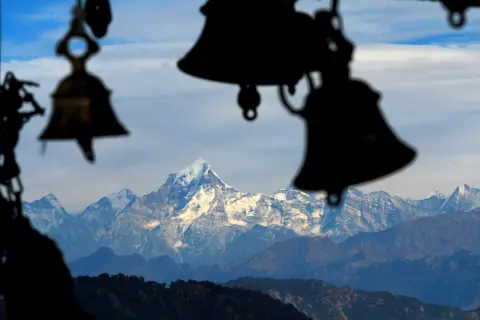 Easy
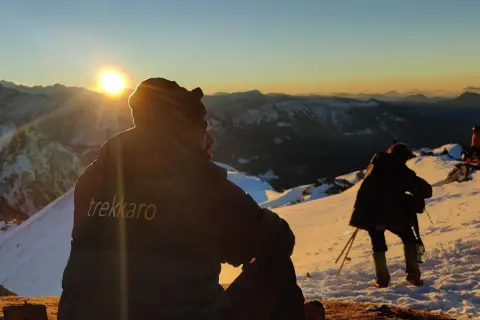 Easy–Moderate
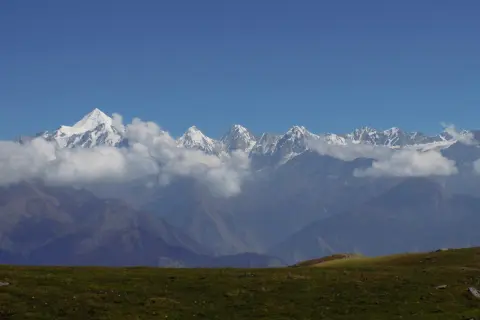 Easy
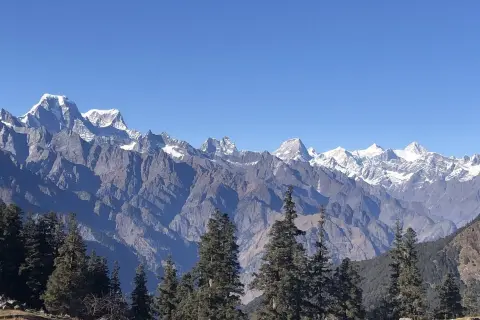 Easy–Moderate
 Easy
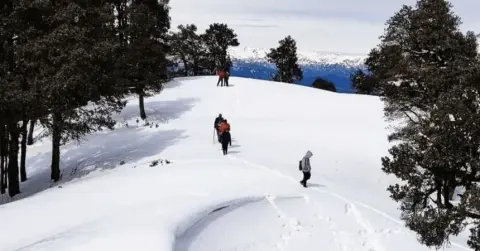 Easy
Compare the treks in winter
Days, grade, highest point, season and price of each trek on this page, from the live trek data. Prices are per person; 5% GST is added at booking.
| Trek | Days | Grade | Max altitude | Best months | From (₹ + GST) | Next winter batch |
|---|---|---|---|---|---|---|
| Aancha Top Trek | 6 | Easy–Moderate | 3,818 m / 12,525 ft | Sep – Jun | ₹9,400 | 5 Dec 2026 |
| Benog Tibba Trek | 2 | Easy | 2,216 m / 7,270 ft | Sep – Jun | ₹3,825 | 5 Dec 2026 |
| Binsar Trek | 2 | Easy | 2,250 m / 7,382 ft | Sep – Jun | ₹3,600 | 5 Dec 2026 |
| Brahmatal Trek | 6 | Easy–Moderate | 3,734 m / 12,250 ft | Oct – Mar | ₹9,000 | 1 Dec 2026 |
| Chadar Trek (Frozen River) | 9 | Difficult | 3,400 m / 11,155 ft | Jan – Feb | ₹25,500 | 9 Jan 2027 |
| Chopta Chandrashila Trek | 5 | Moderate | 3,962 m / 13,000 ft | Oct – Jun | ₹8,250 | 5 Dec 2026 |
| Dayara Bugyal Trek | 4 | Easy–Moderate | 3,749 m / 12,300 ft | Sep – Jun | ₹7,800 | 5 Dec 2026 |
| Deoban Trek | 2 | Easy | 2,900 m / 9,514 ft | Sep – Apr | ₹3,800 | 5 Dec 2026 |
| Dodital - Darwa Pass Trek | 6 | Moderate | 4,150 m / 13,615 ft | Oct – Jun | ₹10,500 | 5 Dec 2026 |
| Gulabi Kantha Trek | 5 | Easy–Moderate | 3,658 m / 12,000 ft | Oct – Apr | ₹8,500 | 5 Dec 2026 |
| Kartik Swami Trek | 2 | Easy | 3,050 m / 10,007 ft | Sep – Jun | ₹3,800 | 5 Dec 2026 |
| Kedarkantha Trek | 5 | Easy–Moderate | 3,810 m / 12,500 ft | Sep – Apr | ₹9,000 | 1 Dec 2026 |
| Khaliya Top Trek | 5 | Easy | 3,500 m / 11,480 ft | Oct – Jun | ₹9,450 | 4 Dec 2026 |
| Kuari Pass Trek | 6 | Easy–Moderate | 3,815 m / 12,516 ft | Oct – Apr | ₹9,400 | 5 Dec 2026 |
| Kunjapuri Trek | 2 | Easy | 1,676 m / 5,499 ft | Sep – Jun | ₹3,600 | 5 Dec 2026 |
| Mukta Top Trek | 6 | Easy–Moderate | 3,608 m / 11,838 ft | Oct – Jun | ₹9,450 | 4 Dec 2026 |
| Nag Tibba Trek | 2 | Easy | 3,022 m / 9,915 ft | Sep – Jun | ₹3,825 | 5 Dec 2026 |
Winter departures (Dec – Feb)
The next winter batches of each trek, up to three per trek. Tap “See all dates” for the full batch calendar on the trek page. Each batch takes up to 20 trekkers, and booking closes at 5 PM on the day before it starts.
| Trek | Dates & availability | Price |
|---|---|---|
| Kedarkantha Trek See all dates → |
|
₹9,000 |
| Brahmatal Trek See all dates → |
|
₹9,000 |
| Mukta Top Trek See all dates → |
|
₹9,450 |
| Khaliya Top Trek See all dates → |
|
₹9,450 |
| Dayara Bugyal Trek See all dates → |
|
₹7,800 |
| Chopta Chandrashila Trek See all dates → |
|
₹8,250 |
| Dodital - Darwa Pass Trek See all dates → |
|
₹10,500 |
| Gulabi Kantha Trek See all dates → |
|
₹8,500 |
| Kuari Pass Trek See all dates → |
|
₹9,400 |
| Aancha Top Trek See all dates → |
|
₹9,400 |
| Nag Tibba Trek See all dates → |
|
₹3,825 |
| Benog Tibba Trek See all dates → |
|
₹3,825 |
| Binsar Trek See all dates → |
|
₹3,600 |
| Deoban Trek See all dates → |
|
₹3,800 |
| Kartik Swami Trek See all dates → |
|
₹3,800 |
| Kunjapuri Trek See all dates → |
|
₹3,600 |
| Chadar Trek (Frozen River) See all dates → |
|
₹25,500 |
Trekking in winter: what to expect
Winter in the Indian Himalaya runs from December to February. It is the snow season. The treks that run now climb to a summit, a snow meadow or a low pass. The high passes of summer are closed under deep snow: Rupin Pass and Bali Pass reopen in May, Hampta Pass in June and Kashmir Great Lakes in July.
The treks on this page come from the batch calendar, so each one has open winter dates. Kedarkantha (3,810 m, 5 days) and Brahmatal (3,734 m, 6 days) are the two classic first snow treks. Both are graded Easy to Moderate. Kuari Pass (3,815 m, 6 days) adds a wide view of Nanda Devi. Dayara Bugyal (3,749 m, 4 days) and Gulabikantha (3,658 m, 5 days) climb to open snow meadows. Deoriatal-Chandrashila (3,962 m, 5 days) and Dodital-Darwa Pass (4,150 m, 6 days) are graded Moderate and go higher. Nag Tibba (3,022 m) and Benog Tibba (2,216 m) are the two-day treks from Dehradun.
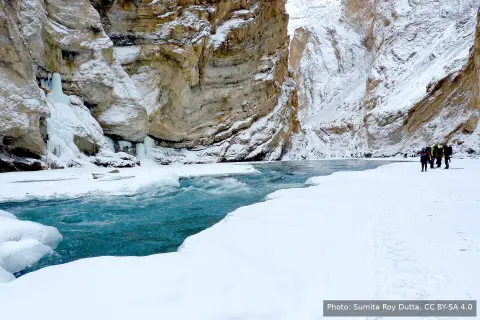
In Ladakh, the Chadar trek walks the frozen Zanskar river in January and February. It takes 9 days, starts and ends in Leh, and is graded Difficult. Temperatures on the river drop to -20°C and below.
Each winter month feels different. December brings the first snow to the summit ridges, and the Christmas and New Year batches fill first. January is deep winter: the trail is white from the high camp to the top. February has the deepest snow of the year and longer, slightly warmer days. There is no long holiday weekend in February, so seats are easier to find at short notice. Snow stays on the higher trails into March; March batches are on the spring and March pages.
How cold it gets depends on the trek and the camp height. On Kedarkantha, winter days are -2 to 8°C and nights -15 to -10°C. On Kuari Pass, days are 8 to 14°C and nights -14 to -8°C. Nag Tibba nights are -7 to -2°C. Benog Tibba is the lowest trek here, with nights of -3 to 4°C. The air is dry and still, so the right layers make the cold comfortable.
Pack thermals top and bottom, a fleece, an insulated layer, a windproof shell, a woollen cap, liner and insulated gloves, two pairs of warm socks, sunglasses, sunscreen and a headlamp for the pre-dawn summit start. Free Trekking Gear covers the heavy items: Decathlon trekking shoes, a -10°C jacket, trekking poles, gaiters and microspikes. Tents and -20°C sleeping bags are provided at the camps.
The Uttarakhand winter treks start from Dehradun or Rishikesh. Transport is not included in the trek fee: we help the group book shared cabs, paid directly to the driver and split among trekkers. On Chadar, the drive from Leh to the trek start and back is part of the trek fee. Snow can slow the mountain roads, so book your return for late night or the next morning. Each batch takes up to 20 trekkers. Booking for a batch closes at 5 PM on the day before it starts.
Frequently asked questions
Which treks can I do in winter with Trekkaro?
Trekkaro runs 17 treks in winter: Aancha Top Trek, Benog Tibba Trek, Binsar Trek, Brahmatal Trek, Chadar Trek (Frozen River), Chopta Chandrashila Trek, Dayara Bugyal Trek, Deoban Trek, Dodital - Darwa Pass Trek, Gulabi Kantha Trek, Kartik Swami Trek, Kedarkantha Trek, Khaliya Top Trek, Kuari Pass Trek, Kunjapuri Trek, Mukta Top Trek, Nag Tibba Trek. Free Trekking Gear comes with 16 of these treks; the others include free microspikes and gaiters.
What is the cheapest trek in winter, and what does it cost?
Binsar Trek at ₹3,600 per person + 5% GST for 2 Days, with free Decathlon trekking shoes, a -10°C jacket, poles and gaiters.
Which is the easiest trek in winter for a first-time trekker?
Benog Tibba Trek, graded easy. It is a good choice for first-time trekkers.
What should I wear on a winter trek in the Himalaya?
Layers you can add and remove: a thermal base layer top and bottom, a fleece, an insulated or down layer, and a windproof shell. Add a woollen cap, liner and insulated gloves and two pairs of warm socks. On treks with Free Trekking Gear the -10°C jacket, trekking shoes, poles, gaiters and microspikes are provided.
Which winter trek is best for a first-timer in the snow?
Kedarkantha or Brahmatal. Both are graded Easy to Moderate, with summits at 3,810 m and 3,734 m. The minimum age is 8 on Kedarkantha and 7 on Brahmatal. Dayara Bugyal (4 days) is a shorter choice, and Nag Tibba is the two-day option from Dehradun.
How cold does it get on winter treks, and are sleeping bags provided?
It depends on the trek. Kedarkantha has winter nights of -15 to -10°C and days of -2 to 8°C. Kuari Pass nights are -14 to -8°C, Nag Tibba nights -7 to -2°C and Benog Tibba nights -3 to 4°C. Tents and -20°C sleeping bags are provided at the camps.
Which months of winter have the most snow on the trail?
February has the deepest snow. January has the most reliable white trail from the high camp to the summit. December brings the first snow to the ridges, and the trail turns white through the month. Fresh snowfall comes through in January and February.
Are winter treks safe, and what happens if it snows heavily?
Yes, on routes built for winter. Trek leaders check the weather and the snow each morning. On a heavy-snow morning the group waits at camp, and the summit climb goes ahead only when conditions allow. There are daily health checks, and microspikes go on where the trail is packed hard.
Which Himalayan treks are closed in winter, and when do they reopen?
The high-pass treks are closed from December to February. Rupin Pass and Bali Pass reopen in May, Hampta Pass in June and Kashmir Great Lakes in July. The treks on this page are the ones with open winter batches.
How do I reach a winter trek from Delhi, and is transport included?
Take an overnight train or bus from Delhi to Dehradun or Rishikesh, the pickup towns for the Uttarakhand winter treks. Transport is not included in the trek fee: we help the group book shared cabs, paid directly to the driver and split among trekkers. Chadar starts and ends in Leh, and its drive from Leh to the trek start and back is part of the trek fee.
Which winter trek batches sell out first over the holidays?
Christmas and New Year batches (departures from 22 December to 1 January) fill first. Christmas falls on Friday 25 December 2026, New Year on Friday 1 January 2027 and Republic Day on Tuesday 26 January 2027. The departure list above marks the batches that include a holiday. Each batch takes up to 20 trekkers. Booking closes at 5 PM on the day before the batch starts.
Can children join a winter snow trek with their parents?
Yes, on the easier treks. The minimum age is 6 on Benog Tibba, 7 on Brahmatal, 8 on Kedarkantha, Dayara Bugyal and Gulabikantha, and 9 on Nag Tibba. Trekkers under 18 join with a parent or guardian. Chadar has a minimum age of 14.
Is trekking gear included in the price of these treks?
On 16 of these treks, yes: free Decathlon trekking shoes, a -10°C jacket, trekking poles and gaiters (Free Trekking Gear, FTG; ₹3,000 refundable deposit + ₹200 washing). The other 1 include free microspikes and gaiters; each trek page says which applies.
Why Book With Trekkaro?
- Free Trekking Gear on 16 of these treks — Decathlon Quechua TREK 100 trekking shoes (worth ₹6,999), Quechua SH 100 jackets rated to -10°C (worth ₹3,299), trekking poles, gaiters and microspikes to use and return. ₹3,000 refundable deposit + ₹200 washing charge; the others get free microspikes & gaiters.
- EMI from ₹186/month — book your Himalayan trek without any financial stress
- Expert certified guides and strict safety protocols on every expedition
- Flexible cancellation — free rescheduling or a 100% TrekCash voucher up to 8 days before departure
- Rated 4.9/5 on Facebook and 4.7/5 on Google by trekkers who booked with us
Explore more treks
*Free to use on the trek, returned after · refundable deposit
AI can make mistakes · never share payment or ID details · Talk to a person