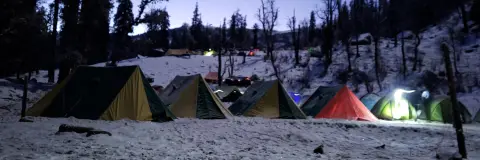
This guide is about the Kedarkantha Trek — dates, price, day-by-day itinerary and booking are on the trek page.
Quick answer: Yes, November is a good month for the Kedarkantha trek. Expect clear post-monsoon skies, days of about 5°C to 18°C and nights of -8°C to -2°C at camp. Snow on the summit trail is not guaranteed, though early snowfall on the upper trail is possible. Trekkaro runs Kedarkantha batches through November at ₹9,000 + 5% GST (₹9,450); see the trek page for live dates.
November sits between Kedarkantha’s autumn and winter. The forest has turned golden and amber, the air is at its clearest, and the trail is quieter than in December. What you trade away is certainty of snow. This guide is for trekkers choosing a November date: what the weather is really like on the 3,810 m (12,500 ft) summit trek above Sankri, how batches run this month, how early and late November differ, and what it costs.
What is the weather on Kedarkantha in November?
Trekkaro’s Kedarkantha page gives one range for autumn (September to November): about 5°C to 18°C during the day and -8°C to -2°C at night on the higher camps. The last batches of November run into early winter, when the December–February range drops to -15°C to -10°C at night.
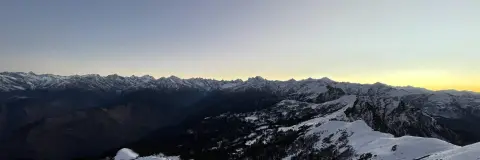
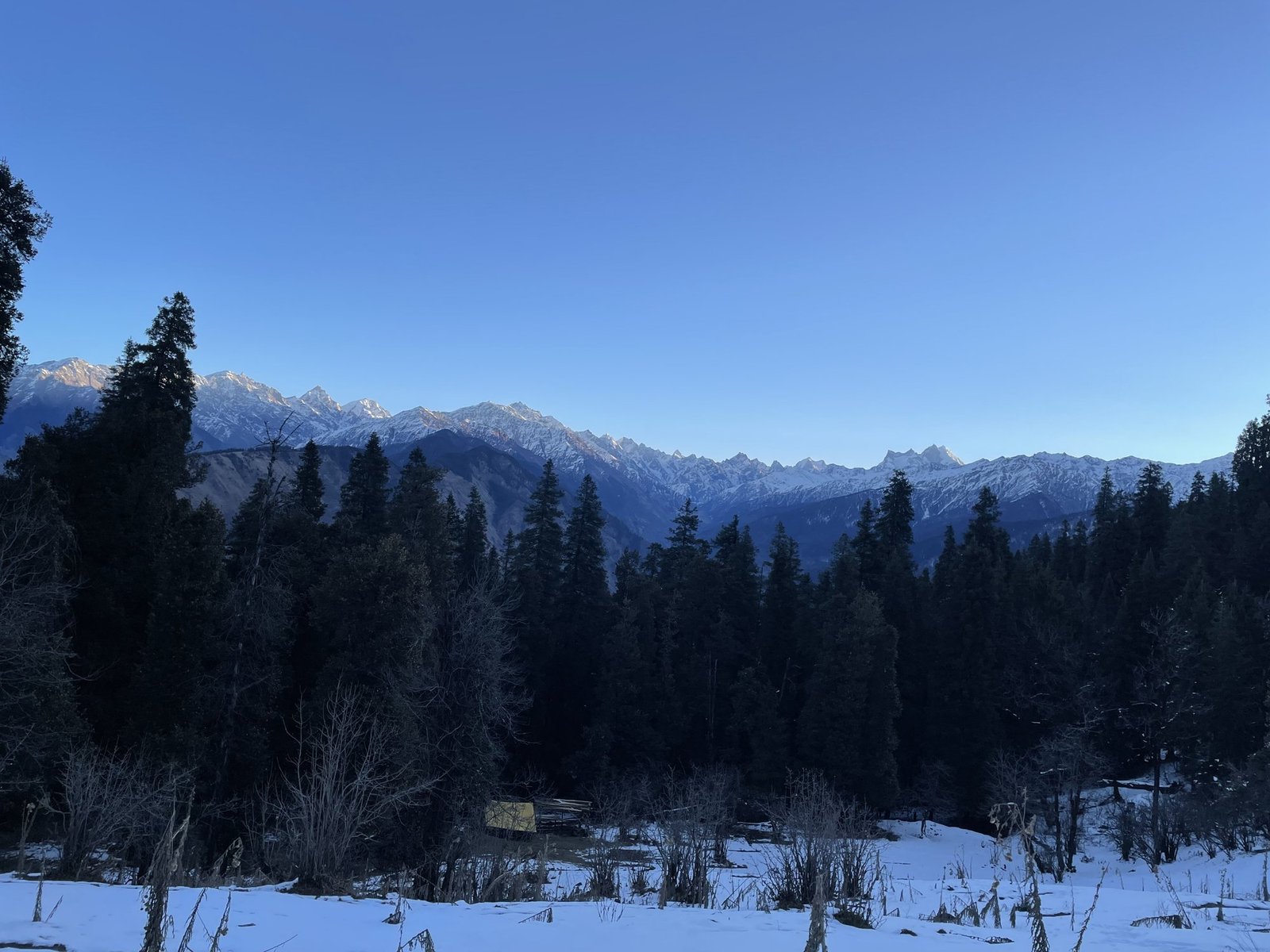
After the monsoon the air is clear, and the views of Swargarohini, Bandarpunch and Black Peak are at their sharpest. The catch is the cold before sunrise. On summit day you leave the base camp at 2:00 AM, the coldest part of the night, and the wind on the final ridge makes it feel colder than the thermometer says.
Will there be snow on Kedarkantha in November?
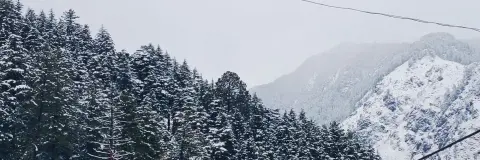
Not guaranteed. The trek page describes the first dustings of snow on the higher Himalayan peaks in October and November, and says that early snowfall on the upper trail in November can give a partial snow experience without the full cold of mid-winter.
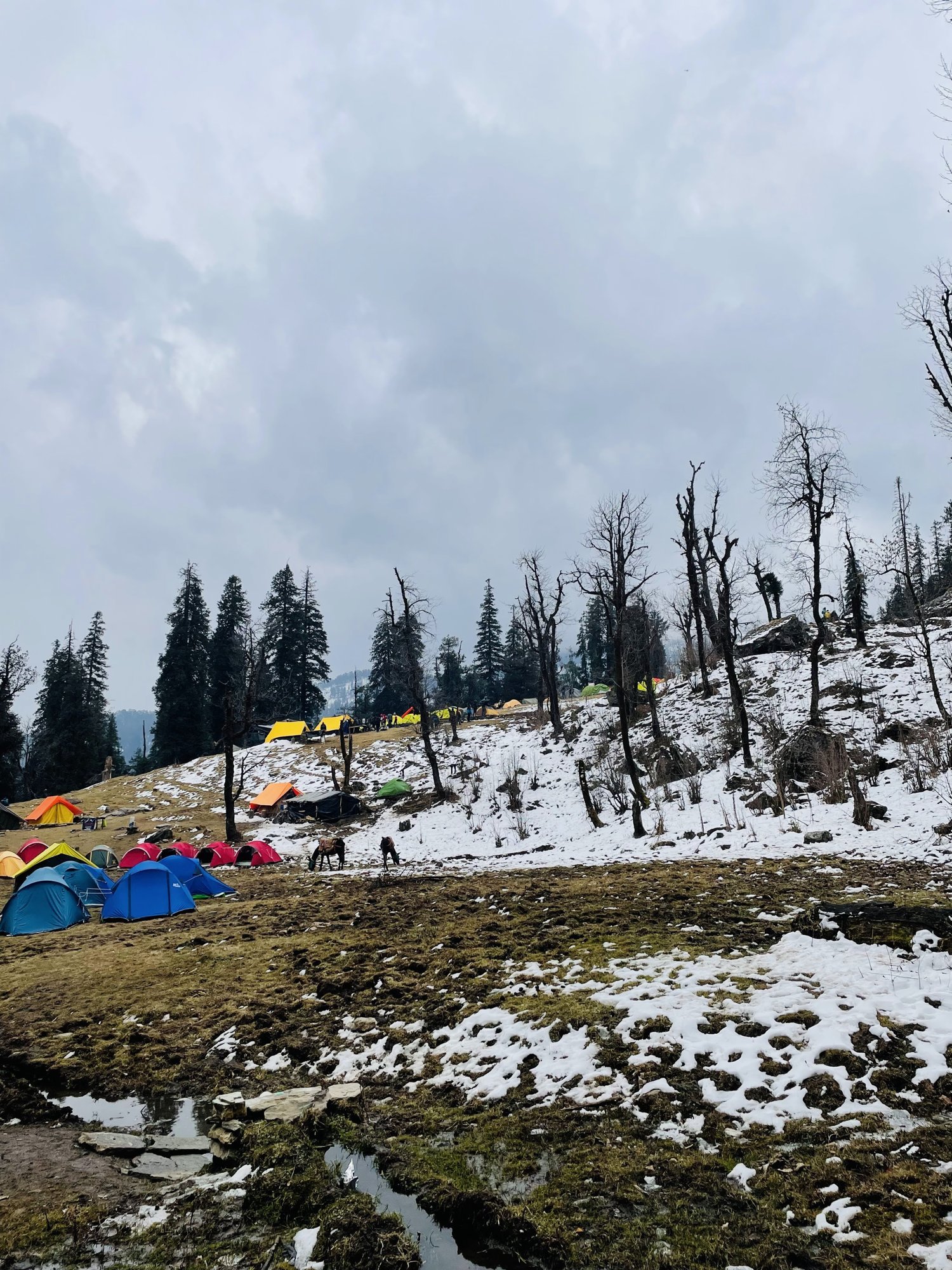
So pick November for clear views, crisp days and sub-zero nights. If walking through deep snow is the main reason you want to do Kedarkantha, choose a batch from December to February, the deep-snow season on the trek page.
Early November or late November: which is better?
| Factor | Early November (first half) | Late November (second half) |
|---|---|---|
| Snow on the upper trail | Less snow | More chance of snow, not guaranteed |
| Night cold at base camp | Autumn range, -8°C to -2°C | The last batches run into early winter |
| Forest and meadows | Golden and amber forest tones in both halves of the month | |
| Holiday demand | Diwali and Guru Nanak Jayanti move from year to year; batches over them carry a holiday label, so check the trek page for batches over these holidays. Otherwise quieter than December | |
How do Kedarkantha batches run in November?
Kedarkantha batches run through November; see the trek page for live dates. Each batch is 5 days from Dehradun to Dehradun, with a maximum of 20 trekkers and one leader or guide for every eight.
| Part of November | Trail and weather | Night at camp |
|---|---|---|
| Early November | Autumn conditions, clear trail and clear air | -8°C to -2°C |
| Mid-November | Colder nights; early snow on the upper trail possible | -8°C to -2°C |
| Late November | The last batches run into early December and early winter | Heading towards the winter range of -15°C to -10°C |
A batch that starts at the end of October also runs into early November. Booking for a batch closes at 5 PM India time on the day before it starts. Check the trek page for the live list of open batches.
What does the 5-day itinerary look like in November?
| Day | Route | Distance and time |
|---|---|---|
| 1 | Dehradun to Sankri (1,950 m / 6,400 ft); the shared cab leaves Dehradun Railway Station at 6:30 AM | 200 km, 8 to 9 hours |
| 2 | Sankri to Juda Ka Talab (2,773 m / 9,100 ft), through pine and oak forest to a lake camp | 4 km, 4 to 5 hours |
| 3 | Juda Ka Talab to Kedarkantha base camp (3,429 m / 11,250 ft); a short day that helps you acclimatise | 3 km, 2 to 3 hours |
| 4 | Summit (3,810 m / 12,500 ft) for sunrise and back to Juda Ka Talab, from a 2:00 AM start | About 9 km, 8 to 9 hours |
| 5 | Juda Ka Talab to Sankri, then the drive to Dehradun, reaching about 6 PM | 4 km; 8 to 9 hours by road |
Two notes for the days in the table. On Day 1, Purola is the last reliable ATM and cards are not accepted on the trail, so withdraw cash in Dehradun; Sankri is the last mobile signal, and only Jio works there. From Day 2 there is no charging point, so bring a power bank, and Day 4 needs a headlamp for the 2:00 AM start and an insulated bottle. You also need a government photo ID, a medical certificate signed by a doctor and travel insurance covering high-altitude trekking and helicopter evacuation, which is mandatory. Ask your doctor about altitude medicine such as Diamox before you leave.
What should you pack for Kedarkantha in November?
Pack for winter nights even if the days feel like autumn. The November-specific points are below.
| Pack | Why in November |
|---|---|
| Thermal inner, two fleece or woollen mid-layers, padded jacket | Free Trekking Gear gives you a jacket rated to -10°C, worn over your own fleece on summit night |
| Woollen cap, balaclava, fleece gloves plus a waterproof outer pair, spare woollen socks for camp | Nights at the higher camps fall to -8°C |
| UV sunglasses (category 3 or 4), SPF 50+ sunscreen and lip balm | Clear skies at altitude mean strong sun even when the air is cold |
| Headlamp with spare batteries | The summit push starts in the dark, and batteries drain faster in the cold |
| Microspikes and gaiters (Free Trekking Gear, with Decathlon trekking shoes and poles) | Early snow or frozen patches on the upper trail can be slippery |
On summit night, pack the waterproof shell and outer gloves at the top of your day pack, so you can add them at a rest stop without unpacking in the dark. Carry an insulated bottle and keep it inside your jacket so the water does not freeze, and eat something small at every rest stop. Sleeping bags at camp are rated to -20°C, and tents are shared by three (men and women separate).
Is November a good month for first-timers?
Yes, for a prepared beginner. Kedarkantha is graded Easy to Moderate, the minimum age is 8, and a trail with little or no snow is easier underfoot than deep snow. Summit day is the hard part: about 9 km and 8 to 9 hours. You should be able to walk briskly for 4 to 5 hours. The team checks your SpO2, pulse and blood pressure twice a day at every campsite and carries a portable oxygen cylinder and a stretcher. The Uttarakhand Health Department’s health advisory for travellers going above 3,000 m advises no more than 800–1,000 m of height gain a day and descending if you feel unwell; report any warning sign to your leader.
November is not for you if a white trail is the only picture you want from the trip, or if you can travel only over Diwali and want a quiet campsite.
What does Kedarkantha cost in November?
The Kedarkantha trek costs ₹9,000 per person + 5% GST = ₹9,450 for 5 days, Dehradun to Dehradun. The trek page shows EMI from ₹463 a month. The fee covers stays, meals, permits, camping equipment and the trek team.
| Item | Cost |
|---|---|
| Transport from Dehradun | Not included: ₹1,000 per person each way (₹2,000 return), paid directly to the driver |
| All-in (trek fee + 5% GST + ₹2,000 return cab) | ₹11,450 |
| Backpack offloading (up to 9 kg) | ₹1,500 + GST (₹1,575) |
| Single tent | ₹2,000 + GST (₹2,100) |
| Free Trekking Gear | ₹3,000 refundable deposit and a ₹200 washing charge (+ GST) |
Transport is not included in the trek fee: we help the group book shared cabs at ₹1,000 per person each way, paid directly to the driver. Cancellation: 70% refund 30 days or more before departure, 50% between 15 and 29 days. At 8–14 days there is no cash refund, but you can take a 100% TrekCash voucher (valid 1 year), a free reschedule or a transfer to another trekker. Any of these can also replace a cash refund at any point up to 8 days before departure. At 7 days or less, or a no-show, nothing is refunded. When you compare operators, compare what is included, especially the gear, not just the fee.
See Kedarkantha November dates and book | Kedarkantha in October | Kedarkantha in December | Kedarkantha trek cost | Treks in November
Frequently asked questions
Is there snow on the Kedarkantha trek in November?
Snow in November is not guaranteed. Early snowfall can leave a partial cover on the upper trail, and the later batches run into early winter. Choose December to February if deep snow is your priority.
How cold is Kedarkantha at night in November?
The trek page’s autumn range for camp nights is -8°C to -2°C, and the last November batches run into early winter. Summit night, with a 2:00 AM start and wind on the ridge, feels the coldest.
Is November a good time for a first Himalayan trek?
Yes, if you prepare. A dry or lightly snowed trail is easier underfoot, and Kedarkantha is graded Easy to Moderate. You still need the fitness for an 8 to 9 hour summit day.
How do Kedarkantha batches run in November?
Kedarkantha batches run through November, each 5 days from Dehradun to Dehradun with a maximum of 20 trekkers. Batches over Diwali and Guru Nanak Jayanti carry a holiday label. See the trek page for live batch dates.
How much does the Kedarkantha trek cost in November?
The price is the same as in other months: ₹9,450 per person with GST, and the trek page shows EMI from ₹463 a month. With the shared cab both ways, the all-in cost is ₹11,450.