This guide is about the Kedarkantha Trek — dates, price, day-by-day itinerary and booking are on the trek page.
Quick answer: Yes. The Kedarkantha trek is safe for a fit first-time trekker who follows the trek leader. The summit is 3,810 m, you sleep no higher than 3,429 m, SpO2 and pulse are checked twice a day, and every Trekkaro batch carries an oxygen cylinder, a stretcher and HF radios. The real risks are cold, snow and altitude.
The Kedarkantha trek is graded Easy–Moderate, climbs to 3,810 m (12,500 ft) in the Govind Pashu Vihar National Park of Uttarkashi district, and runs in snow from December to February. None of that makes it dangerous, but each part carries a risk worth understanding, so here they are one by one: what Trekkaro does about each, and what is left for you.
How high is Kedarkantha, and is altitude sickness a real risk?
The trek starts at Sankri (1,950 m) and gains about 1,860 m over three days. You never sleep on the summit: the highest camp is the base camp at 3,429 m, and you descend the same day to Juda Ka Talab at 2,773 m.
| Day | Where you sleep | Altitude | Height gained that day |
|---|---|---|---|
| Day 1 | Sankri guesthouse | 1,950 m / 6,400 ft | Arrival by road |
| Day 2 | Juda Ka Talab camp | 2,773 m / 9,100 ft | About 823 m over 4 km |
| Day 3 | Kedarkantha Base Camp | 3,429 m / 11,250 ft | About 656 m over 3 km |
| Day 4 | Juda Ka Talab camp | 2,773 m / 9,100 ft | Up 381 m to the summit, then down 1,037 m |
| Day 5 | Dehradun | Road | 4 km descent to Sankri |
The Government of Uttarakhand’s health advisory for the Char Dham Yatra, whose high-altitude rules apply equally here, advises “no more than 800 – 1000 meters of elevation gain per day” and tells travellers to “descend if feeling unwell; do not ascend further”. Every day of height gain on Kedarkantha (823 m, 656 m and 381 m) sits inside that limit, and the second rule is built in: the trek leader’s decision on health and safety is final, and a trekker not fit to continue is asked to rest or descend.
The risk is not zero. Some risk of altitude sickness exists at 3,810 m, so consult your doctor before the trek, including about Diamox, and report a headache, nausea, dizziness or breathlessness to the trek leader at once. The signs and the prevention are in Altitude Sickness on Himalayan Treks: Signs and Prevention.
What health checks, equipment and leaders does each batch have?
Every trekker’s blood oxygen (SpO2), pulse and blood pressure are checked twice a day at every campsite, and a falling SpO2 reading is acted on early, before it turns into Acute Mountain Sickness. Every batch carries one portable oxygen cylinder, one emergency stretcher and a first-aid kit. There is no doctor on the trek, so carry your own prescriptions and medicines.
Trekkaro’s trek leaders are trained in wilderness first aid and have completed a basic mountaineering course, and lead with local guides who know the route, its weather and its campsites. Batches take up to 20 trekkers, with one trek leader or guide for every 8. Sankri is the last place with mobile signal (only Jio works consistently) and there is none on the trail, so the team uses HF radio across the group.
Are the snow and the summit climb dangerous?
In winter, snow lies from the forest above Sankri to the summit, and the summit climb is a steep snow slope by headlamp. Ropes are not used on Kedarkantha; the route does not need them. After fresh snowfall the trek team clears the trail, cuts steps where needed and helps you across the slippery sections. Microspikes, gaiters, Decathlon trekking shoes with good grip, trekking poles and a -10°C jacket are all Free Trekking Gear, so no one walks in worn-out or wrong gear.
Summit day starts at 2:00 AM from the base camp. The climb is about 3 km, and the full day back to Juda Ka Talab is about 9 km and 8–9 hours. The trek leader sets the pace, explains the turnaround policy at the evening briefing, and makes the call on the slope. How hard each day feels, and how to train, is in Kedarkantha Trek Difficulty Level: Easy-Moderate, 20 km.
Trekkaro runs no batches from May to August; in July and August the monsoon brings landslide risk and slippery ground.
How cold does it get, and is the cold a safety risk?
In winter (December to February) days are -2°C to 8°C and nights at camp fall to -15°C to -10°C. In March and April nights are -6°C to -2°C, and from September to November -8°C to -2°C. The summit climb begins in the coldest hours, with wind chill on the open slope, so carry a balaclava and waterproof gloves.
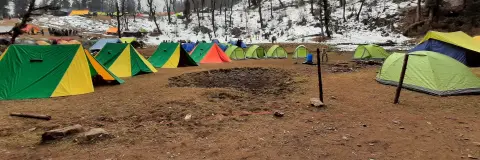
At camp, Trekkaro provides -20°C sleeping bags, mattresses and double-wall tents shared by three, with men and women in separate tents. Hot water comes from the mess tent. Your part is five warm layers, with one set of thermals kept dry for sleeping.
Is Kedarkantha crowded, and does that matter for safety?
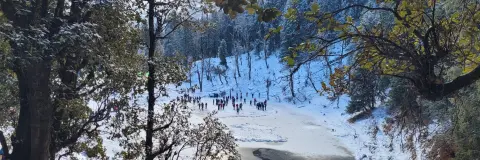
Kedarkantha is India’s most celebrated winter trek, and the trail is busiest between 20 and 31 December. January has the deepest snow on the summit climb, February is the month Trekkaro’s team rates highest, and autumn has lighter crowds than the winter peak.
A crowded trail is not in itself unsafe, but it means more people on the summit slope in the dark. The batch size of up to 20, with a leader or guide for every 8, keeps your group together; stay with your leader rather than the headlamps in front. For women trekking alone, the guides and support staff are carefully selected, and women share tents only with other women.
What happens in an emergency, and where is the nearest hospital?
The way off the mountain is the way you came up: through Juda Ka Talab to Sankri, the road-head, then by road through Mori and Purola towards Dehradun, on foot or on the stretcher, with oxygen on the way. No hospital sits on the trail. The Uttarakhand National Health Mission’s staff list for Uttarkashi district names a health sub-centre at Saur-Sankri, a primary health centre at Mori and a community health centre at Purola, all on the road back to Dehradun, as well as the district hospital at Uttarkashi. The costs of an early exit, an evacuation or an itinerary change for weather or medical reasons are not included in the fee, which is why travel insurance covering high-altitude trekking and helicopter evacuation is mandatory, and yours to arrange.
What must you do to stay safe on the trek?
Every trekker brings a medical certificate signed by a doctor (the form is in My Bookings), travel insurance with high-altitude and helicopter evacuation cover, a government photo ID and a signed disclaimer form with emergency contact details.
Before Day 1, build your fitness with running, cycling or swimming, and tell the trek leader about any medical condition and medicines. On the trek, follow the leader’s calls on route, pace, start times and turning back. The full rules, including what can get you sent down, are in Kedarkantha Trek Do’s and Don’ts: Rules for a Safe Trek.
Who should not do the Kedarkantha trek?
The minimum age is 8 years, and trekkers under 18 must come with a parent or guardian. There is no upper age limit, but trekkers above 60 need good fitness and cardiovascular health, and Trekkaro recommends an ECG or TMT report.
The trek page asks you to consult your doctor and declare any condition to the trek leader. The Uttarakhand health advisory is more specific about who needs that check: travellers with a “history of heart disease, hypertension, asthma, or diabetes”, those who are “obese (BMI > 30)” and those who are “pregnant” should get a health check-up before travelling and carry prescribed medication with their doctor’s contact details. For those groups, the medical certificate is where your doctor decides whether a night at 3,429 m in -15°C is right.
See Kedarkantha trek dates and book | Kedarkantha in December: Snow, Temperature and Crowds | Hypothermia on a Winter Trek: Signs and How to Stay Warm
Frequently asked questions
Is the Kedarkantha trek safe for beginners?
Yes. Kedarkantha is graded Easy–Moderate, daily distances are 3–4 km except summit day, and the height gain is spread over three days. SpO2 and pulse are checked twice a day.
Is the Kedarkantha trek safe in December?
Yes, with winter preparation. December nights at camp fall to -15°C to -10°C and the trail is under snow, so microspikes, gaiters and a -10°C jacket come with Free Trekking Gear. The trail is busiest between 20 and 31 December.
What is the oxygen level on Kedarkantha?
The trek page does not publish an oxygen percentage for the summit. It measures yours instead: SpO2 and pulse are checked twice a day at every campsite, and a falling reading is acted on early. Each batch also carries a portable oxygen cylinder.
Is there a doctor or hospital on the Kedarkantha trek?
No doctor joins the trek, and there is no hospital on the trail. Trek leaders trained in wilderness first aid carry a first-aid kit, oxygen and a stretcher, and an unwell trekker is brought down to Sankri. Travel insurance with evacuation cover is mandatory.
Is the Kedarkantha trek crowded?
It is India’s most celebrated winter trek, and the trail is busiest from 20 to 31 December. January and February have deeper snow and fewer people, and September to November has quieter trails.