Quick answer: The best time for Kedarkantha is December to February for deep snow and a frozen Juda Ka Talab, with January and early February the snowiest weeks. March and April still have snow on the upper trail with milder nights, but no batches are listed for 2027 yet; for clear views, pick October or November. July and August are closed.
Kedarkantha (3,810 m / 12,500 ft) runs in ten months of the year, which is why “when should I go?” is the first question most people ask. The answer depends on whether you want snow, comfort, views or green meadows, on which holidays you can use, and on which dates you can actually book. This guide helps you choose a month; it does not repeat the camp-by-camp temperatures, which are in the weather guide linked at the end.
Which month is best for the Kedarkantha trek?
Choose by what matters most to you:
| If you want | Go in | Why |
|---|---|---|
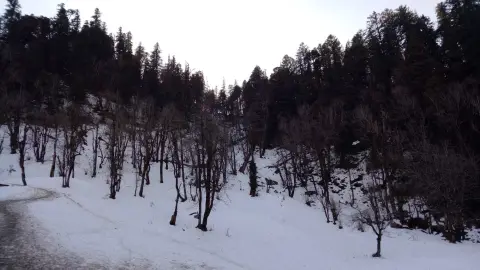
| Deep snow | December to February | Snow from the forest above Sankri to the summit, Juda Ka Talab freezes, and January and early February bring the heaviest snowfall |
| Snow with less cold | March and April (no 2027 dates listed yet) | The upper trail still holds snow, while nights are -6°C to -2°C instead of -15°C to -10°C |
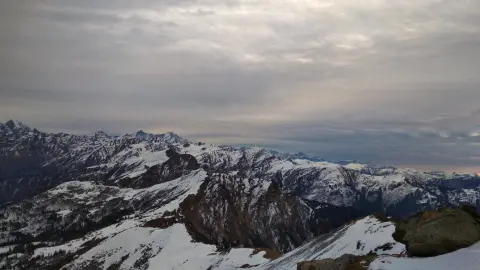
| Clear skies and views | October and November (September 2027 dates not listed yet) | The air is clean after the monsoon, and the first snow appears on the high peaks in October and November |
| Green meadows and the mildest nights | May and June (no 2027 dates listed yet) | The trail is clear of snow, with camp nights of 2°C to 5°C |
| Nothing | Not July or August | No departures in the monsoon; the season reopens on 15 September |
What do snow, batches and holidays look like month by month?
On 15 October 2026 the trek page lists 104 departures, from 17 October 2026 to 28 February 2027. This table pairs each month’s trail conditions with what you can book and which dates carry holiday labels.
| Month | Trail conditions | Batches listed | Holiday batches |
|---|---|---|---|
| October 2026 | Clear trail, first snow on the peaks | 5 (weekend starts) | Dussehra: 17 and 18 Oct starts |
| November 2026 | Clear and cold; early snowfall on the upper trail possible | 9 (weekend starts) | Diwali: 7 and 8 Nov; Guru Nanak Jayanti: 21 and 22 Nov |
| December 2026 | Deep-snow season begins; slightly milder than January | 31 (every day) | Christmas: 21–25 Dec; New Year: 28 Dec–1 Jan |
| January 2027 | Deep snow, frozen lake; the heaviest snowfall | 31 (every day) | Republic Day: 22–26 Jan |
| February 2027 | Deep snow, heaviest in the early weeks | 28 (every day) | None |
| March–June 2027 | Snow on the upper trail in March–April; clear of snow in May–June | Not listed yet | — |
| July–August | Closed for the monsoon | ||
| September (from 15th) | Fresh and clear after the monsoon | Not listed yet for 2027 | — |
Every batch takes a maximum of 20 trekkers, and booking for a batch closes at 5 PM (India time) the day before it starts. The holiday batches are the ones to book first if you can only travel then.
Is snow guaranteed in winter?
No trek can promise snow on a given date. The season pattern on the trek page is this: deep snow from December to February, with the heaviest falls in January and early February, and snow on the upper trail in March and April. From May to November you should not plan on snow on the trail itself; in November early snowfall on the upper trail is possible but not certain. Snow depth varies by year. If snow is the main reason you are going, January and early February are the safest bets, and December is a good second choice.
When should you not do Kedarkantha?
- July and August. The trek is closed for the monsoon; the season reopens on 15 September.
- Christmas to New Year, if you want empty campsites. The 21–25 December and 28 December–1 January starts are the holiday batches.
- Deep-winter batches, if you cannot handle -15°C nights. Pick October or November instead, with camp nights of -8°C to -2°C.
- March to June, for now. The trek page describes these months, but no 2027 dates are listed yet, so do not plan your leave around them.
What changes with the season, besides the weather?
Summit day
Summit day starts at 2:00 AM in every season. In winter you climb in snow with microspikes and gaiters from Free Trekking Gear, and the 9 km round trip back to Juda Ka Talab takes 8 to 9 hours. In October the same climb is on a clear trail, though the altitude is the same. Carry a headlamp and an insulated bottle; ask your doctor about altitude medicine before you go.
What you carry
Winter needs five warm layers (a thermal top and bottom, two fleece or woollen layers and a padded jacket), a balaclava and waterproof gloves. In autumn the days are milder, but nights at both camps still fall below freezing, so a warm jacket stays on the list in every month.
The drive
The 200 km drive from Dehradun to Sankri takes 7 to 8 hours along the Tons river. The shared cab leaves Dehradun Railway Station at 6:30 AM; reach Dehradun the day before.
Safety in any month
Purola has the last reliable ATM and cards are not accepted on the trail; Sankri is the last mobile signal, and only Jio works there; there is no charging on the trail, so carry a power bank. A government photo ID, a doctor-signed medical certificate and travel insurance covering high-altitude trekking and helicopter evacuation are mandatory in every month. The Uttarakhand Health Department’s health advisory for travellers going above 3,000 m advises no more than 800–1,000 m of height gain a day and descending if you feel unwell, whatever the season.
Does the Kedarkantha trek cost change by month?
The price is the same all season: ₹9,000 per person + 5% GST = ₹9,450 for 5 days from Dehradun. EMI starts at ₹463 a month (24 months). Free Trekking Gear comes with the trek: Decathlon trekking shoes, a -10°C jacket, trekking poles, gaiters and microspikes, against a ₹3,000 refundable deposit and a ₹200 washing charge (+ GST).
| Item | Detail |
|---|---|
| Transport | Not included in the trek fee: we help the group book shared cabs at ₹1,000 per person each way, paid directly to the driver. All-in with the return cab: ₹9,450 + ₹2,000 = ₹11,450 |
| Add-ons | Backpack offloading ₹1,500 + GST; single tent ₹2,000 + GST |
| Cancellation | 70% refund 30 or more days before departure; 50% at 15–29 days; at 8–14 days no cash refund, but a 100% TrekCash voucher (valid 1 year), a free reschedule or a transfer to another trekker. Any of these can also replace a cash refund at any point up to 8 days before departure. No refund at 7 days or less or for a no-show |
See Kedarkantha dates and book | Kedarkantha weather by month | Kedarkantha in December | Kedarkantha trek cost
Frequently asked questions
Which is the single best month for the Kedarkantha trek?
For snow, January is the safest month, with the heaviest snowfall of the season and a frozen Juda Ka Talab. If you would rather avoid -15°C to -10°C nights, choose a November batch (camp nights of -8°C to -2°C, without deep snow); March has snow on the upper trail and nights of -6°C to -2°C, but no March batches are listed yet.
Can I do the Kedarkantha trek in July or August?
No. Trekkaro does not run Kedarkantha in July and August because of the monsoon. The season reopens on 15 September.
Will there be snow on the Kedarkantha trek in November?
The first snow appears on the high peaks in October and November, and early snowfall can reach the upper trail in November, but it is not guaranteed. If snow underfoot matters to you, book a December, January or February batch.
Is the Kedarkantha trek cheaper in the off-season?
No. The trek fee is ₹9,000 + 5% GST in every month, and the shared cab from Dehradun costs ₹1,000 per person each way all year.
Is Kedarkantha good for beginners in winter?
Yes, if you are reasonably fit. It is graded Easy to Moderate, and the winter cold is managed with the right layers plus the free jacket, shoes, gaiters and microspikes. Prepare for the 2:00 AM summit start and an 8 to 9 hour summit day.