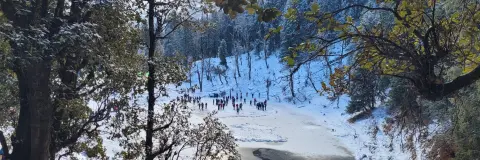
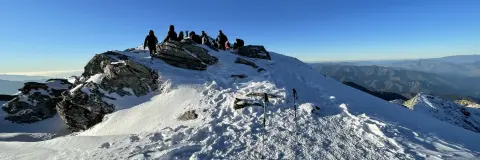
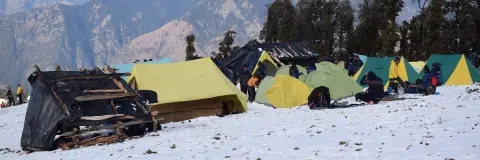
Quick answer: The best winter treks in India for beginners are Dayara Bugyal (the shortest, 4 days), Kedarkantha (the classic first summit), Deoriatal–Chandrashila (a lake, a temple and a summit), Brahmatal (frozen lakes and big peaks), Gulabikantha (quiet snowy meadows) and Kuari Pass (the widest views). All six are in Uttarakhand, five are graded Easy–Moderate and Chandrashila is Moderate, and a fit first-timer can do any of them between December and February.
Beginner winter treks you can book with Trekkaro:
- Kedarkantha Trek: 5 days, about 20 km, graded Easy–Moderate, ₹9,450 with GST.
- Dayara Bugyal Trek: 4 days, about 20 km, graded Easy–Moderate, ₹8,190 with GST.
- Brahmatal Trek: 6 days, about 29 km, graded Easy–Moderate, ₹9,450 with GST.
- Kuari Pass Trek: 6 days, about 35 km, graded Easy–Moderate, ₹9,870 with GST.
- Chopta Chandrashila Trek: 5 days, about 30 km, graded Moderate, ₹8,662.50 with GST.
"Beginner-friendly" gets used loosely. Some so-called easy treks have a brutal summit day or an 8-hour walk on day one. We picked these six for four things: short or gradual walking days, a safe winter route, good campsites and a big reward at the end. Each one also has a catch, and we say what it is.
This page is a shortlist of treks. If you have not chosen a trek yet and want the step-by-step on fitness, altitude and choosing a company, read your first Himalayan trek.
The six treks at a glance
| Trek | Days | Starts from | Highest point | Grade | Winter nights at camp | Price before 5% GST |
|---|---|---|---|---|---|---|
| Dayara Bugyal | 4 | Dehradun | 3,749 m / 12,300 ft | Easy–Moderate | -10°C to -2°C | ₹7,800 |
| Kedarkantha | 5 | Dehradun | 3,810 m / 12,500 ft | Easy–Moderate | -15°C to -10°C | ₹9,000 |
| Deoriatal–Chandrashila | 5 | Rishikesh | 3,962 m / 13,000 ft | Moderate | -10°C to -6°C | ₹8,250 |
| Brahmatal | 6 | Rishikesh | 3,734 m / 12,250 ft | Easy–Moderate | -15°C to -5°C | ₹9,000 |
| Gulabikantha | 5 | Dehradun | 3,658 m / 12,000 ft | Easy–Moderate | -10°C to -5°C | ₹8,500 |
| Kuari Pass | 6 | Rishikesh or Dehradun | 3,815 m / 12,516 ft | Easy–Moderate | -14°C to -8°C | ₹9,400 |
Night figures are the December–February ranges published on each trek page. Prices are per person plus 5% GST and include accommodation, meals on the trek, permits, a trek leader and support staff, and Free Trekking Gear. Transport is not included in the trek fee: we help the group book shared cabs, paid directly to the driver and split among trekkers.
1. Dayara Bugyal: the shortest snow trek to start with
Dayara Bugyal is the pick for complete beginners, families and anyone with only four days to spare. The trek takes 4 days from Dehradun, covers about 20 km and tops out at Dayara Top, 3,749 m / 12,300 ft. The cab leaves Dehradun Railway Station at 7:30 AM for Raithal.
Dayara is a huge, open alpine meadow above the village of Raithal. In winter it turns into a rolling white field with Bandarpoonch, Srikanth and Black Peak across the horizon, and the walk up through oak and maple forest to Gui is 5 km in 3–4 hours. Of the six treks here, this one has the fewest days on the trail.

Day 3 is the long one, 10 km and 8–9 hours from Gui to Dayara Top and back, and there is no sharp summit moment. For snow from week to week, read Dayara Bugyal in December.
2. Kedarkantha: the classic first summit
Kedarkantha suits first-timers who want a real summit. It takes 5 days from Dehradun, covers about 20 km on foot and reaches 3,810 m / 12,500 ft.
Kedarkantha is one of the most popular winter treks in India. The walking days before the summit are short (4 km and 3 km), you camp near Juda Ka Talab, which freezes in winter, and on summit day you climb in the dark to reach the top at sunrise, with Swargarohini and Bandarpunch in front of you.
Its hardest part is summit day, which starts at 2:00 AM, is steep in the snow and runs to about 9 km and 8–9 hours. The trail is also busy around Christmas and New Year, so go in February for quieter campsites. Is it the right first trek for you? See Kedarkantha difficulty and fitness.
3. Deoriatal–Chandrashila: a lake, a temple and a summit
This trek suits people who want variety and a bit of culture with their snow. It takes 5 days from Rishikesh, covers about 30 km and finishes on Chandrashila, 3,962 m / 13,000 ft. It is graded Moderate, one step above the others here.
You camp by Deoriatal, where the Chaukhamba massif is mirrored in the water on a still day, walk through Rohini Bugyal, drive to Chopta and follow the pilgrim path past Tungnath, known as the highest temple of Lord Shiva, to the summit of Chandrashila. From the top, Nanda Devi, Trishul, Chaukhamba, Bandarpoonch and the Kedarnath peaks stand in a 360° circle.
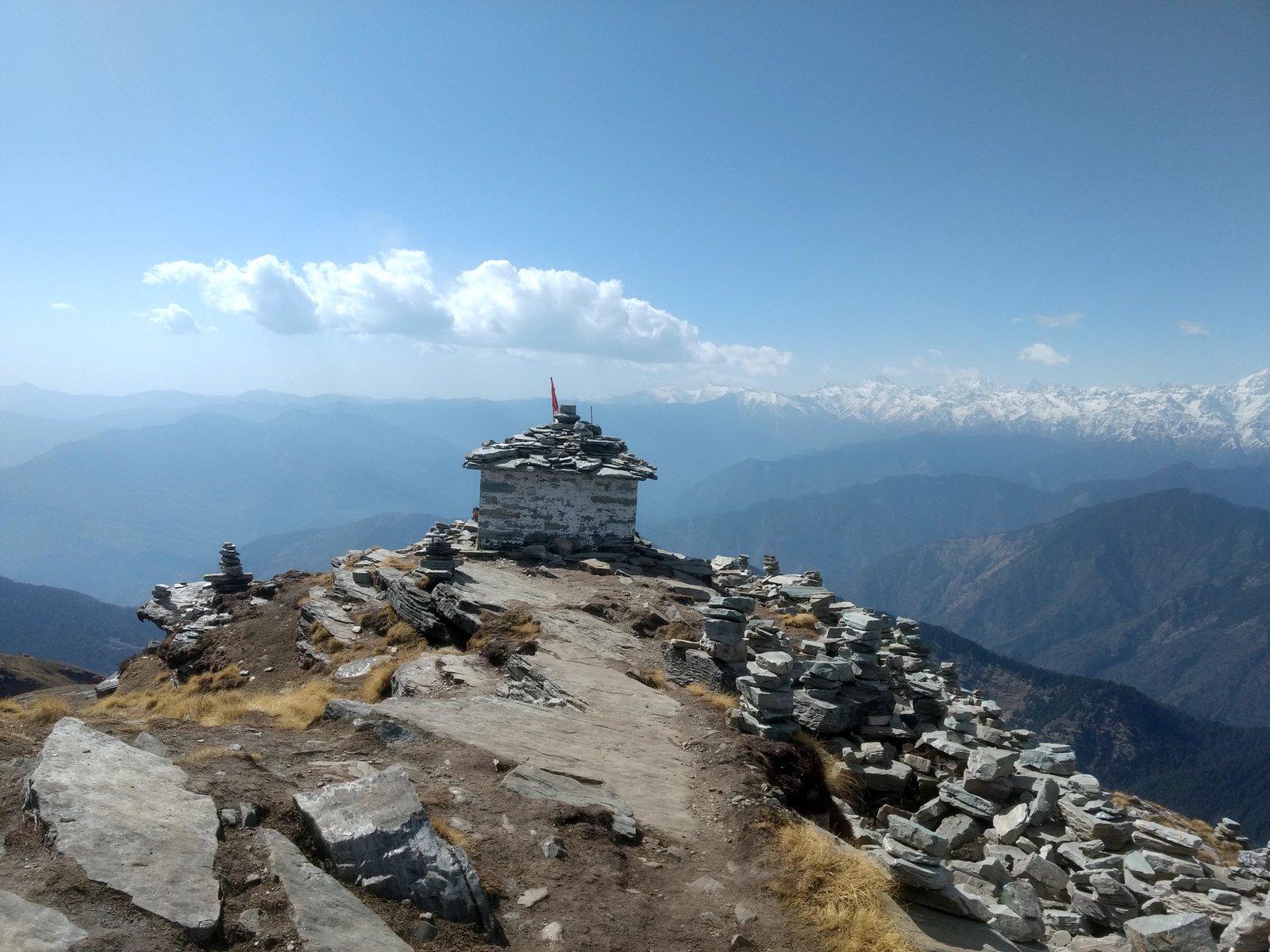
The final climb from Tungnath to Chandrashila is short but steep, and icy in mid-winter, and Day 3 is a long 16 km. Microspikes come with Trekkaro's Free Trekking Gear. Read Chandrashila in December for the winter detail.
4. Brahmatal: frozen lakes and close views of Trishul
Brahmatal suits beginners who want quieter trails and big mountain faces. It takes 6 days from Rishikesh, covers about 29 km and reaches Brahmatal Top, 3,734 m / 12,250 ft.
Brahmatal is a cold-season trek, run from October to March. From December to February both lakes, Bekaltal and Brahmatal, freeze over, the oak forest fills with snow, and from Jhandi Top and Brahmatal Top, Trishul and Nanda Ghunti fill the sky. It sees fewer trekkers than Kedarkantha.
The trade-off is that it runs a day longer, and Day 5, 10 km and 7–8 hours from the base camp back to Lohajung, is long on tired legs. Compare the two classics in Kedarkantha vs Brahmatal.
5. Gulabikantha: the quiet one
Gulabikantha suits beginners who want snow without the crowds. It takes 5 days from Dehradun (cab at 6:30 AM from Dehradun Railway Station), covers about 24 km and reaches 3,658 m / 12,000 ft.
Gulabikantha is a wide alpine meadow on the way to Dodital lake, with little footfall. In winter it becomes a snowfield, and the summit view runs a full 360°: Bandarpoonch and Chaukhamba first, then Swargarohini, Black Peak and Draupadi ka Danda along the skyline.

Keep in mind that summit day from Kandola is 14 km and 7–8 hours, and there is less written about the route than about the big-name treks. The full price breakdown is in Gulabikantha trek cost.
6. Kuari Pass: the widest views on an easy-moderate trek
Kuari Pass suits fit beginners who want the most impressive mountains. It takes 6 days, with pickup at Dehradun Railway Station (6:30 AM) or Rishikesh (8:00 AM), covers about 35 km and crosses 3,815 m / 12,516 ft.
The Curzon Trail to Kuari Pass ends with a 180° view of 14 peaks, among them Nanda Devi, Kamet, Chaukhamba and Kedarnath. In March the lower forests bloom with rhododendrons while the top is still in snow.
Remember that it is the longest trek on this list, and the pass day is about 13 km and 8–9 hours. Train for stamina, not just strength; the Kuari Pass difficulty guide has a 6-week plan.
Which one should you pick?
| If this is you | Pick |
|---|---|
| Only 4 days, or trekking with family | Dayara Bugyal |
| You want a summit on your first trek | Kedarkantha, or Chandrashila if you also want a lake and a temple |
| You want quiet trails | Gulabikantha or Brahmatal |
| Views matter more than anything | Kuari Pass or Brahmatal |
| Your dates are in March | Kuari Pass, for snow on top and rhododendrons below |
| Only two days | Nag Tibba: 2 days from Dehradun, Easy, 3,022 m / 9,915 ft, ₹3,825 + 5% GST (see the Nag Tibba guide) |
How to prepare for your first winter trek
You do not need to be an athlete, but you do need about six weeks of steady preparation. Run, cycle, swim or climb stairs for 45 minutes, four to five days a week, and add squats and lunges for your legs. If you can jog 3 km comfortably, you are ready for an easy trek; if you can do 5 km, you are ready for an easy-moderate one.
For winter, layering is everything: a thermal base layer, a fleece, a down or synthetic jacket and a waterproof shell. The full list is in our winter trek packing list. With Trekkaro, Dayara Bugyal, Kedarkantha, Chandrashila, Brahmatal, Gulabikantha and Kuari Pass all come with Free Trekking Gear: Decathlon trekking shoes, a -10°C jacket, poles, gaiters and microspikes. At camp you get -20°C sleeping bags and tents shared by three (men and women separate), so you bring only your personal clothing.
All six treks go above 3,000 m. The Government of Uttarakhand's high-altitude health advisory lists the warning signs to report to your trek leader at once.
See all winter treks and dates
Frequently asked questions
Which is the easiest winter trek in India for a beginner?
Dayara Bugyal is the shortest of these winter treks: 4 days and about 20 km, graded Easy–Moderate. Its long day is Day 3, 10 km to Dayara Top and back. With only two days, Nag Tibba takes 2 days and is graded Easy.
Can a complete beginner do a snow trek in the Himalayas?
Yes. All six treks on this list suit first-timers who prepare for about six weeks. Choose Dayara Bugyal if you are unsure of your fitness, and Kedarkantha if you want a summit.
What is the best month for a beginner winter trek?
December to February gives the most snow. On Kedarkantha the heaviest snowfall comes in January and early February. March is milder and still snowy on top, and on Kuari Pass it adds rhododendrons in the lower forest.
How cold does it get at night on a beginner winter trek?
From December to February, campsite nights on these treks range from -15°C to -2°C, coldest on Kedarkantha and at Brahmatal base camp. Good layers and the -20°C sleeping bag provided at camp keep you warm.
Do I need to buy trekking gear for a winter trek?
Not on these six treks with Trekkaro. Decathlon trekking shoes, a -10°C jacket, trekking poles, gaiters and microspikes come with Free Trekking Gear, with a ₹3,000 refundable deposit and a ₹200 washing charge. You bring your own clothing layers, a backpack and personal items.