Quick answer: For a Himalayan winter trek, choose a hooded, synthetic-fill jacket rated to about -10°C that fits over two fleece layers. Winter camp nights on the Uttarakhand treks range from about -2°C to -15°C, so layer under it. Trekkaro's winter treks include the jacket in the Free Trekking Gear, with SpO2 checked twice a day at every campsite.
How cold does a winter trek get at night?
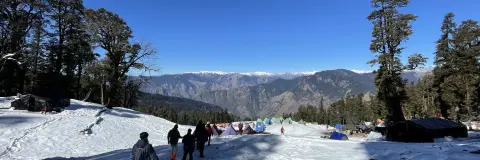
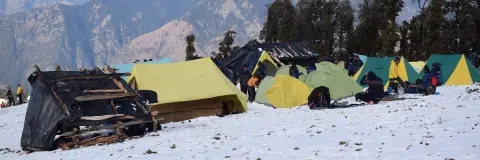
A winter trekking jacket is for the coldest hours: camp evenings, rest stops and the summit morning. So start with how cold those hours get. These are the winter night figures for Trekkaro's winter treks, with the coldest readings our trek leaders have recorded.
| Trek | Winter nights | Coldest reading recorded |
|---|---|---|
| Kedarkantha | -15°C to -10°C (December to February) | -17°C at base camp |
| Brahmatal | -15°C to -5°C at base camp (December to February) | -15°C at base camp |
| Kuari Pass | -14°C to -8°C (December to February) | -16°C at Khullara |
| Dayara Bugyal | -10°C to -2°C (December to March) | -16°C at Gui |
| Chopta Chandrashila | -10°C to -6°C (December to February) | - |
| Nag Tibba | -7°C to -2°C at camp (December to February) | - |
Two things follow from this table. On the colder treks, the night falls below the rating of a -10°C jacket, and wind on an open summit makes the morning feel colder still. Our guides to Kedarkantha weather and temperature and Brahmatal weather and temperature give the figures month by month.
What rating should a winter trekking jacket have?
A jacket rated to about -10°C is the right weight for walking and camp on these treks, as long as you wear it over proper layers. A jacket's rating is not the whole answer, because the warmth you feel comes from everything you wear together. That is why we ask you to bring thermals and two fleece or woollen layers to wear under the jacket in winter.
A much heavier jacket is not better on a trek. You walk uphill for hours, and a jacket that is too warm makes you sweat, and damp layers chill you the moment you stop. Walk in your fleece layers and put the jacket on when you stop. For how the layers go together, see our winter trek packing list.
Down or synthetic: which fill works in snow?
For a snow trek, synthetic fill is the safer choice. Down is light and warm when dry, but it collapses when it gets wet, and on a winter trek a jacket gets damp from snow, from tent condensation and from your own sweat. The Quechua SH100 jacket in our Free Trekking Gear has synthetic fill, which keeps 70 to 80% of its warmth when damp.
Whatever the fill, keep the jacket as dry as you can. Shake off snow before you get into the tent, do not sleep with a damp jacket inside your sleeping bag, and carry a waterproof shell to wear over the jacket in snowfall (it is on the Brahmatal packing list).
What else should a winter trekking jacket have?
Beyond the rating and the fill, check these points before you buy, rent or borrow a jacket.
| Feature | What to look for | Why it matters on a winter trek |
|---|---|---|
| Fit over layers | Try it on over a thermal and two fleece layers, with your arms raised and a loaded backpack on. | A jacket that is tight over layers squeezes out the warmth and limits your arms on the climb. |
| Hood | A hood that fits over a woollen cap. | The summit morning brings wind on the open top, and a cap and hood together keep your head warm. |
| Length | A hem that covers your hips. | A short jacket lets cold air in at the waist when you sit on snow at a rest stop. |
| Cuffs and zip | Cuffs that close around gloves, and a zip you can use with gloves on. | You keep your gloves on at the top, so the jacket has to work with them. |
| Outer fabric | A water-repellent outer fabric, with a separate waterproof shell for snowfall. | Snow that settles on the jacket melts from your body heat and soaks in. |
| Packed size | A jacket that compresses into a stuff sack or its own pocket. | It rides in your backpack for most of the walking day. |
| Pockets | Zipped hand pockets on the inside or outside. | A phone and spare batteries drain fast in the cold, and a pocket close to your body keeps them warm. |
When do you wear the jacket on a winter trek?
Put the jacket on as soon as you reach camp and before dusk, and keep it on through the evening. It goes on again at every long rest stop and for the summit morning. The time spent at the top, in the morning wind, is when the jacket, cap and gloves matter most. Keep your cap and gloves on at the top, even for photos.
While you walk uphill, open the zip or take the jacket off before you sweat into it. If you start to shiver and cannot stop, tell your trek leader at once; our guide to hypothermia on a winter trek explains the warning signs.
Do you need to buy a jacket for a winter trek?
Not for Trekkaro's winter treks. The jacket is one of the five items in our Free Trekking Gear: Decathlon Quechua TREK 100 trekking shoes, a Quechua SH100 jacket rated to -10°C, trekking poles, gaiters and microspikes. The jacket alone is worth ₹3,299 and the five items together cost about ₹13,395 to buy. There is no rental fee, only a ₹3,000 refundable deposit and a ₹200 washing charge, plus GST on the washing charge.
You give your jacket size when you book, and the kit is packed and labelled before you arrive. At the gear check before the drive to the trailhead, the jacket is fitted for movement with a loaded pack. You still bring your own thermals, fleece or woollen layers, cap, gloves and socks. The Chadar trek is different: there you bring your own jacket and expedition-grade layers, which are available in Leh, and Trekkaro gives free microspikes and gaiters.
What should you check before you book a winter trek?
Whether you need to buy a jacket depends on what the trek fee covers. Ask these questions before you pay; the right-hand column gives Trekkaro's answers on its winter treks.
| What to check | Why it matters | With Trekkaro |
|---|---|---|
| Does the fee include a winter jacket, trekking shoes, poles, gaiters and microspikes? | Without them you buy or rent a jacket and a snow kit before the trek. | Free Trekking Gear, with a synthetic-fill jacket rated to -10°C. No rental fee; a ₹3,000 refundable deposit and a ₹200 washing charge. Buying the kit costs about ₹13,395. |
| What sleeping bags are given? | Without a bag rated for the camp nights, the jacket ends up doing the sleeping bag's job. | Sleeping bags rated to -20°C on the Uttarakhand winter treks, in tents shared by three. |
| How many times a day is SpO2 checked? | Without regular readings, altitude sickness can be mistaken for tiredness or cold. | SpO2 and pulse twice a day at every campsite. |
| What emergency kit travels with the group? | Without oxygen and a stretcher on the trail, a sick trekker waits for a team from the road. | One oxygen cylinder, one stretcher and a first-aid kit with every batch. Trek leaders are trained in wilderness first aid. |
| How many trekkers per trek leader or guide? | With too few leaders, a trekker who is getting cold is noticed late. | Up to 20 trekkers per batch, one trek leader or guide for every 8. |
| What does the fee include? | Without a written list, extras appear later. | Stays, tents, pure vegetarian meals, permits and the gear kit. On Kedarkantha, for example, the fee is ₹9,000 per person plus 5% GST (₹9,450 with GST). |
| What happens if you cancel? | Without clear terms you may lose the whole fee. | 70% back at 30 or more days, 50% at 15 to 29 days, or a 100% TrekCash voucher, a free reschedule or a transfer up to 8 days before. |
| Can you pay in parts? | Without EMI the whole fee is due at once. | EMI starts at ₹463 a month. |
Check the district forecast on the India Meteorological Department's Dehradun centre in the days before you travel, so you know what the nights will bring.
See the Free Trekking Gear | Gaiters for trekking | Shoes for snow trekking
Frequently asked questions
Which jacket should I wear on a winter trek in the Himalayas?
A hooded, synthetic-fill jacket rated to about -10°C, worn over a thermal and two fleece or woollen layers, suits the Uttarakhand winter treks. Synthetic fill holds its warmth better when damp, while down collapses when wet.
Is a -10°C jacket enough for Kedarkantha?
Yes, when you wear it over layers. Kedarkantha winter nights fall to -15°C to -10°C, so bring thermals and two fleece or woollen layers to wear under the jacket.
Should I buy a down jacket or a synthetic jacket for trekking?
For snow treks, synthetic is the safer choice, because a jacket gets damp from snow and sweat and the synthetic fill in our Quechua SH100 keeps 70 to 80% of its warmth when damp. Down is warmer for its weight only while it stays dry.
Do I need my own jacket for the Chadar trek?
Yes. The Chadar trek does not include the jacket, so you bring your own jacket and expedition-grade layers, which are available in Leh. Trekkaro gives free microspikes and gaiters.
What should I look for when choosing a company for a winter trek?
Check whether the fee includes a winter jacket, shoes, poles, gaiters and microspikes, the sleeping bag rating, how many times a day SpO2 is checked, the emergency kit, the trekker-to-leader ratio, what the fee covers, the cancellation terms and EMI.