Quick answer: Nag Tibba is a 2-day, 16 km trek to a 3,022 m (9,915 ft) summit in Tehri Garhwal, Uttarakhand, starting from Pantwari village about 85–90 km beyond Mussoorie. It is graded Easy, runs from September to June, carries snow from late December to February, and costs ₹3,825 + 5% GST with Trekkaro, Free Trekking Gear included. Leave Dehradun on Saturday morning and you are back by Sunday evening with a Himalayan summit behind you.
This guide covers everything you need before you book: the route, the two days in detail, the best month for what you want (snow, rhododendrons or clear views), how hard it is, what it costs, what to pack and how to reach Pantwari from Delhi or Dehradun. The detail for each topic lives on the Nag Tibba trek page and in the linked articles.
Nag Tibba trek at a glance
| Region | Jaunpur area, Tehri Garhwal, Uttarakhand (beyond Mussoorie) |
| Duration | 2 days, Dehradun to Dehradun |
| Summit | 3,022 m / 9,915 ft, the highest point of the Nag Tibba range |
| Start and end | Pantwari village, 1,400 m |
| Camp | Forest clearing near the Nag Devta temple, about 2,300 m / 7,550 ft |
| Distance | About 16 km on foot (5 km on Day 1, 11 km on Day 2) |
| Grade | Easy |
| Season | September to June (no batches in July and August) |
| Snow | Late December to February, into March after a heavy winter |
| Minimum age | 9, with a parent or guardian under 18 |
| Batch size | 6 to 20 trekkers, never more than 20 |
| Price | ₹3,825 + 5% GST (list price ₹4,250), Free Trekking Gear included |
Why Nag Tibba is the classic weekend trek
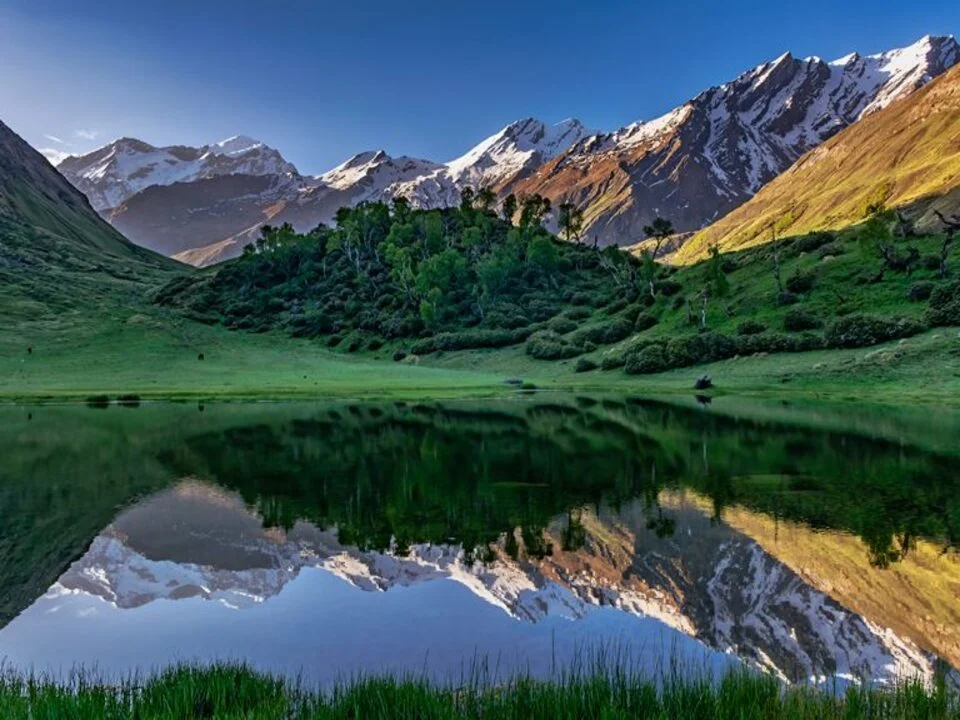
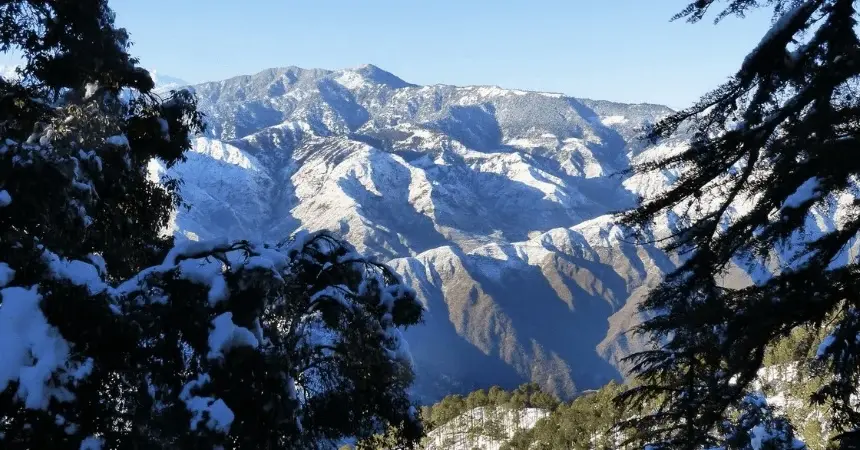
Nag Tibba, the ‘Serpent’s Peak’, is the highest point of the Nag Tibba range in the Garhwal foothills. The trail climbs from the stone and slate-roofed houses of Pantwari through terraced fields of wheat, potatoes and mustard into a forest of oak, rhododendron and deodar, past the small Nag Devta temple, and out onto an open summit ridge. From the top, Bandarpoonch, Swargarohini, Kala Nag (Black Peak) and the Gangotri group line the horizon, with the Kedarnath peaks beyond on very clear mornings.
What makes it special is the gap between where you sleep and what you wake up for. The camp sits in a forest clearing with no view of the summit. It is only the next morning, after more than 700 m of climbing by headlamp, that the mountains appear, and they appear all together. You have climbed more than 1,600 m since Pantwari, and by evening you are back in Dehradun. Short enough to fit between one working week and the next, hard enough to feel like a real mountain.
Day-by-day itinerary
Day 1: Dehradun to Pantwari, trek to the Nag Devta camp
88 km drive (about 4 hours) + 5 km trek (3–4 hours) | 1,400 m to 2,300 m | Night in tents
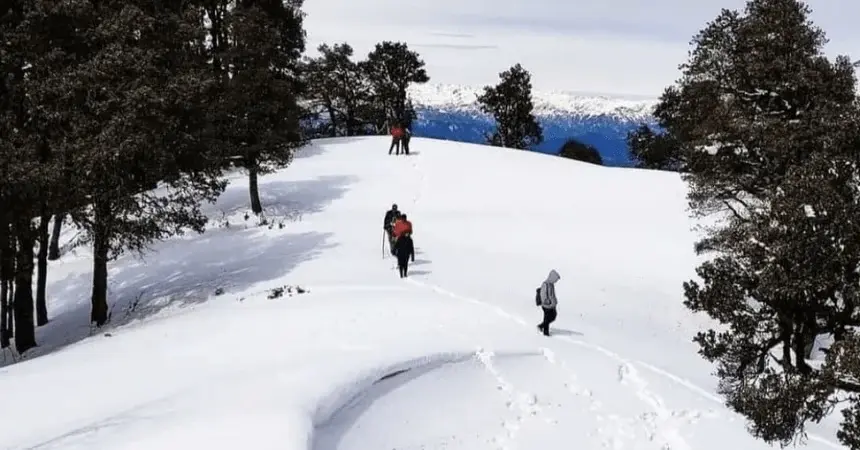
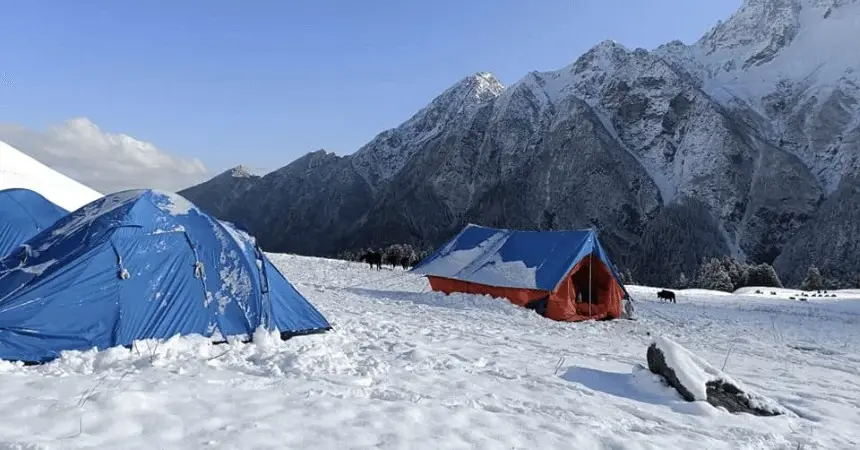
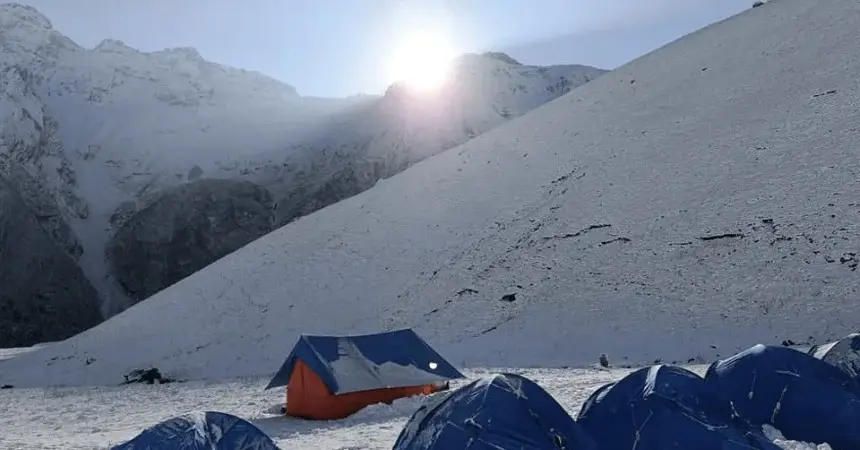
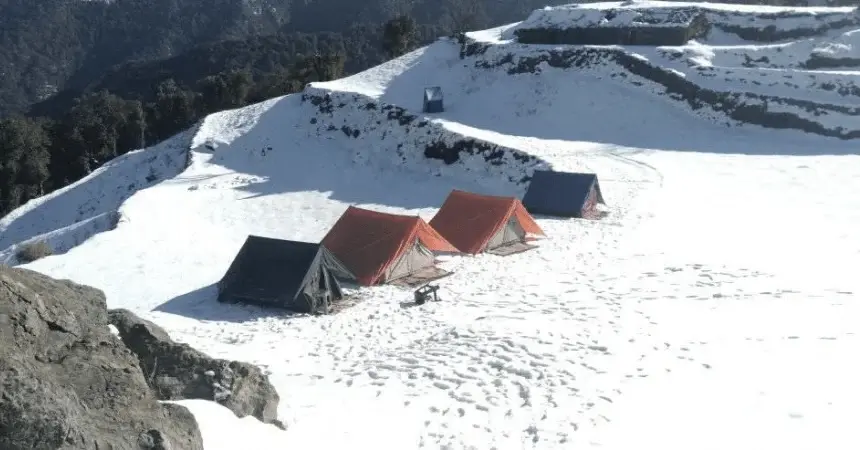
Be at the meeting point in Dehradun by 6:30 am so the group leaves before the Mussoorie traffic builds. The road climbs out of the Doon valley to Mussoorie, passes Kempty Falls and drops into the Aglar river valley to Pantwari. After lunch and a briefing, the walk begins on a wide village path between fields and hamlets. The fields give way to oak and rhododendron, then deodar; the gradient is steady rather than steep, but it rarely lets up. The campsite is a forest clearing close to the Nag Devta temple. Evenings are cold in every season and well below freezing in winter.
Day 2: Summit climb, descend to Pantwari, drive to Dehradun
11 km trek (6–8 hours) + 88 km drive (4–5 hours) | 2,300 m to 3,022 m to 1,400 m | Trek ends in Dehradun by evening
Summit day begins before sunrise, at 5 or 6 am, with headlamps on. The trail passes the temple, hung with bells and offerings, and climbs steeply through dense oak forest. From December to February this section is under snow; your trek leader helps you fit microspikes and gaiters from the Free Trekking Gear before the steep part. The forest thins and then opens all at once onto the summit. After the views, you return to camp for breakfast, pack up and begin the long descent to Pantwari, which is harder on the knees than the climb: walk slowly and use your poles. After lunch at Pantwari the group drives back through Mussoorie to Dehradun, arriving by evening. Book your onward travel for late night or the next morning.
Best time for the Nag Tibba trek
The trek runs from September to June, and because the whole trek fits into a weekend, the month you choose shapes almost everything about it.
| Months | What you get | Day / night temperature | Best for |
|---|---|---|---|
| December to February | Snow on the upper forest and summit ridge, most reliable in January and February; the steep section above the temple becomes a snow climb | 0°C to 9°C / -7°C to -2°C at camp | A first snow trek, a snowbound summit |
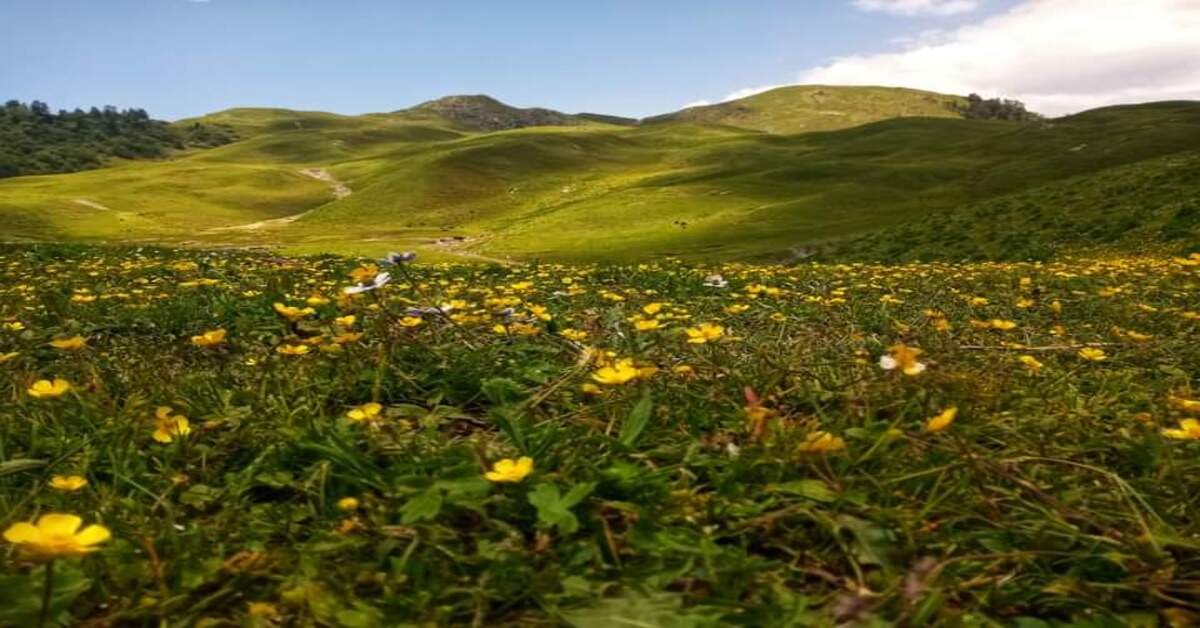
| March to April | Rhododendrons in bloom, snow melting from the lower slopes (lingering into March in some years) | Mild days, cold nights | Rhododendron forest, photographers |
| May to June | Pleasant days and cool nights while the plains bake | 15°C to 25°C / 5°C to 10°C | Families, first-time campers |
| September to November | Clear post-monsoon air; the sharpest views of Bandarpoonch, Swargarohini and the Gangotri group | Pleasant days, cold nights | The summit panorama |
Our pick: January or February for snow, March or April for rhododendrons, May or June for an easy weekend with children, and autumn for the clearest views. Trekkaro runs Nag Tibba every Saturday from mid-October to June, plus 24–25 December and 31 December–1 January batches. See treks in December and treks in January for the snow season across all our treks.
How difficult is Nag Tibba?
Nag Tibba is graded Easy, and it is one of the best first treks near Delhi: a real summit in two days, with no technical sections and no altitude sickness risk to speak of at 3,022 m. That said, it is not a stroll. Day 1 is a steady 5 km climb of 3–4 hours. Day 2 is the hard day: an early 700 m summit climb followed by a 1,600 m descent, about 11 km and 6–8 hours on foot, with a steep forest section that lies under snow in winter.
Prepare for four to six weeks: brisk walks or jogging, stairs or uphill walking, and squats and lunges for the descent. By the trek you should be able to jog 5 km in under 40 minutes and walk 6–8 hours with breaks. Children aged 9 and above who walk regularly can join with a parent or guardian; trekkers above 60 need a doctor’s fitness certificate, and an ECG or TMT report is recommended. Take the free 2-minute test at Am I Ready? if you are unsure.
Nag Tibba trek cost
| Trek fee | ₹3,825 + 5% GST = ₹4,016 per person (list price ₹4,250) |
| EMI | From about ₹197/month on a 24-month card EMI |
| Included | One night of camping in 3-person tents, all meals from Day 1 lunch to Day 2 lunch, forest permits and camping fees, tents, sleeping bags and mats, trek leader, local guide and support staff, first aid and oximeter checks, and Free Trekking Gear |
| Free Trekking Gear | Decathlon trekking shoes, -10°C jacket, trekking poles, gaiters and microspikes: no rental fee, ₹3,000 refundable deposit + ₹200 washing charge |
| Not included | Transport: Trekkaro helps the group book shared cabs from Dehradun Railway Station to Pantwari and back, paid directly to the driver and split among trekkers; your trek coordinator confirms the fare. Meals on the drive. Travel insurance (mandatory). |
| Add-ons | Backpack offloading ₹800 + 5% GST (up to 9 kg); single tent ₹1,000 + 5% GST |
| Cancellation | See the cancellation policy; it is the same on every Trekkaro trek |
The full breakdown, with the Delhi-to-Delhi total, is in our Nag Tibba trek cost guide.
What to pack
Free Trekking Gear covers the three expensive items: trekking shoes, the -10°C jacket and poles, plus gaiters and microspikes for the snow months. You bring a 30–40 litre backpack, two or three warm layers (a fleece and a thermal set in winter), two quick-dry T-shirts and trek pants, a woollen cap, gloves and two pairs of socks, a rain jacket or poncho, a headlamp for the summit climb, sunglasses and sunscreen, two 1-litre water bottles, a small towel, basic toiletries and your regular medicines. Carry your original government photo ID, a medical certificate signed by a doctor and the signed disclaimer form.
How to reach Pantwari
The trek starts and ends in Dehradun. Transport to Pantwari is not included in the trek fee: we help the group book shared cabs, paid directly to the driver and split among trekkers.
- By train: Dehradun Railway Station has overnight and day trains from Delhi (Nanda Devi Express, Shatabdi, Vande Bharat). Book on IRCTC; arrive by 6:30 am on Saturday or come the night before.
- By bus: ordinary and Volvo buses run from Delhi ISBT Kashmere Gate to Dehradun ISBT in 6–7 hours. An overnight bus puts you in Dehradun before dawn.
- By air: Jolly Grant Airport, Dehradun, is about 25–30 km from the city.
- Dehradun to Pantwari: about 85–90 km via Mussoorie and Kempty Falls, 3.5–5 hours by road.
Plan your return from Dehradun for late night on Sunday or Monday morning. The last ATM is in Dehradun or Mussoorie; Jio and Airtel work at Pantwari and patchily at camp, with little or no signal near the summit.
Five tips from our trek leaders
- Take the overnight train or bus on Friday so you are rested for the 6:30 am start.
- Carry at least 1.5 litres of water on summit day; there is no water on top.
- In winter, fit the microspikes before the steep section above the temple, not after you slip.
- Use your poles on the descent and keep your knees soft; the way down is the hard part.
- Book the Saturday batch two to three weeks ahead for Diwali, Christmas and New Year weekends; batches are capped at 20.
See Nag Tibba dates and book | Nag Tibba trek cost | Benog Tibba, the other 2-day trek from Dehradun | All easy treks | Kedarkantha, the next step up
Frequently asked questions
Can the Nag Tibba trek be done in a single weekend from Delhi?
Yes. Take the Friday overnight train or bus to Dehradun, meet the group at 6:30 am on Saturday, drive to Pantwari and trek to the forest camp, summit on Sunday morning and be back in Dehradun by Sunday evening. An overnight train or bus returns you to Delhi by Monday morning. Trekkaro runs the Nag Tibba trek every Saturday from mid-October to June, with extra batches on 24 December and 31 December.
How much snow is there on the Nag Tibba trek, and in which months?
Snow arrives on the upper forest and summit ridge from late December and is most reliable in January and February, when fresh falls turn the steep section above the Nag Devta temple into a snow climb. After a heavy winter it lingers into March. Microspikes and gaiters come with the Free Trekking Gear, so you do not need to buy or rent anything for the snow.
Is the Nag Tibba trek suitable for complete beginners and children?
Yes. Nag Tibba is graded Easy and is one of the best first treks near Delhi, with no technical sections. Day 2 is long, about 11 km and 6 to 8 hours including the descent, so four to six weeks of walking and stairs make it comfortable. Children aged 9 and above who walk regularly can join with a parent or guardian, and May and June batches are the easiest for families.
What is the total cost of the Nag Tibba trek with Trekkaro?
The trek fee is ₹3,825 + 5% GST, which comes to ₹4,016 per person, with Free Trekking Gear, camping, meals, permits and the trek team included. The shared cab from Dehradun to Pantwari and back is paid separately to the driver and split among the group; your trek coordinator confirms the fare. Backpack offloading is ₹800 and a single tent ₹1,000, each plus 5% GST.
Which peaks can you see from the Nag Tibba summit?
On a clear morning the view runs along the Greater Himalaya: Bandarpoonch and Swargarohini to the north, Kala Nag (Black Peak) and the Gangotri group beside them, and on very clear days the Kedarnath peaks beyond. On the other side the land falls away towards the Doon valley. The clearest views come in the post-monsoon months, from September to November, and on cold, dry winter mornings.
Is there mobile network and an ATM on the Nag Tibba trek?
Jio and Airtel work at Pantwari and patchily at the forest camp, with little or no signal near the summit, so make your calls before you leave the village. There is no ATM at Pantwari; withdraw cash in Dehradun or Mussoorie for the shared cab, tea stops and any extras. Carry your original photo ID and medical certificate in a waterproof pouch.
What is the accommodation like on the Nag Tibba trek?
You spend one night in tents at the Trekkaro campsite in a forest clearing near the Nag Devta temple at about 2,300 m. Tents are shared by three trekkers, with separate dining and toilet tents; sleeping bags and mats are provided. Female trekkers share only with other women, and couples and families get their own tent. A single tent is available for ₹1,000 + 5% GST.