Quick answer: Kedarnath Wildlife Sanctuary covers 975.2 sq km of Rudraprayag and Chamoli districts in Uttarakhand, from 1,160 m to the 7,068 m summit of Chaukhamba, and is home to the endangered Himalayan musk deer. Trekkaro's Deoriatal Chandrashila trek walks its oak, maple and rhododendron forest and climbs to Tungnath (3,680 m) and Chandrashila (3,962 m).
Where is Kedarnath Wildlife Sanctuary, and how big is it?
The Wildlife Institute of India's page on Kedarnath Wildlife Sanctuary places it in Rudraprayag and Chamoli districts, in the upper catchment of the Alaknanda and Mandakini rivers, and calls it one of the largest protected areas in the state. The Ministry of Environment, Forest and Climate Change lists it at 975.2 sq km in its table of wildlife sanctuaries.
That figure makes it the largest of the seven Uttarakhand sanctuaries in the ministry's table, ahead of Askot at 600 sq km. At the other end of the same list is Mussoorie, the 10.82 sq km forest around Benog Tibba covered in our Benog Wildlife Sanctuary guide.
How high does Kedarnath Wildlife Sanctuary go?
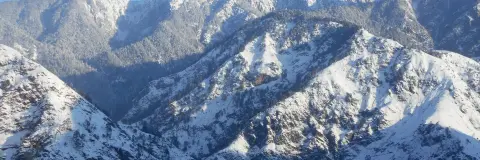
According to the Wildlife Institute of India, the sanctuary runs from 1,160 m to 7,068 m above sea level. It is bordered in the north by three high peaks:
| Peak bordering the north | Height (WII) |
|---|---|
| Chaukhamba | 7,068 m |
| Kedarnath | 6,940 m |
| Mandani | 6,193 m |
The trek reaches only the lower half of that range. Its highest point, Chandrashila at 3,962 m, is a little more than half the height of Chaukhamba, and the institute's own photo caption shows the timberline at Tungnath inside the sanctuary.
What lives in Kedarnath Wildlife Sanctuary?
The Wildlife Institute of India records more than 30 mammal species, 240 bird species, 147 butterfly species, nine snake species and 10 fish species here. The animal that gives the sanctuary its high conservation value is the endangered Himalayan musk deer (Moschus leucogaster).
The plant life is just as rich. The institute counts over 1,100 plant species in five major forest types, from Himalayan moist temperate forest dominated by oaks, through sub-alpine forest, to wide alpine meadows. About 44.4 to 48.8 percent of the sanctuary is forest and 7.7 percent alpine meadow.
On the trek, the bird to look for is the Himalayan monal, the colourful state bird of Uttarakhand; with luck you spot one on Day 3. The Day 2 forest above Sari is alive with the songs of Himalayan birds.
The same institute page names the pressures on this forest: unsustainable harvesting and logging, a growing influx of religious and adventurous tourists that drives up fuelwood demand from dhaba and hotel owners, and frequent flash floods and landslides. Nearly 173 villages lie on the sanctuary's fringes and depend on its resources for their daily needs.
Which part of the sanctuary does the Deoriatal Chandrashila trek cross?
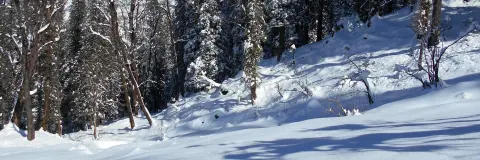
On Day 3, much of the day runs through the dense oak, maple and rhododendron forest of the Kedarnath Wildlife Sanctuary.
| Day | Stretch | Distance and time | Height |
|---|---|---|---|
| 2 | Sari to Deoriatal, through oak, rhododendron and maple | 3 km, 2 to 3 hours | 2,012 m to 2,390 m |
| 3 | Deoriatal to Baniyakund, through the sanctuary forest and Rohini Bugyal | About 16 km, 7 to 8 hours | To 2,610 m |
| 4 | Chopta to Tungnath and Chandrashila, and back | 11 km, 8 to 9 hours | 2,679 m to 3,962 m |
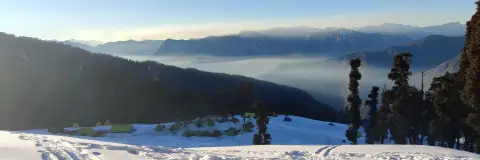
Rohini Bugyal, partway through Day 3, is an open alpine meadow that turns red and pink with rhododendrons in spring and lies under snow in winter. On Day 4 the trail from Chopta climbs about 3 to 3.5 km to Tungnath (the temple committee gives 3 km), then about 1 km more to Chandrashila. The temple itself is covered in the Tungnath temple guide.
Do you need a permit to enter Kedarnath Wildlife Sanctuary?
On Trekkaro's trek, all necessary trekking permits and forest camping fees are included in the fee. Your original photo ID is checked at the forest check posts, so keep it where you can reach it. Foreign nationals pay a flat forest fee of ₹1,000 per person at booking, with no GST, refunded in full if the booking is cancelled before the trek starts.
What is the weather like in Kedarnath Wildlife Sanctuary?
The Wildlife Institute of India gives about 3,000 mm of rain a year, most of it in the monsoon from June to September, and heavy snowfall from December to February in the alpine and temperate zones. For camp temperatures by season, see the Chandrashila trek best time guide.
What does the Deoriatal Chandrashila trek cost?
The fee is ₹8,250 per person plus 5% GST (₹8,663 with GST), for a 5-day trek with about 30 km on foot, starting at Sari and ending at Baniyakund. The drive from Rishikesh to Sari is about 185 km and takes 8 to 9 hours, and the nearest airport, Jolly Grant (DED) at Dehradun, is about 20 to 25 km from Rishikesh. Transport is not included: the shared 5–6 seat cab is paid directly to the driver and split among the trekkers in it, and your trek coordinator confirms the fare.
The fee includes Free Trekking Gear (Decathlon trekking shoes, a -10°C jacket, trekking poles, gaiters and microspikes) against a ₹3,000 refundable deposit and a ₹200 washing charge, along with tents shared by 3 with men and women in separate tents, pure vegetarian meals and the sanctuary permits. The minimum age is 8. Every trekker brings a doctor-signed medical certificate, and travel insurance is mandatory and not included.
See Deoriatal Chandrashila trek dates and book | Chopta travel guide | Deoriatal lake guide
Frequently asked questions
Where is Kedarnath Wildlife Sanctuary?
Kedarnath Wildlife Sanctuary lies in Rudraprayag and Chamoli districts of Uttarakhand, in the upper catchment of the Alaknanda and Mandakini rivers. The Environment Ministry lists it at 975.2 sq km.
Which animal is Kedarnath Wildlife Sanctuary known for?
The Wildlife Institute of India names the endangered Himalayan musk deer as the species that gives the sanctuary its high conservation value. It also records more than 30 mammal species and 240 bird species there.
Is Tungnath inside Kedarnath Wildlife Sanctuary?
Yes. The Wildlife Institute of India shows the timberline at Tungnath inside the sanctuary. The Deoriatal Chandrashila trek reaches Tungnath at 3,680 m on Day 4.
Can you see the Himalayan monal in Kedarnath Wildlife Sanctuary?
There is a chance. With luck you spot one in the sanctuary forest on Day 3, between Deoriatal and Baniyakund.
Do you need a permit for Kedarnath Wildlife Sanctuary?
On Trekkaro's Deoriatal Chandrashila trek all trekking permits and forest camping fees are included in the fee. Carry your original photo ID, which is checked at the forest check posts.