Quick answer: Go in October or November for the clearest views (days 10–15°C, nights around 0°C), December to February for snow (nights -10 to -6°C), and April or May for rhododendrons. We list 48 open batches from 24 October 2026 to 28 February 2027; spring dates are not on the trek page yet.
This guide is for trekkers choosing a month for the Chopta Chandrashila trek. It sets out what each part of the year brings on the route from Sari to Deoriatal, Rohini Bugyal, Tungnath and the 3,962 m summit, and which months you can book with us right now. The temperatures are the ones printed on our trek page, by season; we do not give made-up figures for single days or camps.
Chandrashila month by month
| Months | Day | Night | Snow | What stands out | Trekkaro batches |
|---|---|---|---|---|---|
| October | 10 to 15°C | Around 0°C | None listed | Clear skies, Chaukhamba reflected in Deoriatal | 3 open: 24, 25 and 31 October |
| November | 10 to 15°C | Around 0°C, colder towards December | None listed | Clear summit views, colder nights | 9 (Diwali and Guru Nanak Jayanti starts included) |
| December | 8 to 14°C | -10 to -6°C | Can reach the higher sections | Snow can begin; Christmas and New Year batches | 17 |
| January | 8 to 14°C | -10 to -6°C | Meadows, forest trail and summit slopes | Full winter trek | 11 |
| February | 8 to 14°C | -10 to -6°C | Meadows, forest trail and summit slopes | Full winter trek | 8 (last start 28 February) |
| March | 13 to 17°C | Around 0°C | Snow cover continues through March | Late-winter snow, warmer days | Not listed yet |
| April | 13 to 17°C | Around 0°C | Patches can stay on the summit | Rhododendrons in bloom | Not listed yet |
| May and June | 18 to 24°C | 3 to 8°C | None given | Rhododendrons in May, warmest nights | Not listed yet |
| July to September | Outside the season the trek page lists | None | |||
Which month gives the clearest views?
October and November. The trek page calls autumn the most dependable time for the Chaukhamba reflection in Deoriatal and for the clearest summit views. From the top you look across Chaukhamba, Kedarnath, Trishul, Bandarpoonch and Nanda Devi, and the page gives December as the earliest month snow can reach the higher sections.
The trade-off is the cold at night. Days are a comfortable 10 to 15°C, but nights fall to around 0°C and get colder towards the end of November. Pack warm layers for the evenings even in October; your Free Trekking Gear includes a -10°C jacket.
November has two holiday weekends this season. Batches start on 7 and 8 November (Diwali) and on 21 and 22 November (Guru Nanak Jayanti).
When is there snow on Chandrashila?
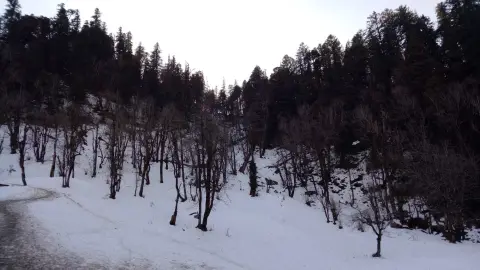
The trek page gives this order: snow can reach the higher sections from December; from January to March it covers the meadows, the forest trail and the summit slopes; and patches can stay on the summit into April. How much snow lies on the trail on a given date depends on that winter's snowfall, so read December as the start of the snow season, not a promise of deep snow.
Winter is the coldest and most demanding time on this trek. Days are 8 to 14°C and nights -10 to -6°C.
On the 16 km Day 3, stop for a short break at regular intervals; its steep descents work the knees. On Day 4, the final 1 km from Tungnath is steep and high: take short steps, breathe steadily and take short, regular pauses. In snow, plant your poles and follow the guide's line; microspikes and gaiters come with your Free Trekking Gear. Coming down, take the steep upper section slowly.
December has the most departures of the season, 17, with daily starts from 19 to 31 December.
Spring and summer: rhododendrons and warmer nights
From March the days warm up to 13 to 17°C while nights stay around 0°C. The trek page calls spring the easiest season for a first Himalayan summit. In April and May, rhododendrons flush red and pink on the forest slopes and at Rohini Bugyal, and patches of snow can stay on the summit into April. May and June bring the warmest weather: 18 to 24°C by day and 3 to 8°C at night.
Our March to June 2027 dates are not on the trek page yet. If spring is your month, check the trek page before you plan leave; you can book only the dates listed there.
Who should pick which season
- First summit, want clear views: October or November.
- Want a snow trek and are fit for a long cold day: January or February.
- Want snow but can only travel at year-end: late December, with daily starts from 19 to 31 December.
- Want flowers and milder nights: April or May, once those dates are listed.
- Not this trek: anyone under 10 years, and anyone planning for July to September, which is outside the trek's season.
Things that do not change with the season
Pickup is at Jumping Heights, Tapovan, Rishikesh, at 07:00 AM on Day 1; the Day 5 cab leaves Baniyakund at 06:30 AM and reaches Tapovan around 05:00 PM. Road meals on Day 1 and Day 5 are not included. Rudraprayag is the last reliable ATM and cards are not accepted on the trail, so carry small notes. Sari is the last stable signal; beyond it, coverage is patchy to non-existent. Drinking water at camp is boiled or treated with chlorine tablets; check with the trek leader before refilling anywhere else.
Carry an original government photo ID and a photocopy in a waterproof pouch; it is checked at forest check posts. Each trekker brings a doctor-signed medical certificate; above 60, good fitness is needed and an ECG or TMT is recommended. Travel insurance covering high-altitude trekking and evacuation is mandatory and not included. No doctor joins the trek: our trek leaders are trained in Wilderness First Aid, and each camp has a first-aid kit, oxygen cylinders and a stretcher. Consult your doctor before the trek and carry any altitude medicine they prescribe, plus your regular medicines.
How to check the weather before your batch
A few days before you leave, look at the district forecasts and warnings from the IMD Meteorological Centre, Dehradun, which covers Uttarakhand.
Above 3,000 m, the Uttarakhand Health Department's advisory for high-altitude travel asks you to rest 5 to 10 minutes for each hour of walking, to descend if you feel unwell and not climb further, and to pack for cold, rain and sun. It also advises no more than 800 to 1,000 m of elevation gain a day. Summit day climbs about 1,352 m from Baniyakund, more than that figure, and you return to sleep at Baniyakund (2,610 m) the same night. If you feel unwell on the climb, stop going up and come down.
What it costs in any month
The fee is the same across the season: ₹8,250 per person + 5% GST = ₹8,662.50, Sari to Baniyakund. The trek page shows EMI from ₹425 a month. It includes meals from Day 1 dinner to Day 4 dinner, the Sari stay, 3-person tents, sleeping bags rated to -20°C, permits and forest camping fees, and Free Trekking Gear (Decathlon trekking shoes, -10°C jacket, trekking poles, gaiters and microspikes) against a ₹3,000 refundable deposit and a ₹200 washing charge (+ GST). Backpack offloading is ₹1,000 + 5% GST and a single tent is ₹2,000 + 5% GST.
Transport is not included in the trek fee: we help the group book shared cabs, paid directly to the driver and split among trekkers. It is about ₹6,500 per 5–6 seat vehicle one way. Each batch takes up to 20 trekkers with one leader or guide for every 8, and booking closes at 5 PM (India time) the day before the start.
If you cancel 30 or more days before departure, you get a 70% refund; 15 to 29 days, 50%; 8 to 14 days, no cash refund. At any point up to 8 days before departure you can take a 100% TrekCash voucher (valid 1 year), a free reschedule (once per booking) or a transfer to another trekker instead of the cash refund. At 7 days or less, or a no-show, there is no refund, voucher, reschedule or transfer.
See Chopta Chandrashila dates and book | Chandrashila trek in December | Where is Chandrashila | Chandrashila distance and height
Frequently asked questions
Is the Chandrashila trek open in October?
Yes. Our open October batches start on 24, 25 and 31 October 2026. Days are 10 to 15°C and nights around 0°C, and the trek page lists December as the month snow can reach the higher sections.
Is January a good time for the Chandrashila trek?
Yes, if you want snow and can handle the cold. Snow covers the meadows, forest trail and summit slopes from January to March, nights are -10 to -6°C, and we have 11 batches in January 2027.
Can I do the Chandrashila trek in the monsoon?
Not with us. July to September is outside the season the trek page lists, and no batches are listed for those months.
When do rhododendrons bloom on the Chandrashila trek?
In April and May, on the forest slopes and at Rohini Bugyal. Our spring 2027 dates are not listed yet, so check the trek page before you plan.
How warm is Chandrashila in May?
The trek page gives 18 to 24°C by day and 3 to 8°C at night for May and June. These are the warmest months of the trek's season.