Quick answer: Govind National Park lies in Uttarkashi district, Uttarakhand. The Environment Ministry lists it at 558.88 sq km and Govind Pashu Vihar Wildlife Sanctuary separately at 485.89 sq km; the Wildlife Institute of India marks the area as important for snow leopard conservation. Trekkaro's Kedarkantha trek climbs into the Govind forest from Sankri (1,950 m) to 3,810 m, permits included.
Where is Govind National Park?
The Wildlife Institute of India's page on Govind National Park places it in Uttarkashi district in the Western Himalaya. Its Rupin and Supin valleys form an important catchment for the Tons, the main tributary of the Yamuna.
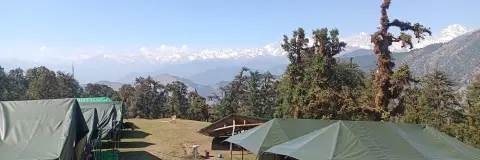
For a trekker the way in is Sankri, the road head for Kedarkantha at 1,950 m (6,400 ft). The drive from Dehradun is about 200 km and takes 8 to 9 hours, and the road, NH-707, follows the Tons River for much of the way. The nearest airport is Jolly Grant (DED), about 25 km from Dehradun city, and the cab leaves from Dehradun Railway Station. Kedarkantha peak rises from the Govind protected area in Uttarkashi district, and the walk from Sankri climbs into that forest.
Is Govind a national park or a wildlife sanctuary?
It is both: two protected areas share the Govind name. The Ministry of Environment, Forest and Climate Change keeps separate lists for each, and the figures below come from those two tables.
| Protected area | Area | Source |
|---|---|---|
| Govind National Park | 558.88 sq km | MoEFCC national parks table |
| Govind Pashu Vihar Wildlife Sanctuary | 485.89 sq km | MoEFCC wildlife sanctuaries table |
The Wildlife Institute of India gives the order in which they came removed: part of the Upper Tons valley was declared a sanctuary first, and the national park was notified later. The same page counts about 47 villages within the protected landscape, where people depend on livestock, traditional farming and forest produce. Locally the two names are joined as "Govind Pashu Vihar National Park".
What wildlife lives in Govind National Park?
The Wildlife Institute of India identifies the area as important for snow leopard conservation. It cites a report of about 20 mammal species and 100 bird species from the sanctuary, and a record of 70 butterfly species from the area.
The same page lists what wears the habitat down: livestock grazing, logging, lopping for fodder and fuelwood, collection of medicinal plants and forest fire. It also notes that nomadic herders bring large flocks into the alpine meadows, which strains that fragile ground.
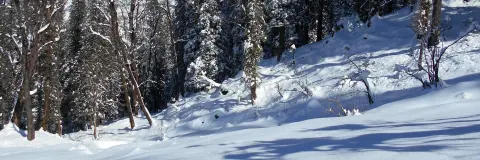
On the Kedarkantha trail, expect signs of wildlife more than sightings. On the Day 2 forest walk the guide points out medicinal plants and animal tracks pressed into the snow, and you hear the occasional whistle of a Himalayan bird.
Which forest zones does the Kedarkantha trek pass through?
The Wildlife Institute of India divides Govind into height bands, each with its own plants. Matching those bands with the Kedarkantha camp heights shows how the forest changes as you climb.
| Zone (WII) | Height band | Example plants (WII's Latin names) | Kedarkantha points at this height |
|---|---|---|---|
| Subtropical | 1,200 to 1,700 m | Chir pine (Pinus roxburghii), toon (Toona ciliata) | – |
| Temperate | 1,700 to 3,500 m | Deodar (Cedrus deodara), rhododendron (Rhododendron arboreum) | Sankri 1,950 m, Juda Ka Talab 2,773 m, Kedarkantha Base Camp 3,429 m |
| Sub-alpine | – | Himalayan yew (Taxus wallichiana), kharsu oak (Quercus semecarpifolia) | – |
| Alpine | Above 3,500 m | Jatamansi (Nardostachys jatamansi), kutki (Picrorhiza kurroa) | Kedarkantha summit 3,810 m |
Every night of the trek is spent in the temperate band, and summit morning is the only time you step into the alpine zone. From the top, Swargarohini, Black Peak, Bandarpunch and Kalanag catch the first light. Day 2 is a trail through dense pine and oak forest that lies under snow in winter, and in March and April rhododendrons bloom crimson and pink along the lower forest sections.
What is the weather like in Govind National Park?
According to the Wildlife Institute of India, the lower parts of the park receive about 1,500 mm of rain a year, most of it in July and August. Winters bring extreme cold, with snow lying for three to four months.
Trekkaro runs Kedarkantha from September to April, with no batches from May to August, which keeps the trek out of the monsoon months the institute describes. For camp temperatures month by month, see the Kedarkantha weather and temperature guide.
Do you need a permit for Govind National Park?
Yes, and on the Kedarkantha trek it is handled for you. Trekkaro arranges the park entry permits and forest checkpost fees, and both are included in the trek fee.
Foreign nationals pay a flat forest fee of ₹1,000 per person at booking, with no GST, refunded in full if the booking is cancelled before the trek starts. Every trekker, Indian or foreign, brings a medical certificate signed by a doctor; the form is in My Bookings. The minimum age for Kedarkantha is 8.
How does the Kedarkantha trek cross the Govind forest?
The trek covers about 20 km on foot over five days, out of Sankri and back on the same side of the mountain, and climbs about 1,860 m from Sankri to the summit. Distances and height gain for each day are in the Kedarkantha distance and height guide.
The village itself, with its stays, network and ATM, is covered in the Sankri village guide.
What does the Kedarkantha trek cost?
The fee is ₹9,000 per person plus 5% GST (₹9,450 with GST). The shared cab between Dehradun and Sankri is charged per person each way and paid directly to the driver, and your trek coordinator confirms the fare. The ₹200 washing charge and the ₹3,000 refundable deposit for the free gear are separate. EMI starts at ₹463 a month.
The fee includes Free Trekking Gear, tents shared by 3 with men and women in separate tents, -20°C sleeping bags, pure vegetarian meals on the trek and the park permits. Travel insurance is mandatory and not part of the fee.
See Kedarkantha trek dates and book | Kedarkantha trek complete guide | Benog Wildlife Sanctuary
Frequently asked questions
Is Govind National Park the same as Govind Wildlife Sanctuary?
No, they are two protected areas with a shared name. The Environment Ministry lists Govind National Park at 558.88 sq km and Govind Pashu Vihar Wildlife Sanctuary at 485.89 sq km, and the Wildlife Institute of India places the area in Uttarkashi district.
Which district is Govind National Park in?
Govind National Park is in Uttarkashi district of Uttarakhand, in the Western Himalaya. Its Rupin and Supin valleys drain into the Tons, the main tributary of the Yamuna.
Is the Kedarkantha trek inside Govind National Park?
Kedarkantha rises from Govind Pashu Vihar, the local name that joins the park and the sanctuary, and the walk from Sankri climbs into that protected forest. Entry permits and forest checkpost fees are included in Trekkaro's fee.
Which animals live in Govind National Park?
The Wildlife Institute of India identifies the park as important for snow leopard conservation. It cites a report of about 20 mammal species and 100 bird species from the sanctuary, and 70 butterfly species have been recorded.
Do you need a permit to visit Govind National Park?
Yes. On Trekkaro's Kedarkantha trek the park entry permits and forest checkpost fees are arranged for you and included in the fee. Foreign nationals also pay a flat forest fee of ₹1,000 per person at booking.