This guide is about the Kedarkantha Trek — dates, price, day-by-day itinerary and booking are on the trek page.
Quick answer: The Kedarkantha trek in March and April ends the season. Snow covers the upper trail and the 3,810 m summit while the lower forest path is clear, and camp nights are -6°C to -2°C. March has clear skies; April can bring afternoon cloud. The fee is ₹9,000 + 5% GST, or ₹11,450 with the return Sankri cab.
This guide is for trekkers who want Kedarkantha with snow on top but without January's cold, and who are choosing between March and April. The trek facts come from our Kedarkantha trek page; Trekkaro runs no Kedarkantha batches from May to August.
What changes on Kedarkantha in March and April?
The trek page files March and April under "Spring Season (Good for Beginners)". Compared with the winter months, four things change.
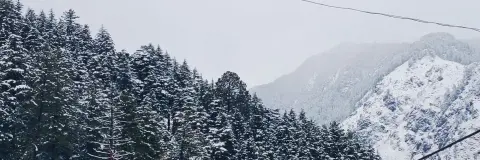
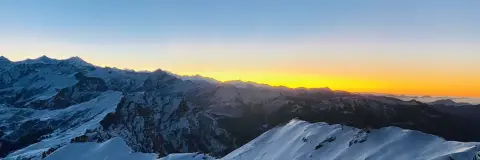
First, the snow moves up the mountain. From December to February heavy snow covers the whole trail and Juda Ka Talab freezes solid; in spring, residual snow still covers the upper trail and the summit, while the lower forest path is clear.
Second, the forest flowers: rhododendrons begin to bloom in crimson and pink along the lower forest sections, which is why the trek page lists spring as the season for wildflower photography.
Third, the cold eases. Daytime temperatures are comfortable, and camp nights are several degrees warmer than in winter (the figures are in the table below).
Fourth, the days get longer. In the trek page's words, "the longer daylight hours make for relaxed pacing on the trail."
The page sums up the season as "an excellent window for trekkers who want some snow experience without the extreme cold", and as a particularly good season for first-time trekkers.
Should you pick March or April?
Both months share the same trek-page conditions: residual snow on the upper trail and summit, a clear lower forest path and rhododendrons in bloom. The page separates them on the sky.
| What to compare | March | April |
|---|---|---|
| Sky | Clear skies | Occasional afternoon cloud build-up |
| Trek page's verdict | "If you want milder temperatures with residual snow, March is ideal." | No separate verdict; it is the last month before the May to August break |
| Snow | Upper trail and summit | Upper trail and summit |
| Days / camp nights | 5°C to 15°C / -6°C to -2°C | 5°C to 15°C / -6°C to -2°C |
Pick March if clear summit views matter most to you. April works just as well if your leave only fits then: summit day begins with a 2:00 AM wake-up call, so you reach the top in the early hours, before the afternoon cloud the trek page mentions for April builds up.
How much warmer is spring than winter?
| Season on the trek page | Day | Night at camp | Trail |
|---|---|---|---|
| Winter (December to February) | -2°C to 8°C | -15°C to -10°C | Deep snow, Juda Ka Talab frozen |
| Spring (March to April) | 5°C to 15°C | -6°C to -2°C | Partial snow on upper sections, clear lower forest trail |
By these figures, spring camp nights are 8 to 9 degrees warmer than winter nights and days are about 7 degrees warmer. Nights still drop below freezing, and the summit climb starts in the dark from base camp at 3,429 m, so warm layers matter in spring as much as in winter. For every month's figures, see our Kedarkantha weather and temperature guide.
Where will you meet snow and flowers on each day?
The route is the same in every month. In spring, the snow and the flowers sit on different days of it:
- Day 1: Dehradun to Sankri (1,950 m), about 200 km and 8–9 hours by road.
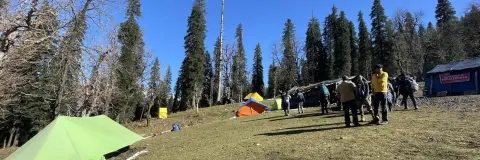
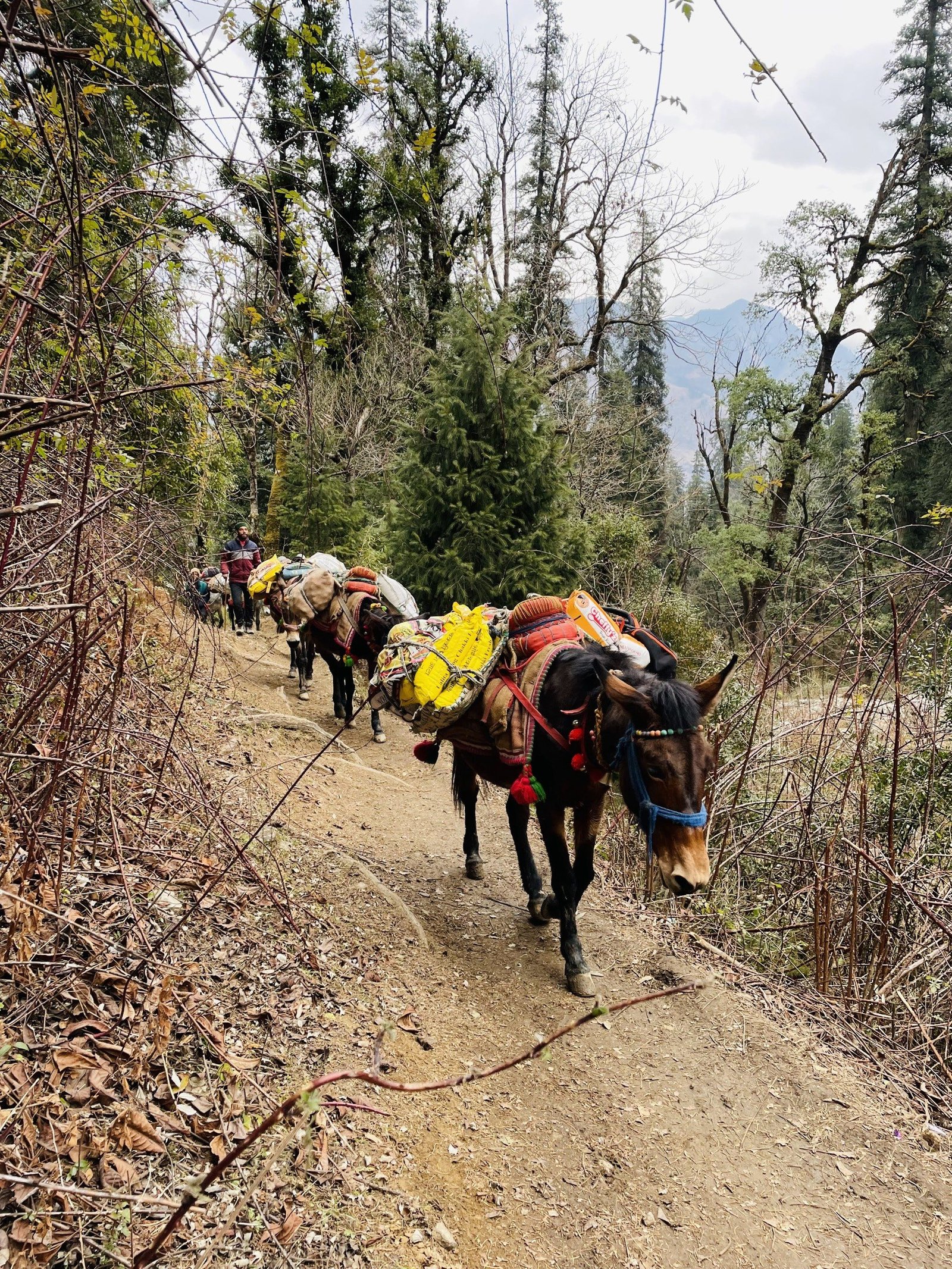
- Day 2: Sankri to Juda Ka Talab (2,773 m), about 4 km and 4–5 hours. This is the lower forest path, clear of snow in spring, where the rhododendrons bloom.
- Day 3: Juda Ka Talab to base camp (3,429 m), about 3 km and 2–3 hours, into the upper sections where the residual snow starts.
- Day 4: summit day, up to 3,810 m on the snow-covered upper trail and down to Juda Ka Talab, about 9 km and 8–9 hours.
- Day 5: about 4 km down the clear forest path to Sankri, then the drive to Dehradun.
The only night above 3,000 m is base camp, reached on Day 3 with a gain of about 656 m. The Uttarakhand Health Department's health advisory, issued for pilgrims going above 3,000 m (10,000 ft) on the Char Dham Yatra, advises no more than 800–1,000 m of elevation gain a day and says to descend if you feel unwell.
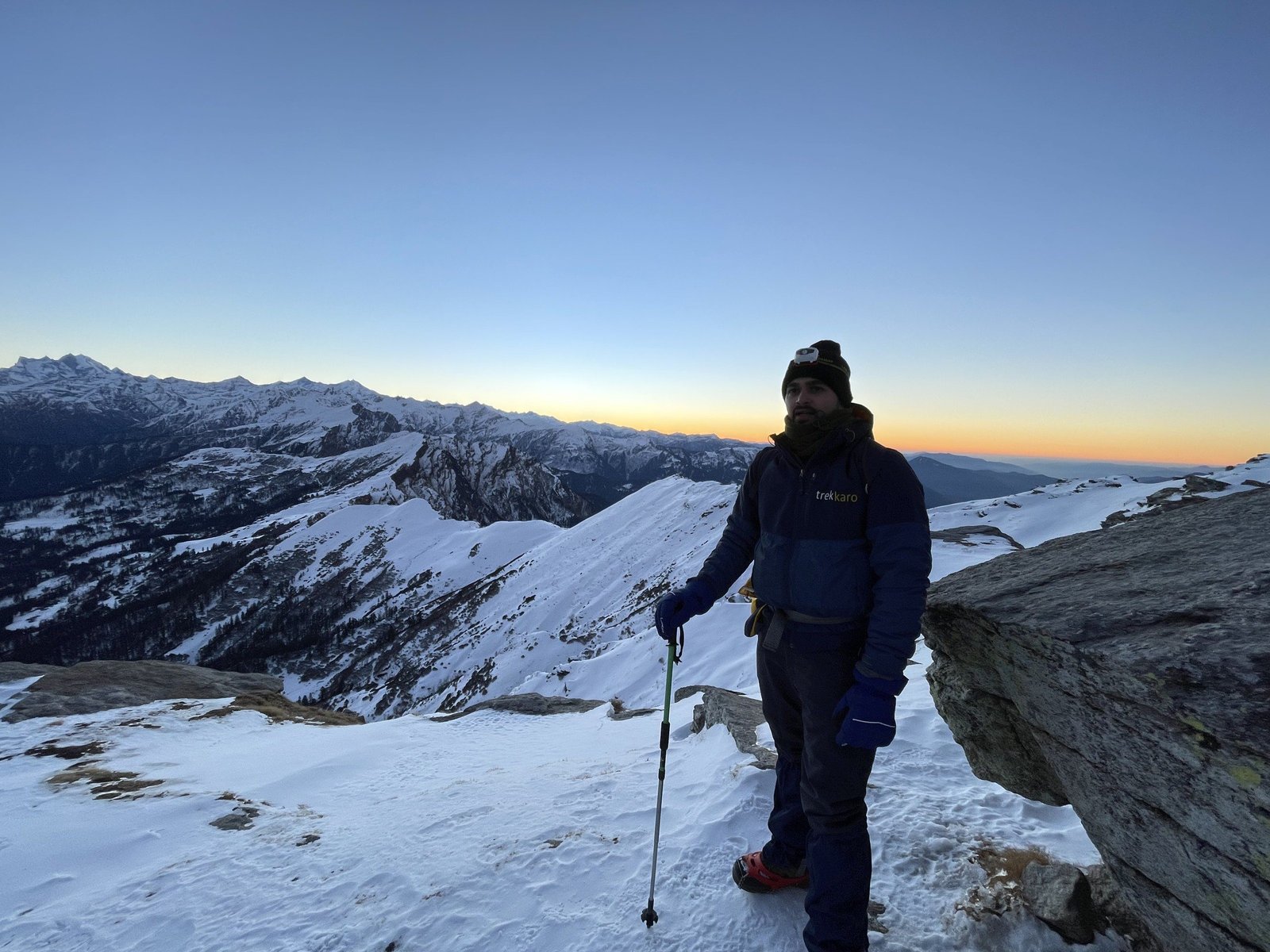
What should you pack for a spring batch?
Our Free Trekking Gear covers the snow items: Decathlon trekking shoes, a -10°C jacket, trekking poles, gaiters and microspikes, against a ₹3,000 refundable deposit and a ₹200 washing charge. Microspikes and gaiters matter in spring because the summit day is still walked on snow.
From the trek page's list, bring:
- 2 sets of thermal inners, merino or synthetic, keeping one set dry for sleeping
- 2 fleece jackets or woollen sweaters (200–300 gsm) for camp and rest stops
- 3–4 pairs of socks, with woollen pairs for camp and night
- A fleece or woollen pair of gloves plus a waterproof outer pair for snow
- UV sunglasses (category 3 or 4) and SPF 50+ sunscreen with lip balm, because snow glare can cause snow blindness
- A headlamp with spare batteries for the pre-dawn summit climb
- Two 1 litre water bottles, one of them insulated
- A 20–30 litre day pack if you offload your main backpack
Sunglasses and sunscreen are the items spring trekkers forget: the snow on the upper trail reflects the sun, and the trek page notes that UV is much stronger at altitude, even on cold days.
Is spring the right season for you?
Spring suits you if you are a first-time trekker who wants snow on the summit without -15°C nights, or if you want flowers on the forest trail below a snow summit. Pick another season if you want deep snow from the forest to the top and a frozen Juda Ka Talab (December to February, with January and early February bringing the heaviest snowfall), or clear trails with first snow only on the far peaks (September to November).
The trek page sets the bar plainly: "If you can walk briskly for 4–5 hours and handle cold-weather camping, Kedarkantha is within your reach." The minimum recommended age is 8, and there is no upper age limit, though trekkers above 60 need good fitness. Our Kedarkantha difficulty and fitness guide has the training detail.
What does a March or April batch cost?
| Item | Amount | Notes |
|---|---|---|
| Trek fee | ₹9,000 + 5% GST = ₹9,450 | Meals from Day 1 dinner to Day 5 breakfast, tents shared by 3 (men and women separate), -20°C sleeping bags |
| Shared cab, Dehradun to Sankri | ₹1,000 per person each way (₹2,000 return) | Leaves Dehradun Railway Station at 6:30 AM; paid directly to the driver |
| Fee plus return cab | ₹11,450 | The all-in figure for the trek |
| Free Trekking Gear | ₹3,000 refundable deposit; ₹200 washing charge | Shoes, -10°C jacket, poles, gaiters, microspikes |
| Backpack offloading (optional) | ₹1,500 + 5% GST | Up to 9 kg, no suitcases, trolleys or duffel bags; tell Trekkaro at least 15 days ahead |
| Single tent (optional) | ₹2,000 + 5% GST | Per tent, for the entire trek |
The trek page shows EMI from ₹463 a month. Transport is not included in the trek fee: we help the group book shared cabs, paid directly to the driver and split among trekkers. Each batch takes up to 20 trekkers, with one trek leader or guide for every 8, and online booking closes at 5 PM (India time) the day before the batch starts. Cancellation terms and the TrekCash voucher options are on the trek page.
Every trekker brings a medical certificate signed by a doctor (the form is in My Bookings), and travel insurance covering high-altitude trekking and helicopter evacuation is mandatory and not part of the fee. Campsites run SpO2, pulse and blood-pressure checks twice a day. Purola has the last reliable ATM before Sankri, and Sankri is the last place with mobile signal, where only Jio works consistently. Before you leave home, check the warnings on the IMD Meteorological Centre, Dehradun page.
See Kedarkantha dates and book | Kedarkantha best time by month | Kedarkantha snowfall time
Frequently asked questions
Is March or April better for Kedarkantha?
The trek page calls March ideal for milder temperatures with residual snow, and March has clear skies. April has the same snow and temperature band but can bring occasional afternoon cloud build-up.
How cold is Kedarkantha at night in March and April?
Camp nights in spring are -6°C to -2°C, against -15°C to -10°C in winter. Days are 5°C to 15°C, but the summit climb starts in the dark, so pack your warmest layers.
Can a first-time trekker do Kedarkantha in spring?
Yes. The trek page calls spring a particularly good season for first-time trekkers, and in spring the summit still has snow while camp nights are -6°C to -2°C instead of -15°C to -10°C. You should be able to walk briskly for 4 to 5 hours and handle cold-weather camping.
Do rhododendrons bloom on the Kedarkantha trail in spring?
Yes. In March and April rhododendrons begin to bloom in crimson and pink along the lower forest sections of the trail. The upper trail and summit still carry snow at the same time.
Is April the last month for Kedarkantha?
Yes. Trekkaro runs Kedarkantha from September to April, with no batches from May to August. A trekker who misses April can come back from September, when the autumn season begins.