This guide is about the Kedarkantha Trek — dates, price, day-by-day itinerary and booking are on the trek page.
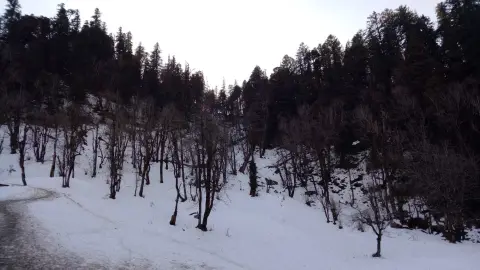
Quick answer: Snow covers the whole Kedarkantha trail from December to February, and January and early February get the heaviest snowfall. First snow shows on the high peaks in October; early snowfall can reach the upper trail in November. In March and April snow stays on the upper trail and the 12,500 ft summit. May and June are near snow-free.
This article is for trekkers who want to time a Kedarkantha batch around snow. It explains when snow falls, how long it stays, and where on the trail it lies, from Sankri at 6,400 ft to the summit. Every condition here comes from our Kedarkantha trek page. We have no dated batch report for this season yet, so read this as the pattern of the season, not as today's snow update.
When does it snow on Kedarkantha? Month by month
The table follows the season section of the trek page. The last column shows how many departures the trek page lists for each month right now.
| Month | Snow on the trail | Batches listed |
|---|---|---|
| Mid-September to October | Trail clear and well defined; first snow on the high peaks from October | October: 3 (from 24 Oct) |
| November | Early snowfall on the upper trail can give a partial snow trek | 9 |
| December | Deep snow throughout; the page calls December slightly milder, with reliable snow and fewer crowds | 31 (one each day) |
| January | Deep snow throughout; heaviest snowfall of the season | 31 (one each day) |
| February | Deep snow throughout; heavy snowfall continues into early February | 28 (one each day) |
| March to April | Snow left on the upper trail and summit; lower forest trail clear; rhododendrons in bloom | Dates not listed yet |
| May to June | Snow gone from all but the very top; green meadows and wildflowers | Dates not listed yet |
| July to August | Trail closed for the monsoon; it reopens on 15 September | None |
So there are two different questions inside “Kedarkantha snowfall time”. Fresh snow falls from December to early February, and January and early February get the heaviest snowfall. Snow on the ground lasts longer: it stays on the upper trail and the summit through March and April, after the lower forest has cleared.
Where on the trail does the snow lie in winter?
In December, January and February the trek page describes snow on each day of the route. This is what you walk on, camp by camp.
- Day 1, Dehradun to Sankri (1,950 m / 6,400 ft): a 7 to 8 hour drive from Dehradun Railway Station at 6:30 AM. The page says snow may dust the roadside even at Sankri, and you see the first snow peaks from the road.
- Day 2, Sankri to Juda Ka Talab (9,100 ft, about 4 km, 4 to 5 hours): the pine and oak forest is laden with snow. Juda Ka Talab, the lake at camp, freezes solid in winter, and you pitch tents beside it.
- Day 3, Juda Ka Talab to base camp (11,250 ft, about 3 km, 2 to 3 hours): the trail leaves the forest for open meadows (bugyals) that carry deep powder in peak winter. From here Swargarohini, Black Peak, Ranglana and Bandarpunch are in view.
- Day 4, summit day (12,500 ft / 3,810 m): a 2:00 AM start by headlamp, with switchbacks through deep snow to reach the top for sunrise. The day covers about 9 km and ends back at Juda Ka Talab. Microspikes are handed out for summit day.
- Day 5, Juda Ka Talab to Sankri (about 4 km), then the drive to Dehradun: an easy descent through the forest, with the shared cab due at Dehradun Railway Station by 6:00 PM.
In March and April the order reverses. The lower forest trail of Days 2 and 5 is clear, and the snow is on the upper sections: the meadows near base camp and the summit slope.
Which month should you pick for snow?
For snow on each day of the trek, book December, January or February; the trek page lists a departure on each day of these three months. For the chance of first snow on clear autumn days, November works, but treat any snow as a bonus. For snow only near the top and warmer camps, wait for March and April dates on the trek page.
Trekkaro tip: if snow is the whole reason for your trip, don't book late October. The page describes a clear trail in October, with snow only on the distant peaks.
What snow changes about the trek
Snow makes Kedarkantha more beautiful and more demanding. The trek page grades it Easy-Moderate and says that without snow it is a gentle hike, while winter snow and the pre-dawn summit climb add challenge. Summit day takes 8 to 9 hours. Nights at camp in winter fall to -10°C to -15°C, so this is cold-weather camping, not a hotel stay.
Who should skip a deep-snow batch: anyone who can't walk briskly for 4 to 5 hours, or who doesn't want to camp at sub-zero temperatures. A March or May batch, when dates are out, is the gentler choice. The minimum recommended age is 8 years.
Gear and safety for snow
On Kedarkantha the Free Trekking Gear (Decathlon trekking shoes, a -10°C jacket, trekking poles, gaiters and microspikes) comes against a ₹3,000 refundable deposit and a ₹200 washing charge (+ GST). Camps have double-wall tents shared by 3 trekkers, men and women in separate tents, and -20°C sleeping bags. SpO2, pulse and blood pressure are checked twice a day at each campsite, and each batch carries a portable oxygen cylinder and an emergency stretcher. No doctor joins the trek; the trek leaders are trained in Wilderness First Aid, so carry your own medicines.
Bring original government photo ID with a photocopy, a medical fitness certificate signed by a doctor, and the signed disclaimer form with emergency contacts. Travel insurance that covers high-altitude trekking and helicopter evacuation is mandatory and not included. Purola has the last reliable ATM and cards are not accepted on the trail, so carry small notes. Sankri is the last place with mobile signal, and only Jio works there consistently; carry a power bank and keep it close to your body in the cold. Water at camp is boiled or treated with chlorine tablets.
Above 3,000 m, the Uttarakhand Health Department's Char Dham health advisory asks travellers to gain no more than 800 to 1,000 m a day, rest 5 to 10 minutes for each hour of walking, and descend if they feel unwell. Ask your doctor about altitude medicine such as Diamox before the trek.
How to check snow before your batch
No one can promise fresh snowfall on a given date. The trek page describes deep snow throughout December, January and February; in November, snow on the upper trail is possible but not certain. In the week before you leave, check the warnings and nowcasts from the IMD Meteorological Centre, Dehradun, and message us from the trek page with any question about your batch.
What a snow batch costs
- Trek fee: ₹9,000 per person + 5% GST = ₹9,450. The trek page shows EMI from ₹463 a month.
- Transport is not included in the trek fee: we help the group book shared cabs, paid directly to the driver and split among trekkers. Dehradun–Sankri is ₹1,000 per person one way (₹2,000 return).
- Add-ons: backpack offloading ₹1,500 + GST for the whole trek (up to 9 kg); single tent ₹2,000 + GST.
- Batches: at most 20 trekkers, with one trek leader or guide for each 8. Online booking closes at 5 PM (India time) the day before departure.
- Cancellation: 70% refund 30 days or more before departure; 50% at 15 to 29 days; no cash refund at 8 to 14 days; nothing at 7 days or less or for a no-show. At any point up to 8 days before departure you can take a 100% TrekCash voucher (valid 1 year), a free reschedule (once per booking) or a transfer to another trekker instead of the cash refund.
See Kedarkantha dates and book | Kedarkantha in January | Kedarkantha weather by month | Kedarkantha best time
Frequently asked questions
Is there snow on Kedarkantha in October?
Little on the trail itself. For mid-September to November the trek page describes a clear, well-defined path with first snow on the peaks from October, and early snowfall can reach the upper trail later in the autumn. Deep snow on the whole trail comes from December.
Which month has the most snow on Kedarkantha?
January and the first half of February. A departure is listed on each day of those months, so you can pick a date inside the heaviest-snow window.
Is there snow on Kedarkantha in March and April?
Yes, on the upper trail and the summit, while the lower forest trail is clear. Dates for March and April are not on the trek page yet.
Does Juda Ka Talab freeze in winter?
Yes, from December to February it freezes solid. Winter nights at camp fall to -10°C to -15°C, so the trek page asks for two 1 L bottles, one of them insulated so your water does not freeze.
Do I need microspikes for Kedarkantha in snow?
Yes, for the summit climb in winter. Microspikes and gaiters are part of the Free Trekking Gear on Kedarkantha, so you don't need to buy them.