Quick answer: Hiking vs trekking comes down to time and nights out. A hike is a few hours and ends the same day. A trek runs two days or more on mountain trails, sleeping in tents, like the 5-day Kedarkantha trek to 3,810 m. Trekkaro's winter treks include Free Trekking Gear and SpO2 checks twice a day at every campsite.
What is the difference between hiking and trekking?
Both mean walking on foot for its own sake, and the two words get mixed up all the time. The useful difference is not the walking itself but what surrounds it: how long you are out, where you sleep, how rough and high the ground is, and how much you have to plan and carry.
| Point | Hiking | Trekking |
|---|---|---|
| How long | A few hours, finished within one day | Two days or more, with the walk split into stages |
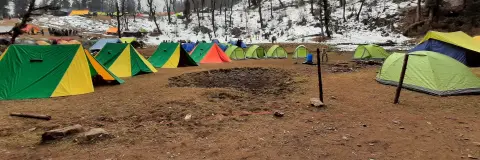
| Where you sleep | At home or in a hotel, back the same evening | In tents at campsites, or in a village guesthouse or homestay at the start and end |
| Ground | Marked paths, forest trails and low hills | Mountain trails that can cross forest, meadows, snow, streams and steep ridges |
| Height | Rarely high enough for altitude to matter | On Himalayan treks you sleep and walk high enough that oxygen levels are checked |
| What you carry | A small bag with water, snacks and a layer | Clothes and kit for several days, in a large backpack or offloaded to a porter or mule |
| Planning | Little beyond the weather and a route | Permits, a trek leader and local guides, food, camps, health checks and gear |
| Footwear | Light, low-cut hiking shoes on dry trails | Waterproof trekking shoes with ankle support, and microspikes and gaiters in snow |
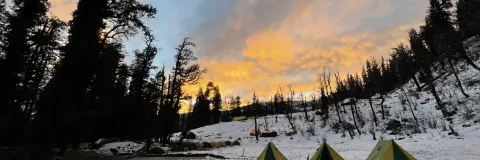
So a morning walk up a hill near your city is a hike. Walking for four days through forest and snow to a summit, sleeping in tents on the way, is a trek. The line between the two is not sharp, and a long day hike can be harder than a short trek, but the table holds for the Himalayan routes most people mean when they say "trek".
What does a trek look like in practice?
The quickest way to see the difference is to look at real treks. Here are seven of Trekkaro's winter treks in Uttarakhand and Ladakh, from the shortest to the longest, with each trek's figures.
| Trek | Days | Walking distance | Highest point | Grade | Starts from |
|---|---|---|---|---|---|
| Nag Tibba | 2 | About 16 km | 3,022 m (9,915 ft) | Easy | Pantwari |
| Dayara Bugyal | 4 | About 20 km | 3,749 m (12,300 ft) | Easy-moderate | Raithal |
| Kedarkantha | 5 | About 20 km | 3,810 m (12,500 ft) | Easy-moderate | Sankri |
| Chopta Chandrashila | 5 | About 30 km | 3,962 m (13,000 ft) | Moderate | Sari, ending at Baniyakund |
| Brahmatal | 6 | About 29 km | 3,734 m (12,250 ft) | Easy-moderate | Lohajung |
| Kuari Pass | 6 | About 35 km | 3,815 m (12,516 ft) | Easy-moderate | Pipalkoti |
| Chadar | 9 | About 60 km | 3,400 m (11,155 ft) | Difficult | Leh |
Even the shortest of these, Nag Tibba, has a night out at a forest camp near the small Nag Devta temple at about 2,300 m, which is what makes it a trek rather than a hike. On the longer treks the distance per day stays modest. Kedarkantha covers about 20 km over 4 trekking days, so the challenge is the height, the cold and the snow, not the kilometres.
Is a trek harder than a hike?
Not always, but it asks for different things. A hike tests your legs for a few hours. A trek tests how you recover overnight, how you cope with cold camps, and how your body handles height day after day. The grades in the table above show the range: Nag Tibba is graded easy, while Chadar, nine days on a frozen river in Ladakh, is graded difficult.
Altitude is the part a hike does not prepare you for. On Trekkaro's batches, SpO2 and pulse are checked twice a day at every campsite, and on Kedarkantha and Brahmatal blood pressure is checked too. One portable oxygen cylinder, one stretcher and a first-aid kit travel with every batch, and the trek leaders are trained in wilderness first aid. Every trekker also brings a medical certificate signed by a doctor; our guide to the medical certificate for trekking explains what it needs.
For fitness on Kedarkantha the bar is clear: if you can walk briskly for 4 to 5 hours, you can do it, and you should train for about six weeks before the trek with running, cycling or swimming. Regular hikes are good training for a trek, because they get your legs used to climbing and descending on uneven ground.
What gear changes when a hike becomes a trek?
On a day hike in dry weather, comfortable shoes, water and a light layer are enough. On a winter trek the list grows, because you walk on snow and spend nights below freezing.
- Shoes need to be waterproof, with ankle support and a sole that grips on snow and wet rock. Our comparison of trekking shoes vs hiking shoes goes through the differences.
- Microspikes strap over the shoes for grip on packed snow and ice, and gaiters keep snow out from above.
- Trekking poles take load off your knees on long descents; our guide on how to use trekking poles covers technique.
- A warm jacket for camp, plus thermals and fleece layers under it.
- A sleeping bag for sub-zero nights. Trekkaro gives sleeping bags rated to -20°C on its Uttarakhand winter treks, in tents shared by three, with men and women in separate tents.
The good news is that most of the costly items come with the trek. Trekkaro's Free Trekking Gear on its winter treks in Uttarakhand includes Decathlon trekking shoes, a jacket rated to -10°C, trekking poles, gaiters and microspikes. There is no rental fee, only a ₹3,000 refundable deposit and a ₹200 washing charge, and buying the same five items costs about ₹13,395. On Chadar the full kit is not included; Trekkaro gives free microspikes and gaiters there instead.
Should you start with a hike or a trek?
If you have never walked in the hills, start with a few day hikes near home. They show you how your knees feel on descents and how your shoes behave over several hours. Then pick a short trek. Nag Tibba, at two days, is the closest thing to a long hike with one night out, and its minimum age is 9. Dayara Bugyal, at four days from Dehradun to Dehradun, adds a summit day in snow during winter.
If you are already fit and hike regularly, a 5-day trek like Kedarkantha is a sensible first Himalayan trek. Our list of the best winter treks in India for beginners compares several of them side by side, and our first Himalayan trek guide walks through training, gear and booking step by step. Winter weather on these treks changes fast, so check the forecast for the trek's district on the India Meteorological Department's Dehradun centre before you go.
What should you check before you book your first trek?
A hike needs little more than a route. A trek is something you book, so compare what each option gives you. The right-hand column shows what comes with a Trekkaro winter batch.
| What to check | Why it matters | With Trekkaro |
|---|---|---|
| Are trekking shoes, a jacket, poles, gaiters and microspikes in the fee? | Without them you buy or rent a full snow kit before your first trek, for a few days of use. | Yes, Free Trekking Gear on the Uttarakhand winter treks, with a ₹3,000 refundable deposit and a ₹200 washing charge. |
| How many times a day is your oxygen level checked? | Without regular readings, a first-timer cannot tell altitude sickness from tiredness. | SpO2 and pulse twice a day at every campsite. |
| What emergency kit walks with the group? | Without oxygen and a stretcher on the trail, help for a sick trekker has to come up from the road. | One oxygen cylinder, one stretcher and a first-aid kit with every batch. |
| How many trekkers does each leader look after? | With too few leaders, a slow first-timer ends up alone at the back. | Up to 20 trekkers per batch, one trek leader or guide for every 8. |
| What does the fee cover? | Without a written list, stays, meals or permits can turn into extras. | Stays, tents, pure vegetarian meals, permits and the gear kit. On Kedarkantha, for example, the fee is ₹9,000 per person plus 5% GST (₹9,450 with GST). |
| What if you have to cancel? | Without clear terms, a change of plan can cost the whole fee. | 70% back at 30 or more days, 50% at 15 to 29 days and no cash refund from 14 days; up to 8 days before, a 100% TrekCash voucher, a free reschedule or a transfer instead. |
| Can you pay in instalments? | Without EMI the full fee is due when you book. | EMI starts at ₹463 a month. |
See Kedarkantha Trek dates and book | Best winter treks for beginners | First Himalayan trek guide
Frequently asked questions
Is trekking the same as hiking?
No. Hiking is a walk of a few hours that ends the same day. Trekking runs over two days or more on mountain trails, with nights in tents or village stays and more planning and gear.
Which is harder, hiking or trekking?
A trek asks more of you over several days: recovery overnight, cold camps and altitude. A long, steep day hike can still be harder than an easy trek like the 2-day Nag Tibba.
Can a beginner go trekking without hiking first?
Yes, on an easy or easy-moderate trek, if you train for about six weeks first. A few day hikes before the trek help you test your shoes and get used to descents.
Is a 2-day walk with one night out a trek or a hike?
It is a trek, because you spend a night out on the trail. Nag Tibba is an example: two days, about 16 km, with a camp at about 2,300 m.
What should I look for when choosing a company for a winter trek?
Check whether the fee includes shoes, a jacket, poles, gaiters and microspikes, and how many times a day SpO2 is checked. Then compare the oxygen cylinder and stretcher, the 1:8 leader ratio, what the fee covers, the cancellation terms and EMI.