This guide is about the Kuari Pass Trek — dates, price, day-by-day itinerary and booking are on the trek page.
Quick answer: In the Kuari Pass vs Pangarchulla choice, Kuari Pass is the 6-day, 35 km Easy–Moderate trek to a 3,815 m (12,516 ft) pass, open to first-timers from age 8, from October to April. Pangarchulla is a 7-day, 45 km Difficult climb to a 4,593 m (15,069 ft) summit for experienced trekkers aged 14 and above. They share two camps.
The two treks share a trail, so trekkers choosing between them are really choosing how far up that trail to go. The trek facts in this comparison come from our Kuari Pass and Pangarchulla Peak trek pages.
How are Kuari Pass and Pangarchulla connected?
They start from different road heads and then join. Kuari Pass trekkers drive from Pipalkoti to Dhak village (2,050 m) and walk 6 km to Gulling. Pangarchulla trekkers drive about 12 km from Joshimath to the Tugasi road head (about 2,100 m) and walk 5 km to Gulling. From there both treks use the same two camps: Gulling at 2,900 m and Khullara at 3,350 m.
The difference is what happens above Khullara. On Kuari Pass, the 13 km round trip to the pass and back is the high point of the trek. On Pangarchulla, the same walk to Kuari Pass is Day 4, an acclimatisation day, and the next day is the summit climb to 4,593 m. The Kuari Pass page calls Pangarchulla "a 15,069 ft summit on the same trail" and "your next step after Kuari Pass".
How do the two treks compare side by side?
| What to compare | Kuari Pass | Pangarchulla Peak |
|---|---|---|
| Grade | Easy–Moderate | Difficult; not suitable as a first trek |
| Duration | 6 days, Pipalkoti to Pipalkoti (Day 1 and Day 6 are the drives from and to Rishikesh) | 7 days, with nights in Joshimath on Day 1 and Day 6 (Day 1 and Day 7 are the drives from and to Rishikesh) |
| Distance on foot | About 35 km | About 45 km |
| Highest point | Kuari Pass, 3,815 m (12,516 ft) | Pangarchulla summit, 4,593 m (15,069 ft) |
| Highest camp | Khullara, 3,350 m | Khullara, 3,350 m |
| Hardest day | Day 4: 13 km round trip, 8–9 hours | Day 5: 14 km, 11–14 hours, starting between midnight and 3 AM |
| Season | October to April; December to March for snow | March to May and October to November |
| Minimum age | 8 | 14, with prior trek experience |
| Preparation the page recommends | At least six weeks | 4–6 weeks of steady preparation, on top of a moderate high-altitude trek already done |
| Trek fee | ₹9,400 + 5% GST (₹9,870) | ₹11,433 + 5% GST |
What does Pangarchulla's summit day ask that Kuari Pass doesn't?
Pass day on Kuari Pass is long but not technical. You leave Khullara early, carrying all the water you will need, and go prepared for snow, icy streams and strong wind. The Kuari Pass page says that on a snow-covered trail the effort is "moderate to strenuous, and it tests your stamina more than your skill." You are back at Khullara the same evening.
Pangarchulla's summit day is a different scale. It starts between midnight and 3 AM depending on conditions, covers 14 km and takes 11 to 14 hours. Above Kuari Pass's height the route climbs snow slopes, then "crosses steep snow and boulder fields to an exposed final ridge." The team fixes ropes and uses ice axes where needed, and the trek leader sets a firm turn-around time. Microspikes and gaiters are worn on the steep snow.
That day is why the two pages set such different entry rules. Kuari Pass needs "no technical climbing or previous high-altitude experience", only a good base of fitness and comfort with walking a full day. Pangarchulla asks that you have completed at least one moderate high-altitude trek, are very fit, can jog 5 km in about 30 minutes and can walk 6 to 9 hours a day.
How fast does each trek gain height?
Both treks sleep a night at Gulling (2,900 m) and then stay at Khullara (3,350 m): two nights on Kuari Pass, three on Pangarchulla. The Uttarakhand Health Department's health advisory, issued for pilgrims going above 3,000 m (10,000 ft) on the Char Dham Yatra, advises no more than 800–1,000 m of elevation gain a day and says to descend if you feel unwell. Pangarchulla builds in an acclimatisation day, walking to Kuari Pass and back on Day 4 before the summit, and on Day 5 you climb from Khullara to 4,593 m and return to Khullara to sleep.
Which months suit each trek?
The seasons overlap in four months and part ways in the rest. From the two trek pages:
| Months | Kuari Pass | Pangarchulla Peak |
|---|---|---|
| December to February | Runs; its coldest snow months, with days of 8°C to 14°C and nights of -14°C to -8°C (the snow window runs to March) | No batches |
| March and April | Runs; days of 13°C to 17°C, nights around 0°C | Runs; the summit slopes lie under snow, with days of 10°C to 15°C and nights of -5°C to 0°C |
| May | No batches | Runs |
| October and November | Runs; days of 10°C to 15°C, nights around 0°C | Runs; its colder window, with the summit mostly rock with hard snow patches, days of 5°C to 15°C and nights of -5°C or lower |
If you want a winter snow trek, the choice is made for you: Kuari Pass. If your dates fall in March, April, October or November, the choice comes down to experience and fitness, not the calendar. Before any batch, check the warnings on the IMD Meteorological Centre, Dehradun page.
Which trek should you pick?
Pick Kuari Pass if this is your first Himalayan trek, if you are trekking with a child aged 8 or above, or if you want snow in winter. The Kuari Pass page recommends it for a first Himalayan trek, "provided you are comfortable walking for a full day", and the view from the pass takes in fourteen peaks, among them Nanda Devi, Kamet, Chaukhamba, Kedarnath, Dronagiri and Trishul. A review shown on the trek page, from Nikhil:
"Views on top and during the track are amazing. Trek in total was completely amazing."
Pick Pangarchulla if you have already done a moderate high-altitude trek, are 14 or older and want a summit rather than a pass. From the top, the Pangarchulla page says, the view stretches across Nanda Devi, Dronagiri, Hathi Parbat, Gauri Parbat, Kamet, Changabang and the peaks around Mana.
The two also work as a sequence, which is how the Kuari Pass page presents them: Kuari Pass shows you the trail to Khullara and how your body handles 3,350 m, and Pangarchulla then adds the summit. Our Kuari Pass difficulty and six-week fitness plan is the place to start.
What do the two treks cost?
| Item | Kuari Pass | Pangarchulla Peak |
|---|---|---|
| Trek fee | ₹9,400 + 5% GST = ₹9,870 | ₹11,433 + 5% GST |
| EMI on the trek page | From ₹484 a month | From ₹588 a month |
| Backpack offloading (optional) | ₹1,800 + 5% GST | ₹2,400 + 5% GST |
| Single tent (optional) | ₹2,000 + 5% GST | ₹2,000 + 5% GST |
| Free Trekking Gear | ₹3,000 refundable deposit + ₹200 washing charge | ₹3,000 refundable deposit + ₹200 washing charge |
| Getting to the start | Shared cab from Dehradun Railway Station (6:30 AM) or Rishikesh (8:00 AM) to Pipalkoti; Rishikesh to Pipalkoti is about 215 km and 9 hours. The cab costs about ₹6,500 per 5–6 seat vehicle one way, split | Shared cab from Rishikesh to Joshimath early in the morning, about 255 km and 9–10 hours; your trek coordinator confirms the fare |
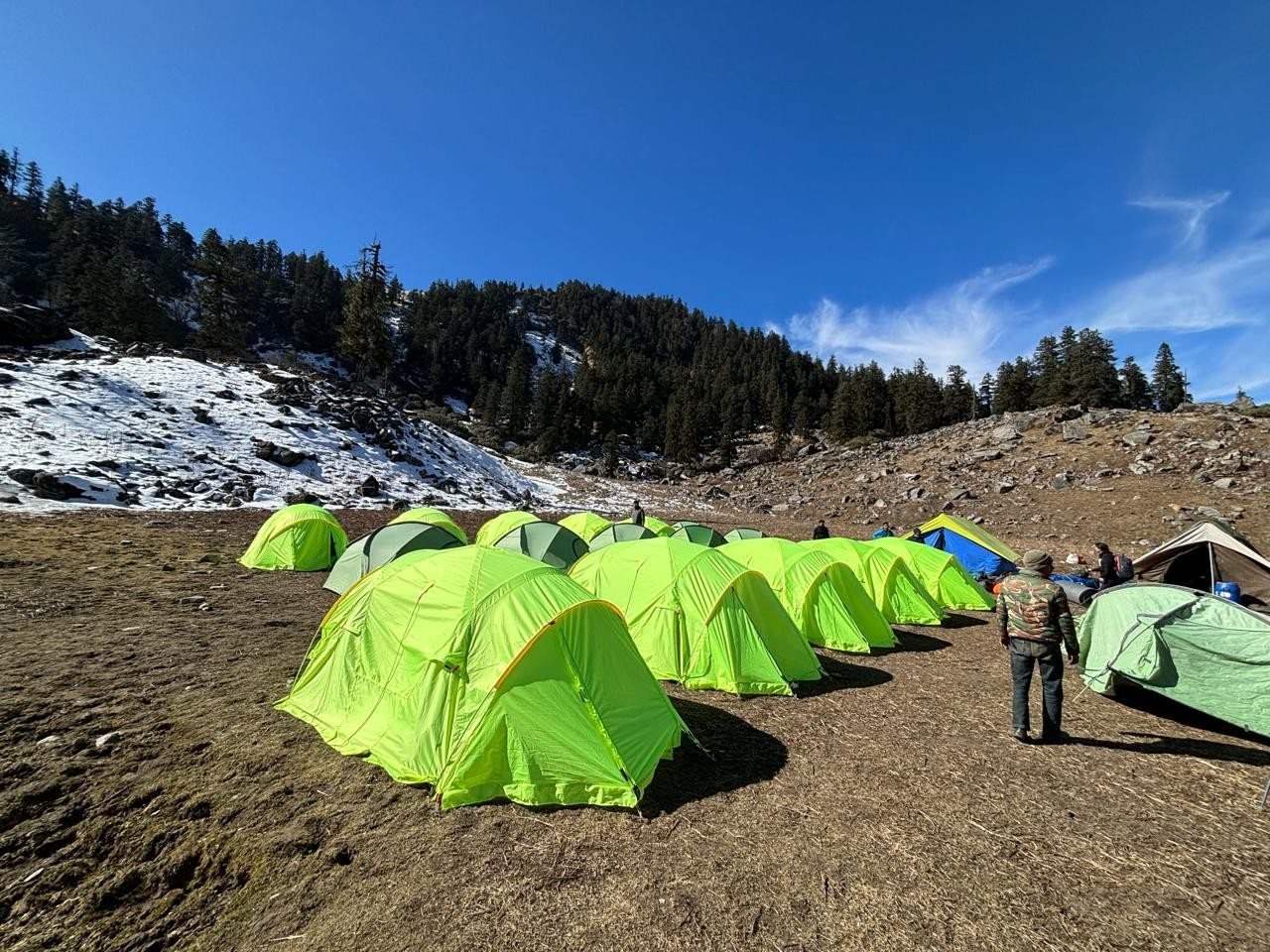
Free Trekking Gear on both treks is Decathlon trekking shoes, a -10°C jacket, trekking poles, gaiters and microspikes. Transport is not included in either fee: we help the group book shared cabs, paid directly to the driver and split among trekkers. Both treks camp in tents shared by 3 (men and women separate) with -20°C sleeping bags, take up to 20 trekkers per batch with one leader or guide for every 8, and close online booking at 5 PM (India time) the day before the batch starts. Every trekker brings a medical certificate signed by a doctor, and travel insurance is mandatory and not part of either fee. Cash matters on both: there is no ATM at Pipalkoti, and Joshimath is the last place with ATMs on the Pangarchulla route, where they can run out of cash.
See Kuari Pass dates and book | Kuari Pass trek distance and height | Kuari Pass vs Kedarkantha
Frequently asked questions
Is Pangarchulla harder than Kuari Pass?
Yes. Pangarchulla is graded Difficult and is not suitable as a first trek, while Kuari Pass is Easy to Moderate. Pangarchulla's summit day alone is 14 km and 11 to 14 hours, against 13 km and 8 to 9 hours for the Kuari Pass day.
Does the Pangarchulla trek cross Kuari Pass?
Yes. On Day 4 of the Pangarchulla trek you walk from Khullara to Kuari Pass at about 3,815 m and back to the same camp as an acclimatisation day. The summit climb follows on Day 5.
Can a beginner do Pangarchulla?
No. The trek page asks for at least one moderate high-altitude trek already completed, a minimum age of 14 and fitness to jog 5 km in about 30 minutes. A beginner should start with Kuari Pass.
Can I do Pangarchulla in winter?
No. Pangarchulla runs from March to May and from October to November. For a winter snow trek on the same trail, Kuari Pass runs from October to April, with December to March the window for snow.
What is the height difference between Kuari Pass and Pangarchulla?
Kuari Pass is at 3,815 m (12,516 ft) and the Pangarchulla summit is at 4,593 m (15,069 ft). Both treks sleep no higher than Khullara at 3,350 m.