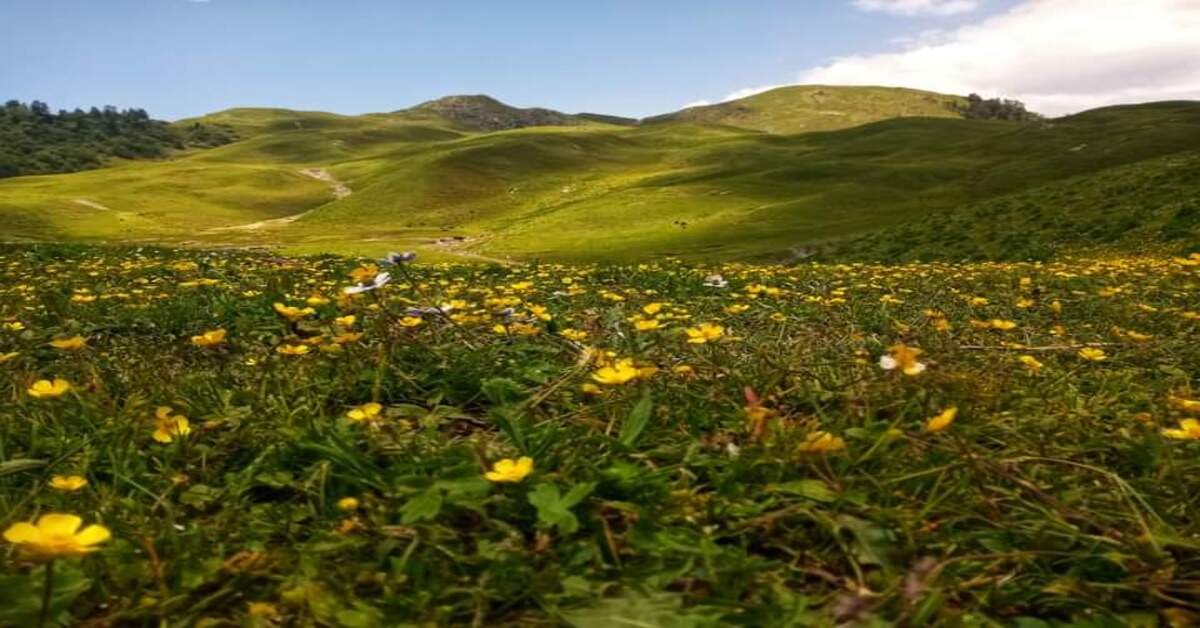
Quick answer: March is one of the most beautiful months for the Kuari Pass trek. The lower forests bloom red and pink with rhododendrons while snow still covers the higher meadows and the pass, so you get spring colour and a snow trek in one. Days are milder than mid-winter, nights are still cold, and the views of Nanda Devi, Kamet, Dronagiri and Chaukhamba are as big as ever. It is a 6-day trek from Rishikesh with transport included.
Most people think of Kuari Pass as a December–February snow trek, and it is a superb one. But ask trek leaders for their favourite month and many will say March. The days are longer and warmer, the trail is quieter, and for a few weeks the forest looks like nowhere else in the Himalayas. Here is what March on Kuari Pass is really like.
What March brings
- Rhododendrons in bloom: the oak and rhododendron forests between Dhak and Khullara turn red and pink as the buransh (rhododendron) flowers open.
- Snow higher up: the meadows around Khullara and the climb to the pass usually still hold snow, especially in early March.
- Milder days: walking days are noticeably warmer than in January, which many first-timers find easier.
- Big views: Nanda Devi, Kamet, Dronagiri, Chaukhamba and many more peaks from the pass.
- Quieter trails than the peak winter weeks.
Every year is different: a snowy winter means more snow in March; a dry one means less. Early March usually has more snow, late March more flowers.
How cold is Kuari Pass in March?
March sits between winter and spring. Days on the trail are generally mild and pleasant in the sun, while nights at Khullara can still drop below freezing. Pack for winter nights: a thermal layer, a fleece, an insulated jacket and warm gloves and cap. On Trekkaro batches you sleep in -20°C sleeping bags and get a free -10°C Decathlon jacket as part of Free Trekking Gear.
Your 6 days on Kuari Pass in March
- Rishikesh to Pipalkoti: about 215 km (around 9 hours) along the Alaknanda river, past the Panchprayag confluences. Transport is included.
- Pipalkoti to Dhak, trek to Gulling: a 40-minute drive to the trailhead, then a climb through Garhwali villages, terraced fields and oak forest.
- Gulling to Khullara: about 5 km, 4 hours, through oak, rhododendron and conifer forest, where March colour is at its best.
- Khullara to Kuari Pass (about 12,516 ft) and back: about 13 km, 8–9 hours, the big day, usually on snow in March, with the full sweep of Garhwal peaks at the top.
- Khullara to Dhak, drive to Pipalkoti: about 11 km, 6–7 hours, descending back through the flowering forest.
- Pipalkoti to Rishikesh: the drive back, about 8–10 hours.
March or January: which is better for Kuari Pass?
| January | March | |
|---|---|---|
| Snow | Deep snow from the forest upwards | Snow on the higher meadows and the pass |
| Colour | White winter forest | Rhododendrons in bloom below, snow above |
| Temperature | Coldest days and nights | Milder days, still cold nights |
| Best for | A classic, full snow experience | First-timers who want snow without peak cold, and photographers |
Tips for Kuari Pass in March
- Go early in March if snow matters most, later in March if flowers matter most.
- Layer up: warm days and cold nights mean adding and removing layers often.
- Carry rain protection: spring weather can change quickly in the afternoon.
- Train for the pass day: 13 km and 8–9 hours needs stamina; start six weeks before.
- Wear sunglasses and sunscreen: the spring sun on snow is strong.
What it costs
Kuari Pass with Trekkaro is ₹9,400 + 5% GST, and it includes the shared taxi from Rishikesh to Pipalkoti and back, plus stays, meals, permits, the trek leader and Free Trekking Gear, with EMI from about ₹484/month. For the full breakdown and how Trekkaro compares with other operators, see Kuari Pass trek cost.
See Kuari Pass March dates and book | Kuari Pass vs Kedarkantha | Best winter treks for beginners
Frequently asked questions
Is there snow on Kuari Pass in March?
Usually yes, on the higher meadows and the pass, especially in early March. The lower forest is often clear of snow by late March. It depends on how snowy the winter was.
When do rhododendrons bloom on the Kuari Pass trek?
Rhododendrons in the forests below Khullara generally bloom in March and into April, with timing that varies a little each year.
Is March a good time for beginners?
Yes. Milder days make March one of the friendliest times for first-time trekkers, while the pass still has snow. Be ready for the long 8–9 hour pass day.
Is transport included for Kuari Pass?
Yes. Trekkaro's Kuari Pass fee includes shared taxis from Rishikesh to Pipalkoti and back.
March or January for Kuari Pass?
January for the deepest snow and a classic winter trek; March for rhododendrons, milder days and snow on the higher sections.