This guide is about the Chadar Trek — dates, price, day-by-day itinerary and booking are on the trek page.
Quick answer: The Chadar trek is safe for fit, experienced trekkers who follow the trek leader, but it is graded Difficult. The real risks are slushy or fragile ice on the frozen Zanskar river, nights down to -30°C at Nerak and the altitude of Leh at 3,500 m. Three days in Leh, a medical check, radios, oxygen and a stretcher answer them.
What can go wrong on the Chadar trek?
The Chadar Trek is a 9-day trek from Leh with about 60 km on foot, five days of it on the frozen Zanskar river in Ladakh. Trekkaro runs it only in January and February, when the river is frozen. The risks on the Chadar come from a short list of hazards, and each one has a control.
| Risk | Where and when | What is in place |
|---|---|---|
| A slip or a fall on the ice | Every day on the river, on slippery, slushy and fragile sections that change with the temperature | Your own gumboots (mandatory), free microspikes and gaiters, ice axes and ropes with the team |
| Ice that changes behind you | The walk back on Days 7 and 8, over ice that may have cracked or gone since the way up | The trek leader decides where and when the group walks |
| Frostbite and hypothermia | Nights of -30°C to -15°C, coldest at Nerak | Sub-zero sleeping bags, hot water from the mess tent at every camp, your own warm layers |
| Altitude illness | Leh at 3,500 m, which is higher than any camp on the river | Three days in Leh, the Government Medical Camp check, SpO2 and pulse checks twice a day at every campsite |
| Distance from help | Nerak is 30 km on foot from the road at Shingra Koma, with no reliable mobile signal on the river | Radios, an oxygen cylinder, a first-aid and medical kit and a stretcher with the group |
It is not a first trek. The minimum age is 14, trekkers under 18 come with a parent or guardian, and you need trekking experience in challenging terrain. Our Chadar difficulty guide covers the fitness side and how to prepare.
Why is the ice the main danger?
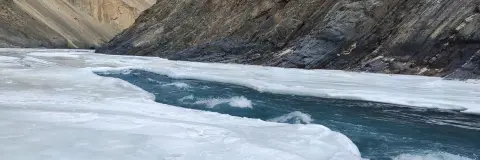
The Chadar is a frozen river, not a fixed trail, so the surface changes with the temperature. One day can bring firm ice, slippery stretches and slushy, fragile sections, and the ice you crossed on the way up may have cracked or gone by the time you walk back. That is why the trek leader, not the printed itinerary, decides where and when the group moves.
Gumboots are mandatory on the ice, and you bring your own pair for the icy, slushy and wet sections; feet can still get wet in them on those sections. Microspikes and gaiters come free, with no deposit, and the team carries ice axes and ropes. How to place your feet on the ice is covered in the difficulty guide linked above.
Why is altitude the risk before you reach the ice?
Because on the Chadar the altitude risk is greatest at the start, not on the river. Leh is at 3,500 m (11,483 ft), higher than any point on the trail: the walk runs between Shingra Koma at 3,150 m and Nerak at 3,400 m. In winter Leh can only be reached by air, so you arrive at that height straight off a flight.
The Ladakh Tourism travel advisory asks visitors to allow at least 48 hours to acclimatise on arrival in Leh, to rest completely on the first day, to avoid alcohol and smoking for the first 48 hours, and to stop ascending if symptoms such as a persistent headache, nausea or trouble sleeping appear. The first three days of the trek are built around that.
| Day | What happens in Leh | Why it matters |
|---|---|---|
| 1 | Arrival, rest and a mandatory orientation briefing | Your body starts adjusting to 3,500 m |
| 2 | Acclimatisation day with a guided visit to the Hall of Fame, Shey Monastery and Thiksey Monastery | Light movement at height, with no load to carry |
| 3 | The mandatory health check at the Government Medical Camp, then insurance formalities | The results decide whether you are medically fit to go on to the river |
Tell your trek leader about any symptom in these three days, however small. A headache in Leh is far easier to deal with than one at Nerak.
How cold does the Chadar get, and how do you stay warm?
Days on the river sit between -5°C and 0°C, and nights fall to between -15°C and -30°C. Nerak is the coldest campsite, with nights down to -30°C. At these temperatures frostbite and hypothermia are real risks, so the cold needs as much planning as the ice.
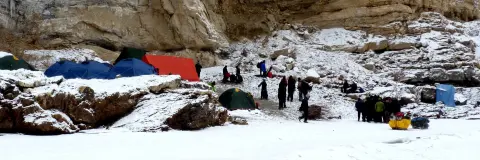
Trekkaro provides sub-zero sleeping bags for the four camping nights, and the mess tent gives hot water at every camp, so you can fill an insulated bottle before you sleep. You bring your own gumboots, trekking shoes, jacket and poles, and your own warm layers. Tell your trek leader early if you cannot get warm. Our hypothermia guide for winter treks explains the warning signs, and the Chadar packing list covers the layers.
Who looks after you on the ice, and what kit goes with the batch?
Trekkaro's trek leaders have completed a basic mountaineering course, are trained in wilderness first aid and lead with local guides who know the route. A batch takes up to 20 trekkers, with one trek leader or guide for every 8.
Your SpO2 and pulse are checked twice a day at every campsite. If you are not fit to continue, the trek leader will ask you to rest or descend. An oxygen cylinder, a first-aid and medical kit and a stretcher travel with the group, and the team uses radios because there is no reliable mobile signal on the river. A doctor is not part of the trek inclusions.
What happens if someone is hurt or falls ill on the river?
The trek leader decides at once whether the trekker rests or goes down, and the team uses its radios, since there is no reliable mobile signal on the river. The stretcher goes with the group for a trekker who cannot walk. The road is at Shingra Koma, 75 km and a 3 to 4 hour drive from Leh, and from Nerak, the farthest camp, it is 30 km back on foot. In Leh, the Ladakh Tourism advisory notes that SNM Hospital provides emergency oxygen support.
Evacuation, hospital and other medical emergency charges are not included in the trek fee. High-altitude risk insurance is mandatory under ALTOA guidelines and is not part of the fee; you complete it in Leh on Day 3. Rescue fees, wildlife and environmental charges, the ALTOA NOC and entry fees are paid in Leh directly to the authorities, at the rates they set.
What if the authorities close the river?
A batch can be cancelled when the route is closed by the forest or permit office, or in circumstances beyond Trekkaro's control. Extra costs caused by decisions of the local authorities or administration are not covered by the trek fee. On the trail, the trek leader's call on the ice and on each trekker's health is final, and that is the most important safety rule on the Chadar.
What does the Chadar trek cost?
The fee for the Chadar Trek is ₹25,500 per person plus 5% GST (₹26,775 with GST). EMI starts at ₹1,311 a month. It includes the safety kit above, the Leh hotel nights, the camps with sub-zero sleeping bags, pure vegetarian meals on the trek and transport between Leh and the trek start.
Flights, airport transfers, meals in Leh, the ALTOA insurance and the Ladakh fees are not included. Our Chadar cost guide sets out the charges.
See Chadar Trek dates and book | Chadar trek temperature | Where is Chadar trek
Frequently asked questions
Can I walk the Chadar in trekking shoes?
Not on the ice. Gumboots are mandatory there and you bring your own pair, with trekking shoes also on your own kit list. Microspikes and gaiters are provided free, with no deposit.
Is there a doctor on the Chadar trek?
No, a doctor is not part of the inclusions. The trek leaders are trained in wilderness first aid, SpO2 and pulse are checked twice a day at every campsite, and an oxygen cylinder, a medical kit and a stretcher go with the group.
Is insurance mandatory for the Chadar trek?
Yes. High-altitude risk insurance is mandatory under ALTOA guidelines, is not part of the trek fee and is completed in Leh on Day 3. Evacuation and hospital charges are not included in the fee.
Is there mobile network on the Chadar trek?
Leh has the last stable mobile network, and only postpaid SIMs work in Ladakh. Once you leave Leh the signal is scarce or unavailable, so the trek team uses radios.
What is the biggest danger on the Chadar trek?
The ice itself, because it changes with the temperature and has slippery, slushy and fragile sections. Gumboots, microspikes and the trek leader's decisions on where and when to walk are what keep the group safe.