This guide is about the Har Ki Dun Trek — dates, price, day-by-day itinerary and booking are on the trek page.
Quick answer: The best time for the Har Ki Dun trek is October, for clear views of Swargarohini and autumn colour in the forest. The second window is March to June, with the rhododendron bloom in April and May. Avoid July and August, when the monsoon leaves the trail waterlogged, and expect deep snow from December to February. The Har Ki Dun trek package runs in the two windows, March to June and October to November.
When is the best time for the Har Ki Dun trek?
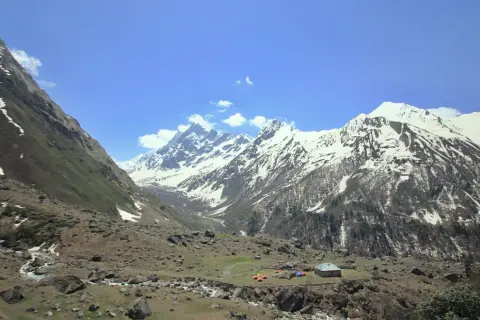
Har Ki Dun has two trekking windows, split by the monsoon: spring, from March to June, and autumn, from October to November. Of the two, Trekkaro recommends October most. The air is clearest then, the oak and maple forests turn gold, and the valley meadow at 3,536 m (11,600 ft) is open and green. If you would rather walk through the rhododendron bloom, choose April to mid-May.
| Months | Season | What you get | Trekkaro batches |
|---|---|---|---|
| March to June | Spring | Rhododendron bloom (peak in April and May), snow at the valley edges, warm days | Yes |
| July and August | Monsoon | Waterlogged paths, swollen river crossings, leeches in the lower forest | No standard batches |
| October to November | Autumn | Clearest views, gold forests, dry trail; nights below zero in the valley from November | Yes; October is the peak month |
| December to February | Winter | The valley and the upper trail are snowbound | Not in the trek’s season |
What is Har Ki Dun like in spring, from March to June?
The spring window opens as the lower trail dries out after winter. In April and May, the forest between Taluka and Puani Garaat, and below Osla, is thick with red and pink rhododendron blooms. In May, the Har Ki Dun valley still holds snow at its upper edges, which stands out against the green of the forest below. Days are warm and nights are cool.
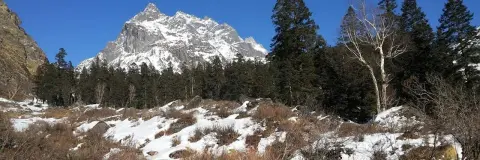
Spring suits trekkers who want forest colour, flowers and some snow in the valley without the cold of late autumn. For the best of the bloom, the trek page suggests April to mid-May.
Can you do the Har Ki Dun trek in the monsoon?
The trail can be walked in July and August, but it is not recommended. The monsoon leaves the forest paths waterlogged, swells the river crossings and brings leeches to the lower forest. Trekkaro does not run standard Har Ki Dun batches in those two months, because the difficulties outweigh what you get from the walk.
Why is October the best month for Har Ki Dun?
The trek season reopens in October, which is its peak month. After the monsoon the air is clear, so Swargarohini I (6,252 m) and Bandarpunch (6,316 m) stand out sharply above the valley. The oak and maple forests turn amber and gold, the trail is dry and well defined, and the valley meadow is wide open. October nights are cold and clear, so a good sleeping bag matters.
In November the days stay clear, but night temperatures in the valley start to drop below zero. You need warm layers for the evenings at camp; the Free Trekking Gear includes a −10°C jacket.
Is there snow at Har Ki Dun in December and winter?
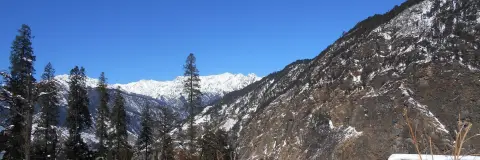
Yes. From December to February, the valley and the upper part of the trail lie under snow. These months are outside the trek’s season windows on the trek page, which are March to June and October to November. If you want a snow trek in December, the Kedarkantha trek also starts from Sankri. For a Har Ki Dun date, check the live batches on the trek page before you plan.
How cold is Har Ki Dun in each season?
The trek page gives these ranges for the two windows. The valley, at 3,536 m, is the coldest point of the trek:
| Window | Taluka (2,107 m) | Puani Garaat (2,440 m) | Har Ki Dun (3,536 m) |
|---|---|---|---|
| March to June | 10°C to 22°C | 5°C to 18°C | 0°C to 12°C |
| October to November | 5°C to 18°C | 2°C to 12°C | −3°C to 8°C |
You sleep at camps between 2,440 m and 2,740 m and reach the valley as a day walk, so the coldest nights are a little milder than the valley figures. For the height of each camp and the distance of each day, read our Har Ki Dun trek distance and height guide.
What should you pack for each season?
| Season | Pack |
|---|---|
| Spring (March to June) | Light layers for warm days, a fleece and a down layer for camp nights, a rain jacket, sunglasses and sunscreen for the snow at the valley edges |
| Autumn (October to November) | Thermals, a fleece and a heavy jacket for nights below zero in November, gloves and a warm cap |
In both seasons, Free Trekking Gear covers the heavy items: Decathlon trekking shoes, a −10°C jacket, trekking poles, gaiters and microspikes, against a ₹3,000 refundable deposit plus ₹200 for washing. The gear check is on Day 1 at Sankri. Our Sankri village guide covers the last ATM and the mobile network before the trail.
What should you check before booking a Har Ki Dun trek?
Ask any company these questions; the last column gives Trekkaro’s answers.
| What to check | Why it matters | With Trekkaro |
|---|---|---|
| Does the batch run in the monsoon? | July and August bring flooded crossings and leeches. | No standard batches in July and August. |
| What warm gear is provided? | Valley nights drop below zero in November. | A −10°C jacket, shoes, poles, gaiters and microspikes in the Free Trekking Gear. |
| How is your health checked? | Cold nights and the climb on Day 4 add up. | Oxygen level, pulse and blood pressure checked twice a day at every campsite; one oxygen cylinder and one stretcher travel with each batch. |
| What happens if the weather changes your plans? | Mountain weather can shift a booking. | 70% back at 30 or more days, 50% at 15 to 29 days, no cash refund at 8 to 14 days and nothing at 7 days or less. Up to 8 days before, you can take a 100% TrekCash voucher (valid 1 year), one free reschedule or a transfer instead. |
What does the Har Ki Dun trek cost?
The Har Ki Dun trek fee is ₹10,500 per person plus 5% GST (₹11,025 with GST). EMI starts at ₹540 a month. It starts and ends at Sankri. The shared cab between Dehradun and Sankri, at ₹1,000 each way, is not included and is paid directly to the driver. Travel insurance that covers high-altitude trekking and helicopter evacuation is mandatory and not included, and each trekker brings a medical certificate signed by a doctor. Live batch dates are on the Har Ki Dun trek dates and cost page.
See Har Ki Dun Trek dates and book | Har Ki Dun trek distance and height | Where is Har Ki Dun and how to reach it
Frequently asked questions
What is the best month for the Har Ki Dun trek?
October. The air is clearest, the forests turn gold and the trail is dry. For the rhododendron bloom, go from April to mid-May instead.
Is Har Ki Dun good in May?
Yes. May is in the spring window, with rhododendrons in the lower forest and snow still at the upper edges of the valley. Days are warm; the valley is 0°C to 12°C.
Can I do the Har Ki Dun trek in December?
The valley and the upper trail are snowbound from December to February, and these months are outside the trek’s season windows. Check the live batches on the trek page before you plan.
How cold is Har Ki Dun in October and November?
The trek page gives −3°C to 8°C at the valley in October and November, with nights below zero from November.
Why is the monsoon not a good time for Har Ki Dun?
In July and August the paths are waterlogged, the river crossings swell and leeches come out in the lower forest. Trekkaro runs no standard batches then.