Quick answer: Gulling is the Kuari Pass trek's first camp, in the forest at 2,900 m (9,514 ft). You reach it on Day 2: a 15 km cab from Pipalkoti to Dhak, then a 6 km walk of 5 to 6 hours, climbing 850 m. A Trekkaro batch includes Free Trekking Gear and SpO2 checks twice a day at every campsite.
Where is Gulling, and how high is it?
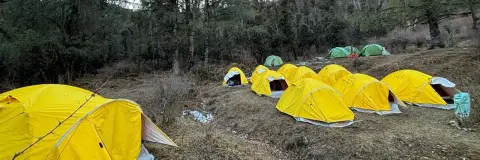
Gulling sits in the oak and rhododendron forest above Dhak village in Chamoli district, on the way up to the meadows of Khullara. It is the first of the two camps on the Kuari Pass trek, and the night you spend there is your first night in a tent.
| Point on the route | Height | How far from Gulling |
|---|---|---|
| Pipalkoti (start and end town) | 1,883 m | 15 km by cab to Dhak, then 6 km on foot |
| Dhak (trailhead) | 2,050 m (6,726 ft) | 6 km, about 850 m below Gulling |
| Gulling (first camp) | 2,900 m (9,514 ft) | - |
| Khullara (second camp) | 3,350 m (10,991 ft) | 5 km, about 450 m above Gulling |
| Kuari Pass | 3,815 m (12,516 ft) | Reached from Khullara on Day 4 |
Gulling is about 1,017 m higher than Pipalkoti, where you slept the night before. Our Kuari Pass trek route map shows where the camp sits on the whole route.
How do you get from Pipalkoti to Gulling on Day 2?
Day 2 starts with a cab, not a climb. A shared cab covers the 15 km from Pipalkoti to Dhak in about 40 to 45 minutes, and on Trekkaro's batch that cab is part of the trek fee. Dhak is where the road ends and the walking begins. Water on this trail can be limited, so fill every bottle at Dhak before you set off.
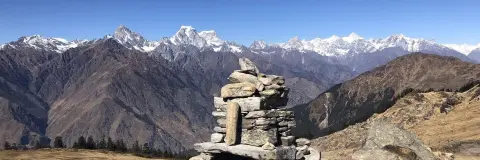
The first stretch out of Dhak is dusty. The path then turns green and passes terraced fields and Tugasi village before it enters oak and rhododendron forest, where the Garhwal peaks show through gaps in the trees. The gradient is moderate, but the forest section is long: the whole walk is 6 km in 5 to 6 hours, with about 850 m of climbing. Lunch is a packed lunch on the trail.
The mistake to avoid on this day is starting too fast. Walk at a steady rhythm, keep your daypack light and take short breaks, because Day 2 sets you up for the two higher days that follow.
What is the camp at Gulling like?
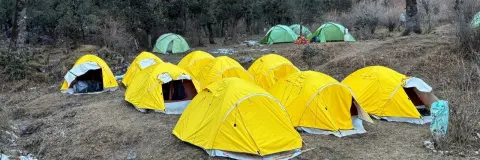
Gulling is a tucked-away campsite on the forest slope. On a Trekkaro batch you sleep in 3-person tents, shared by three, with men and women in separate tents and -20°C sleeping bags. Tea and dinner are served at camp in large mess tents with tables, and the meals are pure vegetarian. The mess tent gives hot water, so bring reusable bottles, one of them insulated, and fill them there instead of carrying plastic bottles.
The campsite has eco-friendly toilet tents. Bring your own toilet paper and sanitiser, leave wet wipes at home and carry a bag to take your waste back down. After you arrive, rest, have tea and put on your warm layers before dusk. On a clear night the sky above the camp is good for stargazing.
Your health readings start here on the trail. SpO2 and pulse are checked twice a day at every campsite, Gulling included, and a falling reading is acted on early. Mobile signal is little or none once the trek starts, so the team uses radios.
What is Gulling like in the snow months?
From December to March the forest between Gulling and Khullara is under thick snow, and walking is slower. Across the Kuari Pass trek, winter nights fall to -14°C to -8°C, and the coldest reading Trekkaro's trek leaders have recorded on the trek is -16°C, at Khullara, the higher camp. In spring (March and April) and autumn (October and November) nights on the trek are around 0°C.
In snow, take short steps, plant your poles firmly and follow the guide's line. Ropes are not needed on this trek: after fresh snowfall the team clears the trail and helps you across slippery sections. Our Kuari Pass weather and temperature guide gives the season figures in full.
Where does the trail go after Gulling?
Day 3 is short and gentle. You leave Gulling on smooth slopes and walk 5 km in about 4 hours to Khullara, gaining about 450 m (1,476 ft). The oak and rhododendron forest gives way to mixed forest with conifers among the oaks, there is a small stream crossing, and the trees open in places to meadows with snow peaks above them. Start early and you reach Khullara with most of the afternoon free. Our Khullara camp guide picks up the route from there, including the 13 km summit day.
What should you check before you book the Kuari Pass trek?
Gulling is reached by a cab and a long forest climb, so these are the points to compare before you pay. The last column gives Trekkaro's answers.
| What to check | Why it matters | With Trekkaro |
|---|---|---|
| Is the Pipalkoti to Dhak cab in the fee? | Without it you arrange and pay for the trailhead drive on Day 2 and again on Day 5. | Yes, the 15 km cab on Days 2 and 5 is included. |
| Does the fee include trekking shoes, a jacket, poles, gaiters and microspikes? | Without them you rent or buy a snow kit before a 9 hour drive, with the forest above Gulling under snow from December to March. | Yes, Free Trekking Gear with Decathlon trekking shoes, a -10°C jacket, poles, gaiters and microspikes. No rental fee; a ₹3,000 refundable deposit and a ₹200 washing charge. Buying the kit costs about ₹13,395. |
| Where do you fill water on Day 2? | Without a plan you can run short on a 6 km climb with limited water sources. | Every bottle is filled at Dhak before the walk. |
| How many times a day is SpO2 checked? | Without readings from the first camp, a drop at Khullara has nothing to be compared with. | SpO2 and pulse twice a day at every campsite, starting at Gulling. |
| What emergency kit travels with the group? | Without oxygen and a stretcher in the forest, a sick trekker waits for help from the road. | A portable oxygen cylinder, a first-aid and medical kit and a stretcher go with the group. |
| How many trekkers per trek leader or guide? | With too few leaders, a slow walker on the long forest climb is left with nobody. | Up to 20 trekkers per batch, one trek leader or guide for every 8. |
| What are the cancellation terms? | Without them, plans that change can cost you the whole fee. | 70% back at 30 or more days, 50% at 15 to 29 days, or a 100% TrekCash voucher, a free reschedule or a transfer up to 8 days before. |
| Can you pay in EMI? | Without EMI the whole fee is due at booking. | EMI starts at ₹484 a month. |
| Where do extra bags stay? | Without a store, your travel bag comes up to Gulling or waits in a hired cab. | A free store in Pipalkoti, kept at your own risk. |
What does the Kuari Pass trek cost?
The Kuari Pass trek fee is ₹9,400 per person plus 5% GST (₹9,870 with GST). It covers a guesthouse or homestay in Pipalkoti on Days 1 and 5, the tents at Gulling and Khullara on Days 2 to 4, pure vegetarian meals from Day 1 dinner to Day 5 dinner, all trekking permits and forest camping fees, the Pipalkoti to Dhak cab and the Free Trekking Gear.
The drive between Pipalkoti and Rishikesh (about 215 km) or Dehradun is not included. We help the group book shared cabs at ₹6,500 one way per 5 to 6 seat vehicle, paid directly to the driver and split among the trekkers in it, which is ₹1,083 each when six share. There is no ATM at Pipalkoti, so bring cash in small notes. Every trekker brings a medical certificate signed by a doctor (the form is in My Bookings), and travel insurance covering high-altitude trekking and emergency evacuation is mandatory and not included. Trekkaro runs the trek from October to April; live batch dates and fees are on the Kuari Pass trek page. Check the Chamoli district forecast on the India Meteorological Department's Dehradun centre before you travel.
See Kuari Pass Trek dates and book | Pipalkoti village guide | Which company for Kuari Pass
Frequently asked questions
How high is Gulling on the Kuari Pass trek?
Gulling is at 2,900 m (9,514 ft). It is the first camp on the trek, about 850 m above the Dhak trailhead and about 450 m below Khullara.
How far is Gulling from Dhak?
Gulling is 6 km from Dhak, a walk of 5 to 6 hours with about 850 m of climbing. The trail passes terraced fields and Tugasi village before it enters oak and rhododendron forest.
Is there water on the way to Gulling?
Water sources on the Day 2 trail can be limited, so fill every bottle at Dhak. At the camp, the mess tent gives hot water.
Is there snow at Gulling in winter?
From December to March the forest between Gulling and Khullara is under thick snow. Winter nights on the trek fall to -14°C to -8°C.
What should I look for when choosing a company for the Kuari Pass trek?
Check that the Pipalkoti to Dhak cab and Free Trekking Gear are in the fee, and ask about the water plan, SpO2 checks, the oxygen cylinder and stretcher, a 1:8 ratio, refunds and a luggage store in Pipalkoti.