This guide is about the Brahmatal Trek — dates, price, day-by-day itinerary and booking are on the trek page.
Quick answer: February is one of the best months for the Brahmatal trek. Expect 2–4 ft of snow on the trail, frozen Bekaltal and Brahmatal lakes, Lohajung at -2°C to 8°C and base camp nights down to -15°C, slightly milder than January. Trekkaro runs Brahmatal batches in February at ₹9,000 + GST (₹9,450); see the trek page for live dates.
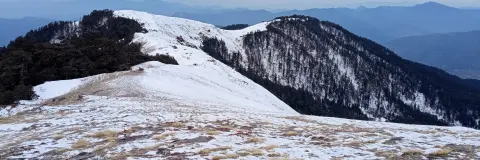
February sits at the end of the peak Brahmatal season. The snow that built up through December and January is still deep, the lakes are still frozen, and the cold is slightly less severe than in January. If you want a full snow trek but find the idea of January cold daunting, February is the month to look at. This guide covers what the trail is like, how February compares with January, how the six days run, what to wear and what it all costs.
What is Brahmatal like in February?
From December to February the core picture is the same: 2–4 ft of snow on the trail, both Bekaltal and Brahmatal frozen, and the oak and rhododendron forest above Lohajung under snow. January is the coldest and clearest month; February combines full snow depth with slightly less severe temperatures. After February, March is late winter, with the snow softening on the lower trail.
| Place | Altitude | Dec–Feb temperature |
|---|---|---|
| Lohajung (start and end) | 2,316 m / 7,600 ft | -2°C to 8°C |
| Bekaltal camp | 2,798 m / 9,180 ft | -10°C to -3°C |
| Brahmatal base camp | 3,106 m / 10,190 ft | -15°C to -5°C |
| Brahmatal Top (summit) | 3,734 m / 12,250 ft | No range published; the 5:30 AM summit start is the coldest part of the trek |
There is one range for December to February rather than separate February figures, and February's temperatures are slightly less severe than January's. Snow depth changes from year to year and after each fresh spell, so no batch is promised an exact depth.
February vs January on Brahmatal
| Point | January | February |
|---|---|---|
| Snow on trail | Deep, 2–4 ft | Deep, 2–4 ft |
| Lakes | Frozen | Frozen |
| Cold | Coldest month, about -15°C at base camp | Slightly milder |
| Trek page note | Most extreme cold and the clearest views | Full snow depth with slightly less severe temperatures |
The difference is small. Choose January if you want the coldest, clearest conditions, and February if you want the same snow with a little more comfort.
How do Brahmatal batches run in February?
Brahmatal batches run through February; see the trek page for live dates. Each batch lasts six days, so one that starts at the end of February ends in early March. Each batch takes a maximum of 20 trekkers, and tents are shared by three (men and women separate). Booking for a batch closes at 5 PM India time on the day before it starts. February batches carry no holiday labels.
Day-by-day plan in February
| Day | Route | Distance and time |
|---|---|---|
| 1 | Rishikesh (shared cab from Jumping Heights, Tapovan, at 6:30 AM) to Lohajung, 2,316 m; gear handover and health baseline | About 250 km, 8–10 hours |
| 2 | Lohajung to Bekaltal, 2,798 m, about 480 m of climbing through snow-covered forest | 6 km, 4–5 hours |
| 3 | Bekaltal to Brahmatal base camp, 3,106 m, over the open ridge at Jhandi Top (about 3,600 m); steepest climb, microspikes from the Bekaltal camp upward | 7 km, 6–7 hours |
| 4 | Brahmatal Top, 3,734 m, and back from a 5:30 AM start in the dark (headlamp), about 630 m of climbing; microspikes and gaiters on | 6 km, 5–6 hours |
| 5 | Base camp to Lohajung back over Jhandi Top and via Bekaltal, ending about 790 m lower; the longest day | 10 km, 7–8 hours |
| 6 | Lohajung to Rishikesh; the cab leaves Lohajung at 6:30 AM and is expected at Tapovan by 6:00 PM | About 250 km, 8–10 hours |
Day 3 is the biggest climb, about 800 m from Bekaltal to Jhandi Top, at the edge of the 800–1,000 m a day in the Uttarakhand Health Department's high-altitude health advisory, which also advises resting 5–10 minutes for every hour of walking and descending if you feel unwell; you sleep lower, at 3,106 m. The team checks SpO2, pulse and blood pressure twice a day, and the evening check at base camp decides who goes up on Day 4.
What to wear and carry in February
| For | Pack |
|---|---|
| Base layers | Two thermal sets, one kept dry for the night |
| Mid layers | Two fleece or woollen layers, plus warm trousers for camp |
| Outer layers | The free -10°C jacket and a waterproof shell; snow melts on clothes during the day |
| Hands and head | Two pairs of gloves, a woollen cap, a balaclava and a buff |
| Eyes and skin | Category 3 or 4 UV sunglasses, SPF 50+ sunscreen and lip balm |
| Water | Two 1-litre bottles, at least one insulated so it does not freeze overnight |
| Light and power | A headlamp for summit morning and a power bank |
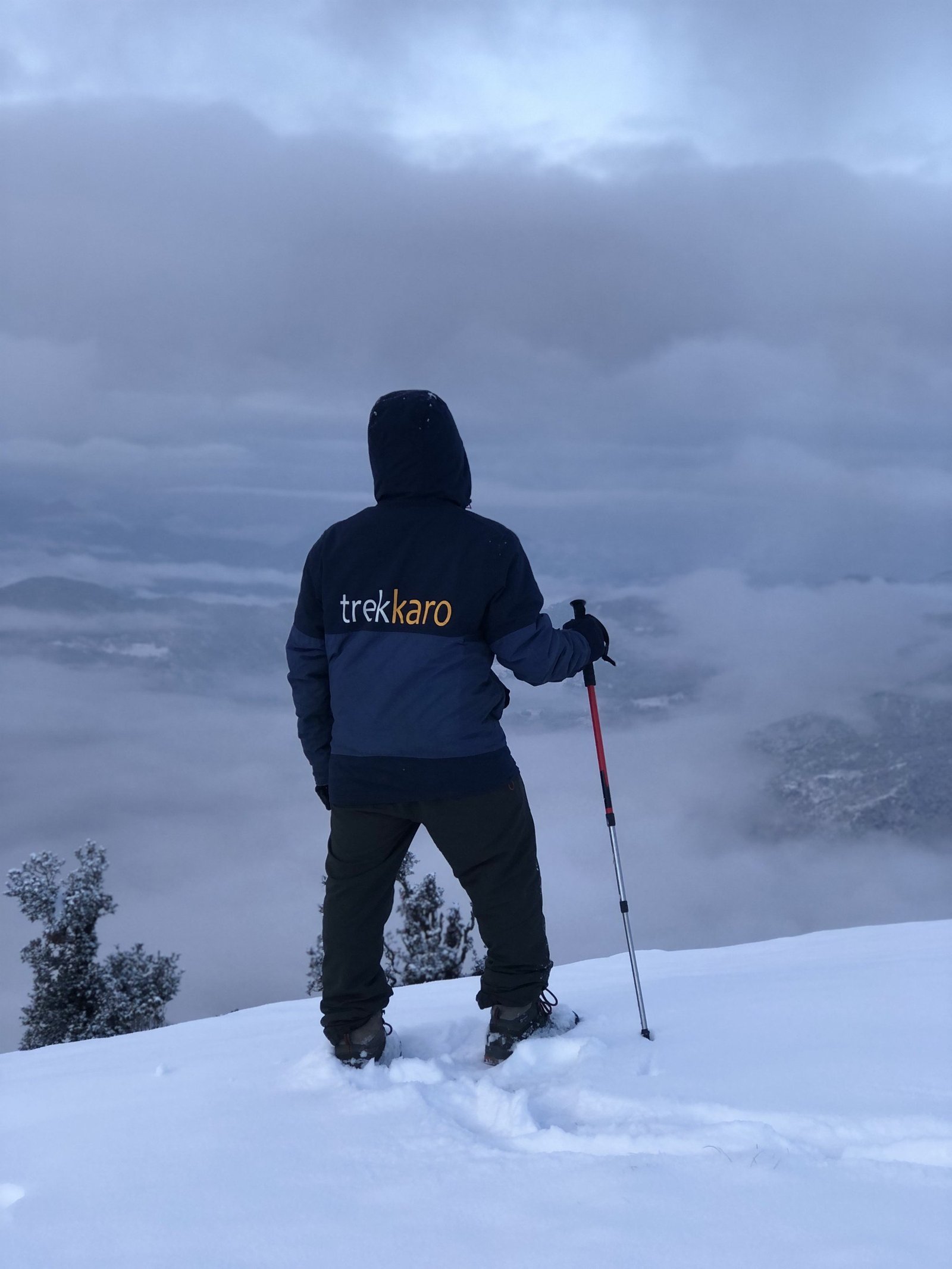
For snow days, start walking slightly cold. If you set off fully layered, you sweat within the first climb, and wet layers are what make you cold at the next halt. Open your jacket on the climbs and close it the moment you stop.
What should you sort out before you go?
- Dewal has the last reliable ATM and cards are not accepted on the trail; Lohajung is the last place with a stable mobile signal and there is no charging on the trail, so carry a power bank.
- Refill water only at sources the trek leader approves.
- Carry a government photo ID and a medical certificate signed by a doctor; insurance must cover helicopter evacuation.
- Ask your doctor about altitude medicine and carry your own.
- Reach Rishikesh the evening before Day 1, and book your journey home for late on Day 6 or the next day.
What it costs
| Item | Cost |
|---|---|
| Trek fee (6 days, Lohajung to Lohajung; Day 1 and Day 6 are the drives from and to Rishikesh) | ₹9,000 + 5% GST = ₹9,450 |
| EMI | EMI starts at ₹463 a month |
| Free Trekking Gear (shoes, -10°C jacket, poles, gaiters, microspikes) | Free; ₹3,000 refundable deposit + ₹200 washing charge (+ GST) |
| Shared cab Rishikesh–Lohajung | About ₹6,500 one way per 5–6 seat vehicle, split among trekkers |
| Backpack offloading (optional) | ₹1,500 + GST |
| Single tent (optional) | ₹2,000 + GST |
Transport is not included in the trek fee: we help the group book shared cabs, paid directly to the driver and split among trekkers. Travel insurance that covers high-altitude trekking and helicopter evacuation is mandatory and not included.
If your plans change, the refund is 70% 30 or more days before departure, 50% at 15–29 days, and no cash refund at 8–14 days, when you can still take a 100% TrekCash voucher (valid 1 year), a free reschedule or a transfer to another trekker. Any of these can also replace a cash refund at any point up to 8 days before departure. At 7 days or less, or a no-show, there is no refund.
See Brahmatal February dates and book | Brahmatal in January | Brahmatal weather | How to reach Lohajung | Treks in February
Frequently asked questions
Is there snow on the Brahmatal trek in February?
Yes. December to February is the peak snow season on the trek page, with 2–4 ft on the trail and both lakes frozen. The exact depth on your batch depends on that winter's snowfall.
How cold is Brahmatal in February?
One December–February band applies: about -2°C to 8°C at Lohajung and -15°C to -5°C at base camp. February is slightly milder than January.
Is February or January better for the Brahmatal trek?
Both have deep snow and frozen lakes. January is the coldest month with the clearest views, while February keeps full snow depth with slightly less severe temperatures, the more comfortable choice for a first-timer.
Do I need microspikes for Brahmatal in February?
Yes. They go on from the Bekaltal camp on Day 3 and stay on through summit day, and Trekkaro's Free Trekking Gear includes them along with gaiters, Decathlon shoes, a -10°C jacket and poles.
Can a beginner do the Brahmatal trek in February?
Yes, if you can walk 6–10 km a day comfortably. Brahmatal is graded Easy to Moderate and the minimum age is 7, but snow makes days slower, so train for about six weeks beforehand.