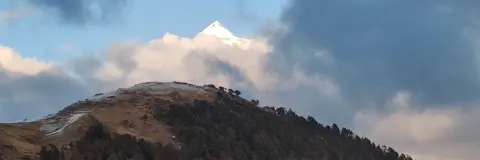
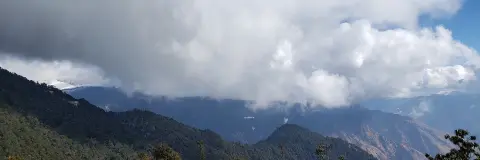
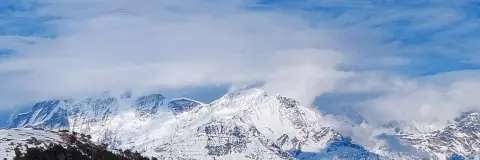
This guide is about the Brahmatal Trek — dates, price, day-by-day itinerary and booking are on the trek page.
Quick answer: The best time for the Brahmatal trek is December to February, which the trek page calls "the definitive Brahmatal window": 2 to 4 ft of snow on the trail and Bekaltal frozen. October–November brings the first snow and fewer trekkers; March keeps snow higher up with more comfortable days. The trek runs October to March only.
When is the best time for the Brahmatal trek?
Our trek page gives the season as October to March and names December to February as the peak: "This is the definitive Brahmatal window." It also states plainly that "Brahmatal is a dedicated winter trek." So the real choice is not between seasons but between three windows inside winter: the early season of October and November, the core winter of December to February, and March.
| Window | What the trek page says | Suits | Read next |
|---|---|---|---|
| October to November | "The Brahmatal season opens in October, and November brings the first snow." November: "First winter experience, fewer trekkers, lakes beginning to freeze." | A first winter trek with fewer people on the trail | Brahmatal in November |
| December to February | "This is the definitive Brahmatal window." 2 to 4 ft of snow on the trail, Bekaltal frozen, and "Jhandi Top on Day 3 is at its most spectacular in this window." | Deep snow, frozen lakes and the Jhandi Top panorama | Brahmatal in December, January and February |
| March | "The summit views retain their winter clarity in early March, and daytime temperatures become more comfortable." "The season ends in late March." | Snow higher up with milder days | Brahmatal in March |
| April to September | Not in the season, which is October to March | Not offered | None |
For camp-by-camp temperatures in every month, see Brahmatal weather and temperature.
Why is Brahmatal a winter-only trek?
The trek page sets Brahmatal apart: "Unlike most Himalayan treks that have a monsoon-to-autumn preference, Brahmatal actively improves as winter deepens."
Among the trek's highlights the page lists "Snow-buried oak and rhododendron forest – the defining trail character of the Brahmatal approach from Lohajung". The trek runs only from October, when the season opens, to March, when the trek page says the snow turns slushy. It does not run from April to September.
What changes on the route from one window to the next?
The trek is 6 days and about 29 km, Lohajung to Lohajung, with the summit at Brahmatal Top, 3,734 m. Three stretches show the difference between the windows most clearly.
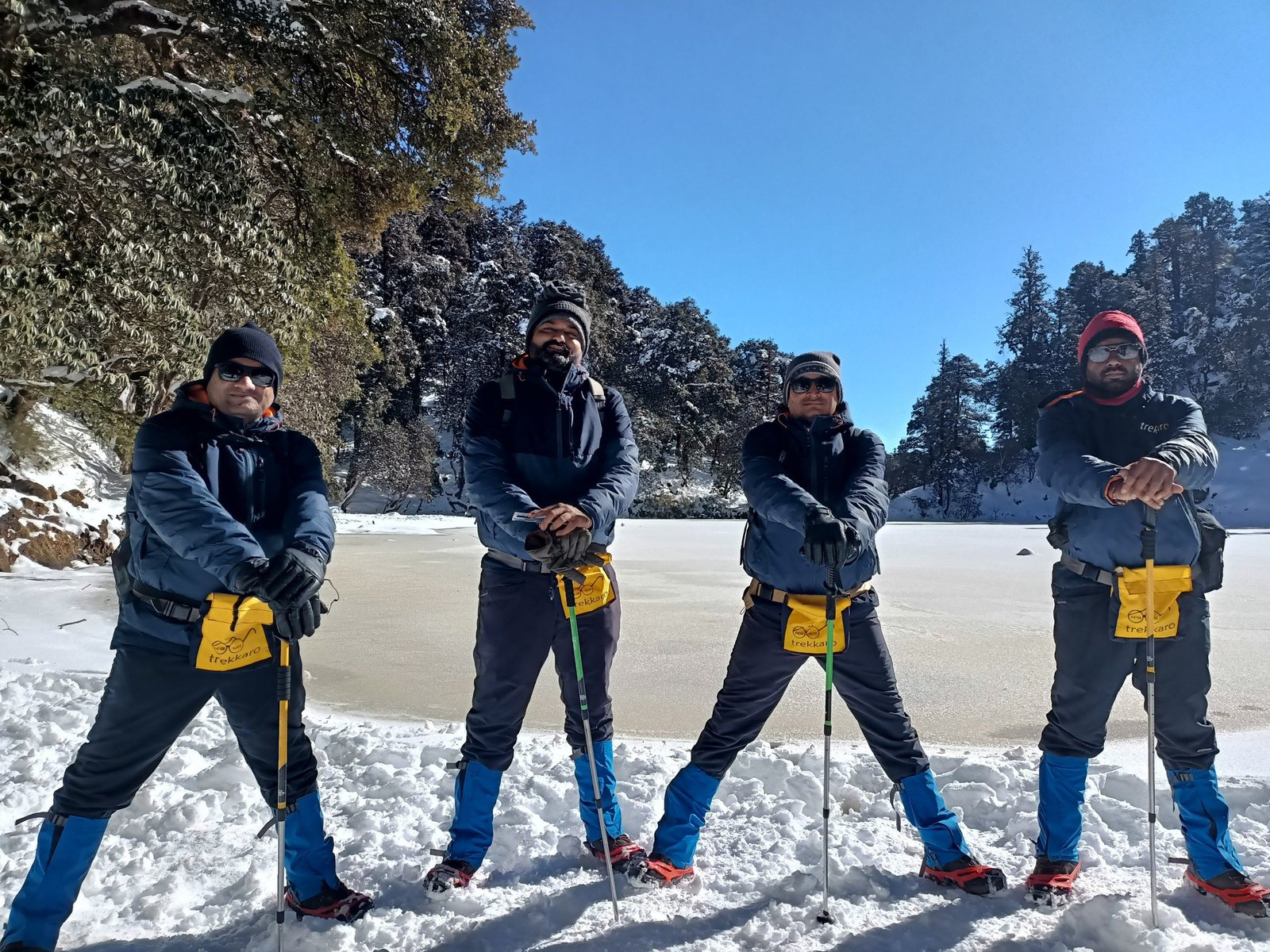
- The forest from Lohajung to Bekaltal (2,798 m) on Day 2. From December to February the trek page puts deep snow on the trail from Lohajung upward. In March this is where the snow softens and compacts first, below Bekaltal, while the upper trail stays snowy.
- Jhandi Top on Day 3, on the way to the base camp at 3,106 m. The trek page ties its best panorama to the December to February window.
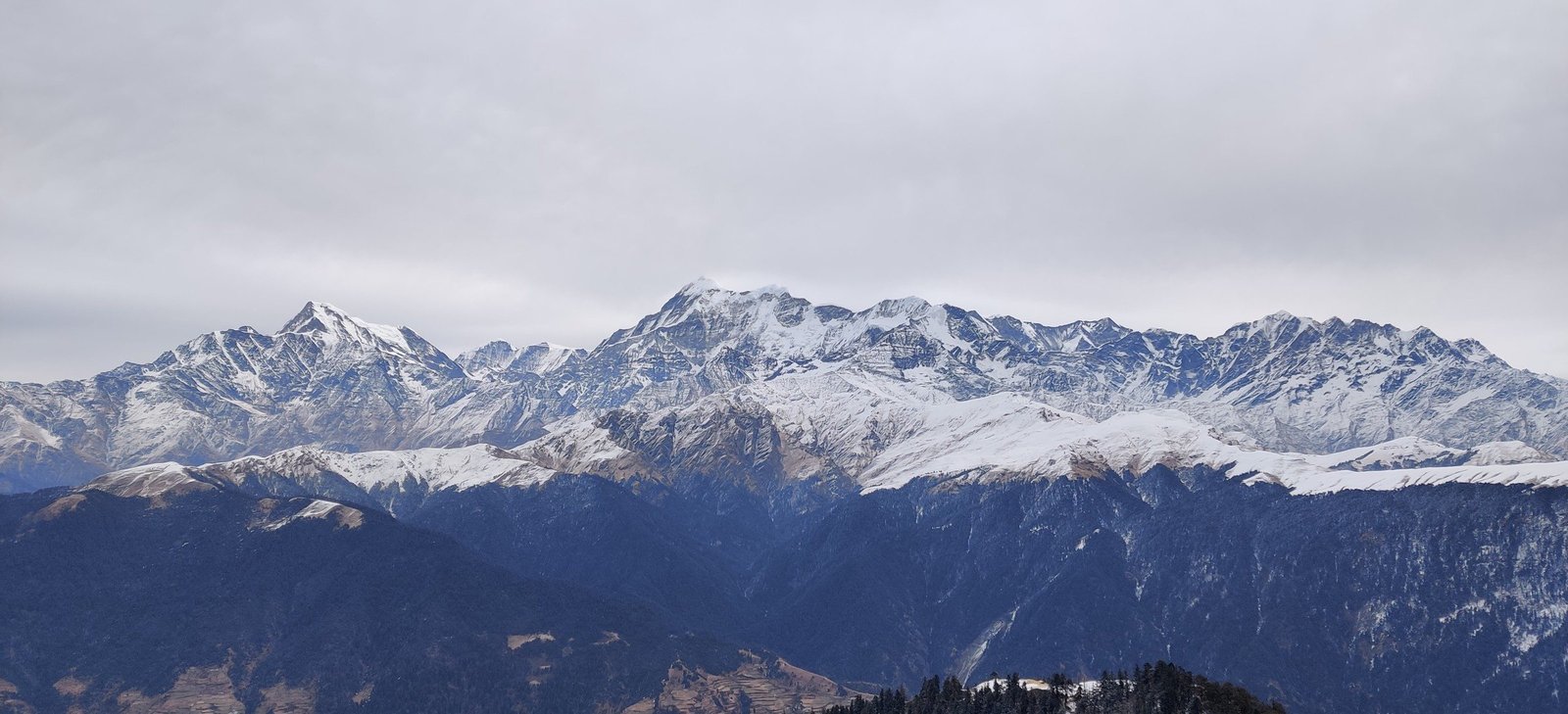
- The summit view on Day 4. From the top the page names Trishul, Nanda Ghunti, Hathi Ghoda Parvat and, on clear days, Kamet. It links the clearest views to January and keeps "winter clarity" for early March.
In October and November the snow line is still arriving: the trek page says the first snow comes in November, mostly higher up, and reaches the forest in the second half of the month.
Where does the Brahmatal season start and end?
At the start, October opens the season with freezing nights, and the trek page does not promise snow in that month. November is the turning point, and the page is specific about when it pays off: "Late November, after the first significant snowfall, is when the route comes properly into its own." Our Brahmatal in November guide covers that month.
At the end, "The season ends in late March as snow becomes slushy and trail conditions deteriorate below the treeline."
Which window suits a first snow trek?
The trek page grades Brahmatal Easy–Moderate and calls it "one of the best winter trek options for first-time snow trekkers", with a maximum altitude of 3,734 m that is "manageable for well-prepared beginners". The minimum age is 7, and trekkers under 18 come with a parent or guardian.
All three windows are open to a beginner. The page's own words point a first-timer two ways: November is listed as a "First winter experience", and in early March "daytime temperatures become more comfortable". The core window gives the most snow, with the coldest nights of the season. Whichever window you pick, every trekker brings a doctor-signed medical certificate; the form is in My Bookings.
What stays the same in every window?
The fee does not change with the month: ₹9,000 + 5% GST, which is ₹9,450 per person, and the trek page shows EMI from ₹463 a month. Free Trekking Gear is included in every window: Decathlon trekking shoes, a -10°C jacket, trekking poles, gaiters and microspikes, against a ₹3,000 refundable deposit and a ₹200 washing charge. Sleeping bags are rated to -20°C, and meals are pure vegetarian.
Transport from Rishikesh to Lohajung, about 250 km and 8–10 hours, is not included: we help the group book shared cabs, about ₹6,500 one way per 5–6 seat vehicle, paid directly to the driver and split among trekkers. For the weather in the days before you leave, the IMD Meteorological Centre Dehradun publishes warnings, nowcasts and weather reports for Uttarakhand. See the trek page for live batch dates.
See Brahmatal trek dates and book | Brahmatal trek in January | Brahmatal trek in December
Frequently asked questions
Which is the best month for the Brahmatal trek?
The trek page calls December to February the definitive Brahmatal window. Within it, January has the clearest views and the hardest cold, and February has full snow with slightly less severe temperatures.
Why is the Brahmatal trek not run in summer?
Brahmatal is run as a dedicated winter trek, from October to March. The trek page says that, unlike most Himalayan treks with a monsoon-to-autumn preference, Brahmatal improves as winter deepens.
Which window has fewer trekkers on Brahmatal?
The trek page lists November as a first winter experience with fewer trekkers and lakes beginning to freeze. It is the start of the snow season on this trek.
Can you do the Brahmatal trek in April?
No, the trek runs only from October to March. The trek page says the season ends in late March as the snow turns slushy below the treeline.
Is the Brahmatal fee different in peak winter?
No. The fee is ₹9,000 + 5% GST, which is ₹9,450 per person, in every month the trek runs. Transport from Rishikesh is not included.