Quick answer: Acclimatization is your body slowly getting used to the thinner air at altitude. It happens best when you go up gradually, sleep a little higher each night instead of a lot higher, drink enough water and rest when you need to. A well-planned trek itinerary is built around this.
Why the body needs time
The higher you go, the less oxygen each breath brings in. Over days, your body adapts: you breathe deeper and your blood carries oxygen better. Going up too fast does not give it that time, which is when altitude sickness is more likely.
How a trek plan helps
- Gradual climbs: camps are spaced so the height you sleep at rises step by step.
- Climb high, sleep low: on summit or pass days you go up and come back down to a lower camp to sleep.
- Short first day: many treks start with a short walk so you settle in at the base.
Each trek page shows the height of every camp in its day-by-day itinerary.
What you can do
- Walk slowly and steadily, at a pace you can talk at.
- Drink water through the day, even when you do not feel thirsty.
- Eat your meals, even if your appetite is low.
- Avoid alcohol and smoking on the trek.
- Tell your trek leader early if you have a headache, nausea, dizziness or unusual tiredness.
When to go down
If symptoms get worse instead of better, the answer is to stop going up, and to go down if they do not improve. Breathlessness at rest, confusion or trouble walking straight are serious signs. Your trek leader decides when to descend.
For the signs of altitude sickness and what to do, read altitude sickness on Himalayan treks. This article is general information, not medical advice.
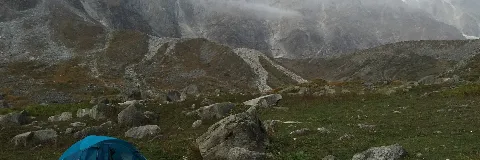
Cover photo: Tapovan meadow seen from above. Photo: Aditya.Asopa, CC BY-SA 4.0, via Wikimedia Commons.