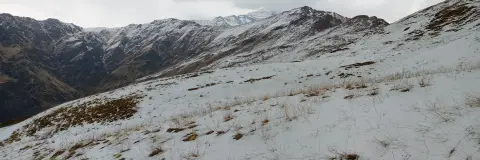
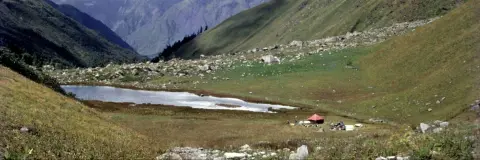
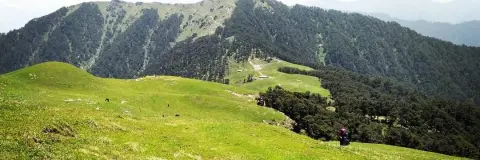
Quick answer: Leave no trace on a Himalayan trek means you carry every wrapper back to the base village, use the camp toilet tent, keep soap and food out of streams and lakes, stay on the trail, pick nothing and feed nothing. Trekkaro packs out all camp waste and keeps batches to 20 trekkers.
“Take photographs, leave footprints” is the short version of the leave no trace rules for a Himalayan trek. The meadows, lakes and forests on these routes are fragile. A bugyal (high meadow) scarred by shortcuts takes years to grow back, and several lakes on Trekkaro routes are sacred to the people who live below them. This guide is for anyone going on a trek in Uttarakhand, Himachal, Kashmir or Ladakh who wants to know what responsible trekking in the Himalayas looks like in practice, from packing at home to the last morning at camp.
Why does leave no trace matter in the Himalayas?
Cold slows decay. A foil wrapper, a wet wipe or a plastic bottle left at a high camp stays there for years, and burnt plastic releases harmful fumes. Streams that pass the camps also feed the villages downhill. And some of the most visited places on Himalayan treks are protected or sacred, with rules that come from the forest department or from local faith rather than from trekkers.
| Place | Why it is sensitive | What to do |
|---|---|---|
| Bedni Kund (Ali Bedni Bugyal trek) | A sacred lake and a key halt of the Nanda Devi Raj Jat Yatra, a procession held once every 12 years | Do not bathe in it, wash in it or throw anything into it |
| Kedartal (4,912 m) | Known as Shiva’s Lake; the origin of the Kedar Ganga river; blue sheep and goral live in the area | Keep soap and food away from the water; keep your distance from wildlife |
| Valley of Flowers National Park | A national park, open from June to the end of October and closed from November to May | Stay on the marked path; pick no flowers; follow the forest staff |
| Gaumukh and Tapovan | The snout of the Gangotri Glacier, inside the Gangotri National Park; national park permits and Gaumukh entry fees apply (Trekkaro arranges them) | Carry every scrap back to Gangotri; follow the permit rules |
| Dayara Bugyal (3,749 m) | A wide high-altitude meadow; the camp is at Gui, below the meadow | Walk on the existing path, especially when the turf is wet |
How do you pack to leave less behind?
Cut the packaging at home
Take snacks out of single packets and put them in one reusable box or zip-lock bag. Every wrapper you leave at home is one less to carry back down. Bring a reusable lunch box: on trail days lunch is packed at camp, and a box saves foil and plastic.
Bring the right toiletries
Carry biodegradable soap, toilet paper, hand sanitiser and a few zip-lock bags. Leave wet wipes at home: they are not biodegradable. Swap single-use items for reusable ones where you can, and use the winter trek packing list on our site for the rest of your kit.
Carry two water bottles
Two 1 litre bottles, refilled at camp, mean you never need to buy bottled water on the drive to the base village. In winter make one of them insulated so the water does not freeze. The Uttarakhand Health Department’s health advisory for travellers going above 3,000 m also asks you to pack for cold, rain and sun and to drink enough fluids, preferably lukewarm, so a bottle you refill is both the safe and the low-waste choice.
What are the leave no trace rules on the trail?
1. Carry out everything you carry in
Keep one small bag in your backpack pocket for wrappers, tissues and fruit peel. Do not bury or burn waste: buried waste is dug up by animals, and burnt plastic releases harmful fumes. Bring it all back to the base village. Trekkaro’s responsible tourism policy says all waste, including non-biodegradable material, is packed out and disposed of responsibly.
2. Use the toilet tent
Toilet tents are listed in the camp inclusions on treks such as Nag Tibba, Phulara Ridge and Pangarchulla; check the inclusions on your own trek page. Use the toilet tent, and use it for nothing else. If you need to go on the trail, move well away from the path and from any stream or lake, and carry used tissue back in a zip-lock bag.
3. Keep soap and food out of the water
Never wash yourself, your dishes or your clothes directly in a stream or lake, even with biodegradable soap. Carry water a little away from the source and let the used water soak into the ground. Do not throw food scraps into the water.
4. Stay on the trail
Cutting corners on switchbacks loosens soil and kills the grass that holds slopes together. On meadows, walk on the existing path, especially in wet weather, when the turf tears easily. On snow, follow the line the trek leader sets.
5. Leave plants and stones where they are
Do not pick flowers, dig up plants or take stones as souvenirs. In the Valley of Flowers National Park and the Gangotri National Park, entry rules and permits apply; follow what the trek team and the forest staff tell you. A photograph is the souvenir.
6. Do not feed wildlife or animals
Blue sheep and goral on the Kedartal route, the Himalayan monal in the forests around Deoriatal, and the dogs and mules in the villages all live along these trails. Feeding them changes their behaviour and harms their health. Keep food packed away at camp.
7. Give way to animals on the path
On shared trails, step to the uphill side and let mules and flocks pass. Do not chase or startle animals for a photograph.
What should you do at camp?
Camp is where most of the impact happens, because a group stays in one spot for a night or two. Four habits keep a campsite clean.
- Light no fires and collect no wood. Meals are cooked by the camp kitchen.
- Keep the noise down. Others are resting, and the quiet is part of why people come. No speakers.
- Walk around your tent before you leave each camp and pick up anything that is yours, down to the last hair tie.
- Share the space. Campsites and trails are used by other groups and by villagers. Be friendly and make room.
How do you respect temples, lakes and villages?
Many treks pass through villages and sacred places. Take off your shoes where asked, ask before you photograph people or the inside of a temple, and dress modestly in villages. On the Deoriatal–Chandrashila trek you walk past Tungnath, the highest temple of Lord Shiva; at Gangotri, the start of the Gaumukh Tapovan and Kedartal treks, there is an evening Ganga Aarti. Treat both as places of worship, not photo stops. In villages, buy what you need from local shops rather than carrying everything from the city; it supports the families who live there.
How does Trekkaro keep its own footprint small?
Trekkaro’s responsible tourism page states the policy in plain terms: leave-no-trace protocols on its treks, all waste packed out, biodegradable products used wherever possible, single-use plastic kept to a minimum, and campsites left cleaner than they were found. Batches are capped at 20 trekkers with one trek leader or guide per 8, because fewer people mean less trail erosion and less impact on each campsite. The trade-off is simple: with a cap of 20, a batch closes once it is full, so book early if your dates are fixed.
What is on the leave no trace checklist?
- One reusable snack box, one lunch box, two water bottles (one insulated in winter).
- Biodegradable soap, toilet paper, sanitiser, zip-lock bags; no wet wipes.
- A small waste bag in your backpack pocket, emptied only at the base village.
- Stay on the trail; no flowers, stones or shortcuts.
- No soap in streams, no food for animals, no fires.
- A last look around before you leave each camp.
See Dayara Bugyal dates and book | Winter trek packing list | How to prepare for your first Himalayan trek
Frequently asked questions
What does leave no trace mean on a trek?
It means the trail and the campsites look the same after your group has passed as they did before. You take your waste home, keep water sources clean and leave plants, animals and sacred places undisturbed.
Are there toilets on Himalayan treks?
There are no permanent toilets on the high trails. Many Trekkaro camps have a toilet tent, listed in the inclusions on each trek page, so check yours before you go. Carry toilet paper, sanitiser and a zip-lock bag for used tissue.
Can I carry wet wipes on a trek?
It is better not to, because wet wipes contain plastic fibres and do not break down in the cold. Toilet paper and biodegradable soap do the same job, and you pack used tissue out.
Is it okay to burn rubbish at a campsite?
No. Burning plastic releases harmful fumes and leaves half-burnt waste behind. Keep your rubbish in a small bag and carry it back to the base village.
Can I pick flowers in the Valley of Flowers?
No. The Valley of Flowers is a national park and a UNESCO World Heritage Site, and leave no trace means you take nothing but photographs. Stay on the marked path and follow the forest staff’s instructions.