
This guide is about the Har Ki Dun Trek — dates, price, day-by-day itinerary and booking are on the trek page.
Quick answer: Har Ki Dun is a 7-day, Easy to Moderate valley trek from Sankri in Uttarakhand to 3,536 m (11,600 ft), below Swargarohini and Black Peak. It covers about 52 km through old villages and forest, and runs from March to June and from October to November. Trekkaro's price is ₹10,500 + 5% GST (₹11,025), Sankri to Sankri, with Free Trekking Gear.
Most treks lead to one summit or one pass. Har Ki Dun is different: the valley itself is the destination. You walk up the Tons and Supin river valleys past timber-and-stone villages hundreds of years old, through pine and walnut forest, to a wide glacial valley ringed by snow peaks. This guide covers the route, the best season, the day-by-day plan, difficulty, cost, gear and how to get there, with links to detailed articles.
Har Ki Dun trek at a glance
| Detail | Har Ki Dun trek |
|---|---|
| Highest point | Har Ki Dun valley, 3,536 m / 11,600 ft |
| Duration | 7 days (Dehradun to Dehradun) |
| Trekking distance | About 52 km over 5 trekking days |
| Grade | Easy to Moderate |
| Base village | Sankri, 1,950 m / 6,400 ft, Uttarkashi district |
| Season | March to June and October to November |
| Minimum age | 8 years (under 18 with a parent or guardian) |
| Trekkaro price | ₹10,500 + 5% GST = ₹11,025, Sankri to Sankri |
| Group size | Maximum 20 trekkers, 1 leader or guide for every 8 |
Why is it called Har Ki Dun?
Har Ki Dun is translated as "the valley of Shiva" or "the valley of the gods". Local tradition links it to the Mahabharata: the Pandavas are said to have passed through this valley on their final journey, climbing towards heaven by way of Swargarohini, the "stairway to heaven" peak that dominates the skyline. Every village in the valley tells its own version of the story.
What makes the Har Ki Dun trek special?
- Living villages. You pass Osla and its old temple dedicated to Duryodhana, and houses built in the Kath Kuni style of interlocking timber and stone.
- The big three peaks. Swargarohini, Bandarpoonch and Black Peak (Kalanag) rise around the valley, with the Jaundhar glacier at its head.
- Forests and rivers. Most of the walk follows the Supin river through pine, walnut and chestnut forest.
- A gentle gradient. The trail gains height slowly over several days, which suits first-timers and families.
- Time in the valley. Two nights at Kalkatiyadhaar give you a full day for the valley itself.
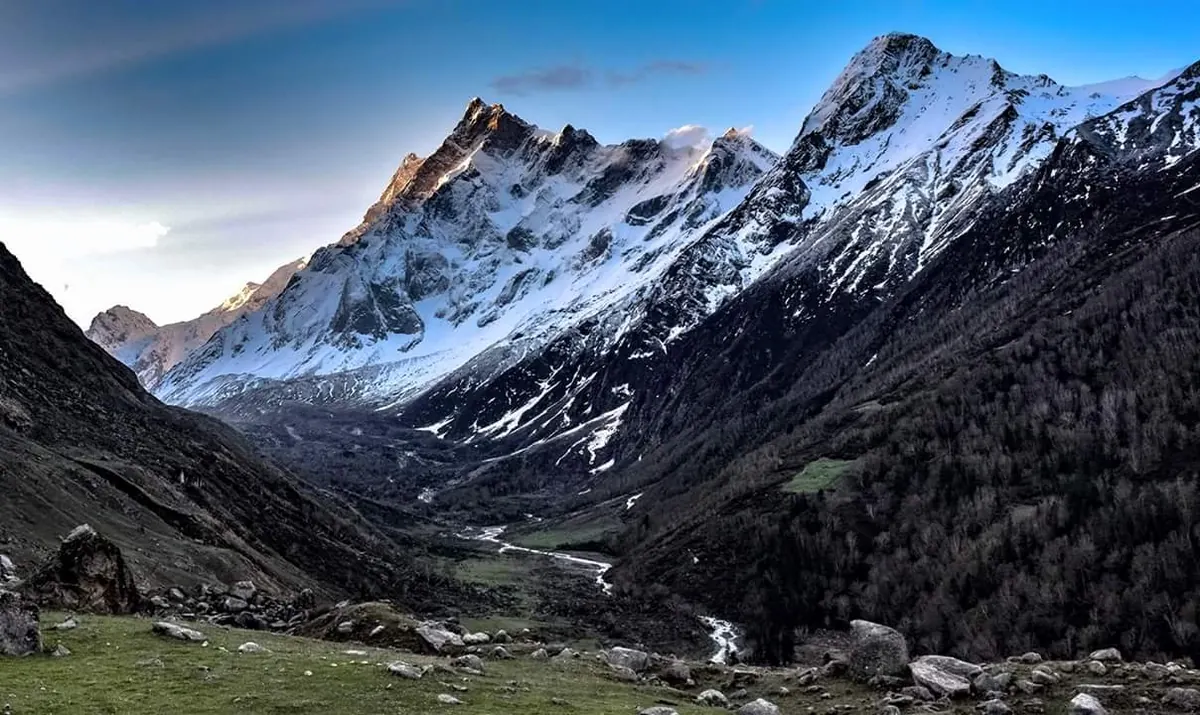
When is the best time for the Har Ki Dun trek?
Trekkaro runs Har Ki Dun in spring and summer (March to June) and autumn (October to November). Temperatures below are from Trekkaro's Har Ki Dun trek page.
| Season | Taluka | Puani Garaat | Har Ki Dun | What to expect |
|---|---|---|---|---|
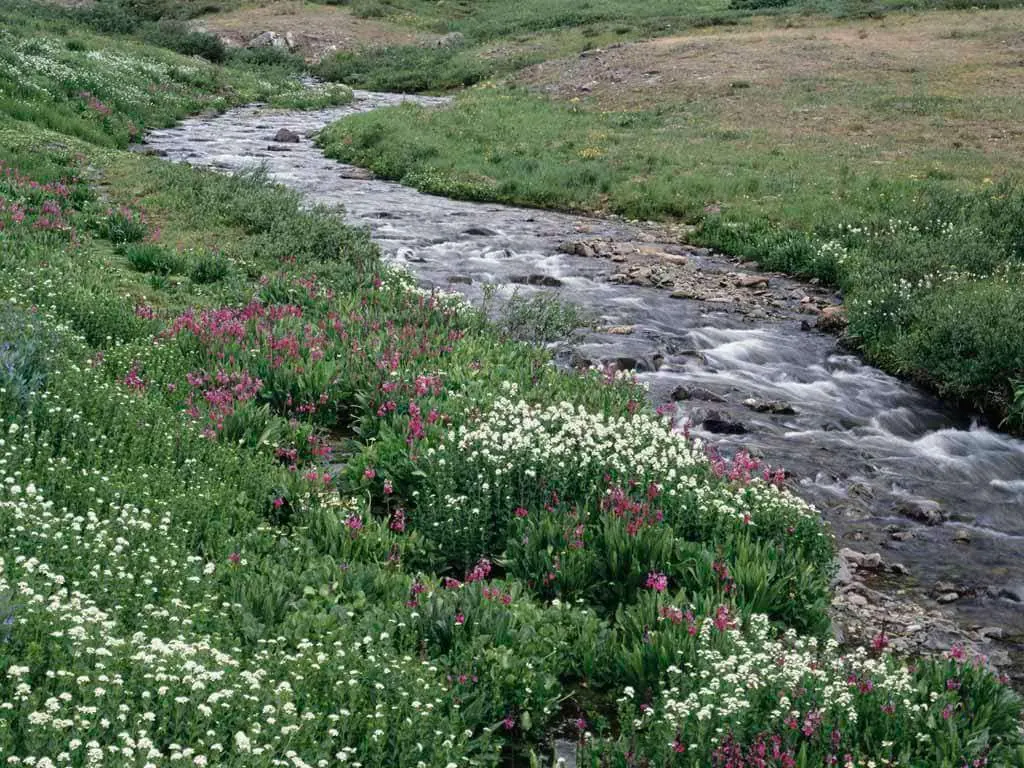
| April to June | 10°C to 22°C | 5°C to 18°C | 0°C to 12°C | Green valley, wildflowers, snow on the peaks and patches in the upper valley |
| October to November | 5°C to 18°C | 2°C to 12°C | -3°C to 8°C | Clear skies, autumn colours, the sharpest views of Swargarohini |
For flowers and green meadows, choose May and June. For clear views and autumn colour, choose October and November. March and early April can still have snow in the upper valley. Check the Uttarkashi forecast from the India Meteorological Department's Dehradun centre before you go.
Har Ki Dun trek itinerary (7 days)
Day 1: Dehradun to Sankri (1,950 m / 6,400 ft)
About 200 km by road, 8 to 9 hours, via Mussoorie, Purola and Mori. The shared cab leaves Dehradun Railway Station at 6:30 AM. Night at a Sankri guesthouse. Purola is the last ATM and Sankri the last mobile signal, with Jio the most reliable.
Day 2: Sankri to Taluka by road, trek to Puani Garaat (2,440 m / 8,010 ft)
12 km by road to Taluka (2,107 m / 6,913 ft, about 45 minutes), then 10 km, 6 to 7 hours, along the Supin river through forest and past small villages to camp at Puani Garaat.
Day 3: Puani Garaat to Kalkatiyadhaar (2,740 m / 8,990 ft) via Osla
10 km, 5 to 6 hours. You pass Osla village and its old temple, climb through terraced fields and forest, and camp at Kalkatiyadhaar with the first views up the valley.
Day 4: Kalkatiyadhaar to Har Ki Dun (3,536 m / 11,600 ft) and back
14 km round trip, 8 to 9 hours, the longest day. The trail climbs through the last forest into the open valley under Swargarohini, with the Jaundhar glacier at its head, then returns to Kalkatiyadhaar.
Day 5: Kalkatiyadhaar to Puani Garaat
10 km, 4 to 5 hours, mostly downhill along the same trail.
Day 6: Puani Garaat to Taluka, drive to Sankri
8 km, 3 to 4 hours of trekking to Taluka, then 45 minutes by road to the Sankri guesthouse.
Day 7: Sankri to Dehradun
The cab leaves Sankri around 6:30 AM and reaches Dehradun Railway Station around 5:00 PM, so book onward travel for the evening or the next day.
How difficult is the Har Ki Dun trek?
Har Ki Dun is graded Easy to Moderate. Daily distances are 8 to 14 km, the gradients are gentle and there are no technical sections. The challenge is endurance: Day 2 is 6 to 7 hours and Day 4 is 8 to 9 hours. Five or six weeks of regular jogging, stair climbing and long walks with a loaded backpack is good preparation. The team checks oxygen saturation, pulse and blood pressure on the trek and carries portable oxygen. New to trekking? Read our first Himalayan trek guide.
What does the Har Ki Dun trek cost?
Trekkaro's Har Ki Dun trek costs ₹10,500 per person + 5% GST = ₹11,025, Sankri to Sankri. The trek page shows EMI from ₹540 a month.
| Item | Cost |
|---|---|
| Trek fee (stays, meals, permits, camping gear, trek team) | ₹10,500 + 5% GST = ₹11,025 |
| Shared cab, Dehradun to Sankri and back | ₹1,000 per person each way (₹2,000 return), paid directly to the driver |
| Backpack offloading (optional, up to 9 kg) | ₹1,800 + GST = ₹1,890 |
| Single tent (optional) | ₹2,000 + GST = ₹2,100 |
| Free Trekking Gear deposit | ₹3,000 refundable + ₹200 washing charge |
The fee includes two nights in a Sankri guesthouse and four nights in camps (three trekkers to a tent), meals from Day 1 dinner to Day 6 dinner, Govind Pashu Vihar entry permits and forest fees, sleeping bags rated to -20°C and mats, and a certified trek leader with guides, cooks and mules. Transport is not included in the trek fee: we help the group book shared cabs at ₹1,000 per person each way, paid directly to the driver. Cancellation: 70% refund 30 days or more before departure and 50% between 15 and 29 days; at 8 to 14 days there is no cash refund, but you can take a 100% TrekCash voucher valid for one year, a free reschedule or a transfer to another trekker. Any of these can also replace a cash refund at any point up to 8 days before departure. At 7 days or less, or a no-show, there is no refund. See the Har Ki Dun trek cost breakdown.
What gear does Trekkaro provide?
Har Ki Dun comes with Free Trekking Gear: Decathlon trekking shoes, a jacket rated to -10°C, trekking poles, gaiters and microspikes, for a ₹3,000 refundable deposit and a ₹200 washing charge. You bring your own backpack, thermal inners, fleece, rain jacket, warm cap and gloves, sunglasses, sunscreen, a headlamp and a water bottle.
How do you reach Sankri?
Dehradun is the gateway. Overnight trains such as the Nanda Devi Express and buses from Delhi's Kashmere Gate ISBT arrive early in the morning, in time for the 6:30 AM cab from Dehradun Railway Station. Jolly Grant Airport is about 25 km from Dehradun. Har Ki Dun starts from the same village as Kedarkantha, so our guide on how to reach Sankri covers every option step by step.
Five things to know before you go
- Carry cash. Purola is the last ATM and cards do not work on the trail.
- Expect no network after Sankri. Tell your family you will be out of reach from Day 2 to Day 6.
- Carry your ID. The Govind Pashu Vihar permit needs an original government photo ID and a photocopy; international trekkers need a passport.
- Respect the villages. Ask before photographing people or entering temples, and dress modestly in Osla.
- Pack a rain layer. Afternoon showers are common in spring and early summer.
See Har Ki Dun dates and book | Har Ki Dun trek cost | Kedarkantha guide | How to reach Sankri
Frequently asked questions
How many days does the Har Ki Dun trek take?
The Har Ki Dun trek takes 7 days from Dehradun to Dehradun, with about 52 km of trekking over five days. Day 4 is the day you walk into the Har Ki Dun valley and back.
What is the best time for the Har Ki Dun trek?
May and June for green meadows and flowers, and October and November for clear views and autumn colour. Trekkaro runs batches from March to June and October to November.
Is Har Ki Dun suitable for beginners?
Yes. It is graded Easy to Moderate with gentle gradients and no technical sections, and the minimum age is 8. The days are long, so train for five or six weeks.
How high is Har Ki Dun?
The Har Ki Dun valley is at 3,536 m (11,600 ft). The camps are at Puani Garaat (2,440 m) and Kalkatiyadhaar (2,740 m).
How is Har Ki Dun different from Kedarkantha?
Both start from Sankri. Kedarkantha is a 5-day summit trek to 3,810 m and is best in winter snow, while Har Ki Dun is a 7-day valley trek through old villages, best in spring and autumn.
Is there mobile network on the Har Ki Dun trek?
Sankri is the last place with signal, and Jio works best. There is no network on the trail from Taluka until you return to Sankri.
How much does the Har Ki Dun trek cost with Trekkaro?
₹10,500 + 5% GST, which is ₹11,025 per person, Sankri to Sankri, with Free Trekking Gear. The shared cab from Dehradun is ₹1,000 per person each way, paid directly to the driver.
