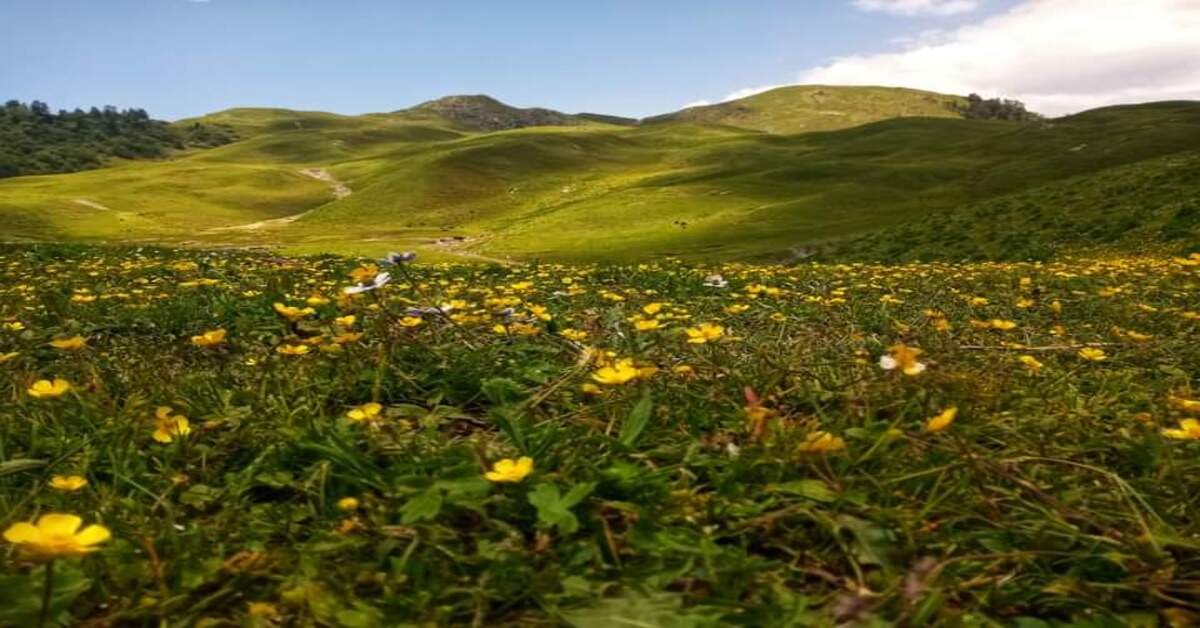
Quick answer: Choose Dayara Bugyal if you want the gentler snow trek: 4 days from Dehradun, about 20 km on foot, one camp at 2,936 m and ₹8,190 with GST. Choose Kedarkantha if you want a true summit at 3,810 m: 5 days, about 20 km, a 2:00 AM summit start and ₹9,450 with GST. Both are Easy–Moderate treks in Uttarkashi.
This comparison is for anyone choosing a first winter trek and stuck between these two. Both start from Dehradun Railway Station, both are run by Trekkaro all winter, and both come with Free Trekking Gear. The trek figures below come from the two trek pages, updated on 14 October 2026.
Dayara Bugyal vs Kedarkantha at a glance
| Fact | Dayara Bugyal | Kedarkantha |
|---|---|---|
| Trip length (Dehradun to Dehradun) | 4 days | 5 days |
| Trekking days and distance | 3 days, about 20 km | 4 days, about 20 km |
| Highest point | Dayara Top, 3,749 m / 12,300 ft | Kedarkantha summit, 3,810 m / 12,500 ft |
| Highest camp you sleep at | Gui, 2,936 m / 9,630 ft | Base camp, 3,429 m / 11,250 ft |
| Grade | Easy–Moderate | Easy–Moderate |
| Start and end village | Raithal, 2,256 m | Sankri, 1,950 m |
| Drive from Dehradun | 180 km, 8–9 hrs | 200 km, 7–8 hrs |
| Pickup | Dehradun Railway Station, 07:30 AM | Dehradun Railway Station, 06:30 AM |
| Snow on the trail | December to March | Deep snow December to February; upper trail March and April |
| Season | October to June | Mid-September to June (no July or August) |
| Minimum age | 8 years | 8 years |
| Price with 5% GST | ₹8,190 | ₹9,450 |
Which trek is easier, Dayara Bugyal or Kedarkantha?
Both carry the same grade, but they load the effort differently. Dayara has one hard day and two short ones. Kedarkantha has two short days, one very long day and an easy walk out.
| Trek day | Dayara Bugyal | Kedarkantha |
|---|---|---|
| Day 2 | Raithal to Gui: 5 km, 3–4 hrs, about 680 m up | Sankri to Juda Ka Talab (2,773 m): 4 km, 4–5 hrs |
| Day 3 | Gui to Dayara Top and back: 10 km, 8–9 hrs, starts at sunrise | Juda Ka Talab to base camp (3,429 m): 3 km, 2–3 hrs |
| Day 4 | Gui to Raithal: 5 km, 2–3 hrs, then the drive | Summit and back to Juda Ka Talab: 9 km, 8–9 hrs, starts at 2:00 AM |
| Day 5 | None | Juda Ka Talab to Sankri: 4 km, 3–4 hrs, then the drive |
The hardest stretch on Dayara is a steep half hour towards Chilapada and the final snowy slope to the top. On Kedarkantha it is summit day: a 2:00 AM start, a steep climb by headlamp, on snow in winter, and 9 km over 8–9 hours.
Altitude matters too. On Dayara you never sleep higher than 2,936 m. On Kedarkantha you spend a night at 3,429 m before the summit. Day 2 on Kedarkantha also climbs more: from 1,950 m to 2,773 m, against about 680 m on Dayara. The Uttarakhand Health Department's high-altitude advisory, written for Char Dham pilgrims going above 3,000 m, advises no more than 800–1,000 m of elevation gain a day and says to descend if you feel unwell. Both itineraries stay within that on the way up.
Which one has more snow, and in which months?
Dayara's trail stays fully under snow one month longer. Its trek page gives snow from December to March, and Gui Lake and Barnala Tal freeze in winter. Kedarkantha has deep snow from the forest above Sankri to the summit from December to February, and Juda Ka Talab freezes. In March and April the snow stays on its upper trail and summit only.
Neither trek page lists a batch starting in March 2027 yet. The last Dayara batches start on 27 and 28 February and reach Dayara Top on 1 and 2 March. For a summit on deep snow, choose Kedarkantha in December, January or February. Snow depth changes from one winter to the next on both treks, so treat the months as the window, not a promise.
How cold does each trek get in winter?
Kedarkantha's trek page gives the colder figures, and its base camp sits about 500 m higher than Gui.
| Season on the trek page | Dayara Bugyal | Kedarkantha |
|---|---|---|
| Winter days | 4°C to 11°C (December to March) | -2°C to 8°C (December to February) |
| Winter nights | -10°C to -2°C | -15°C to -10°C |
| Spring | March falls in the winter band; April is in the April to June figures | Days 5°C to 15°C, nights -6°C to -2°C (March and April) |
| Summer | Days 13°C to 18°C, nights 7°C to 12°C (April to June) | Days 10°C to 20°C, nights 2°C to 5°C (May and June) |
| Autumn | Not published | Days 5°C to 18°C, nights -8°C to -2°C (September to November) |
On both treks you sleep in tents shared by three, with sleeping bags rated to -20°C, and women share tents only with women.
Summit or meadow: what do you actually see?
Kedarkantha is about the summit. You reach the top for sunrise and get a 360° view of the Garhwal and Himachal ranges. From the meadows on the way up you see Swargarohini, Black Peak, Bandarpunch and Ranglana.
Dayara is about space. Out of the forest, the trail opens onto what the trek page calls one of the largest high-altitude pastures in India. From Dayara Top the skyline holds Bandarpoonch, Srikanth, Gangotri I, Black Peak, Draupadi ka Danda, Jaunli and Bakariya Top. You also sleep two nights at the same camp.
How do you reach each trek from Dehradun?
Transport is not included in the trek fee: we help the group book shared cabs, paid directly to the driver and split among trekkers. For Dayara, the shared cab costs about ₹6,500 per 5–6 seat vehicle each way. For Kedarkantha, it is ₹1,000 per person each way, or ₹2,000 return.
- For Dayara Bugyal, the cab leaves at 07:30 AM for Raithal. On Day 4 it leaves Raithal around 01:00 PM and reaches Dehradun by about 09:00 PM. Breakfast is the only meal included that day. Bhatwari, an hour before Raithal, is the last reliable ATM and mobile signal.
- For Kedarkantha, the cab leaves at 06:30 AM for Sankri. On Day 5 it is expected at Dehradun by 06:00 PM. Purola has the last reliable ATM, and Sankri is the last place with signal (Jio).
Carry the same papers for both: an original government photo ID with a photocopy, a medical certificate signed by a doctor and travel insurance covering high-altitude trekking and evacuation (helicopter evacuation for Kedarkantha). Cards are not accepted on either trail, so carry small notes, a power bank (no charging on the Kedarkantha trail) and an insulated bottle. Dayara has oxygen cylinders and a stretcher at every camp; Kedarkantha carries portable oxygen and a stretcher with each batch, checks SpO2 twice a day and has no doctor, only leaders trained in Wilderness First Aid.
What does each trek cost?
| Cost item | Dayara Bugyal | Kedarkantha |
|---|---|---|
| Trek fee | ₹7,800 + 5% GST | ₹9,000 + 5% GST |
| Total with GST | ₹8,190 | ₹9,450 |
| EMI (24 months) | ₹402 a month | ₹463 a month |
| Backpack offloading (optional) | ₹1,000 + GST | ₹1,500 + GST |
| Single tent (optional) | ₹2,000 + GST | ₹2,000 + GST |
| Shared cab from Dehradun (not in the fee) | About ₹6,500 per vehicle each way, split | ₹1,000 per person each way |
| Free Trekking Gear deposit | ₹3,000 refundable + ₹200 washing (+ GST) | ₹3,000 refundable + ₹200 washing (+ GST) |
Both fees cover stays, meals, permits and camping gear. Free Trekking Gear on both treks means Decathlon trekking shoes, a -10°C jacket, trekking poles, gaiters and microspikes. Dayara is ₹1,260 cheaper and one day shorter, so it also costs one less day of leave.
Cancellation terms are the same on both: 70% refund 30 or more days out, 50% at 15–29 days, no cash refund at 8–14 days and none at 7 days or less; up to 8 days before departure, a 100% TrekCash voucher (valid 1 year), free reschedule or transfer can replace any cash refund.
Which trek fits your dates?
Kedarkantha has far more departures in peak winter. Its page lists 31 batches in December 2026, 31 in January 2027 and 28 in February 2027, one starting every day. Dayara lists 17, 11 and 8 for the same months: Saturday and Sunday starts, plus every day from 21 December to 1 January. Booking for any batch closes at 5 PM the day before it starts.
Pick Dayara Bugyal if…
- You can spare 4 days, not 5.
- You want a Saturday or Sunday start: outside 21 December to 1 January, every Dayara batch starts on a weekend.
- You would rather not start a climb at 2:00 AM or sleep above 3,000 m.
- Wide meadows and two frozen lakes appeal to you more than a summit.
Pick Kedarkantha if…
- Standing on a 3,810 m summit at sunrise is the point of the trip.
- You need a mid-week departure in December, January or February.
- You want a frozen lake campsite and can handle -15°C nights.
Trekkaro tip: both summit days run 8–9 hours. Train with long walks for the 4–6 weeks the Dayara page recommends, and take the free Am I Ready? fitness test first.
See Dayara Bugyal dates and book | See Kedarkantha dates and book | Dayara Bugyal cost breakdown | Kedarkantha difficulty and fitness
Frequently asked questions
Can I do Dayara Bugyal and Kedarkantha in one trip?
Both treks start and end at Dehradun Railway Station, so you can book a Dayara batch and then a Kedarkantha batch. Back to back that is 9 days, but you would reach Dehradun at about 09:00 PM and board the 06:30 AM Kedarkantha cab next morning, so the 10-day plan with a rest day in Dehradun is easier.
Which trek is better for a 10-year-old child?
Both accept children from 8 years, with a parent or guardian. Dayara is the easier fit for a child: three trekking days, nights no higher than 2,936 m and no pre-dawn start.
Is Dayara Bugyal or Kedarkantha better for altitude sickness?
Dayara keeps you lower: you sleep no higher than Gui, 2,936 m. Kedarkantha sleeps you at 3,429 m, then drops you to Juda Ka Talab, 2,773 m, on summit day. Ask your doctor before either trek, including about Diamox.
Can I book Dayara Bugyal or Kedarkantha for March?
Not yet. Both trek pages list batches only up to 28 February 2027. If March dates are added, Dayara has snow on the whole trail until March, while Kedarkantha keeps snow on its upper trail and summit only.
Do both treks include Free Trekking Gear?
Yes, both get the full Free Trekking Gear kit, including microspikes and gaiters for the snow. One ₹3,000 refundable deposit plus a ₹200 washing charge (+ GST) covers it, and the deposit comes back when you return the kit.