This guide is about the Bali Pass Trek — dates, price, day-by-day itinerary and booking are on the trek page.
Quick answer: Bali Pass is a Difficult, 8-day crossover of about 59 km from Sankri to Janki Chatti over a 4,950 m (16,241 ft) pass, with Day 9 as a buffer. Trekkaro runs it in May–June and September–October for ₹18,750 + 5% GST (₹19,687.50). Join only after one earlier trek above 4,000 m.
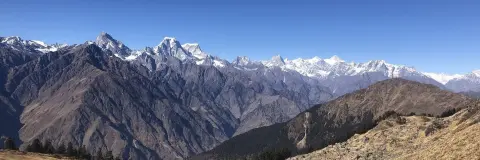
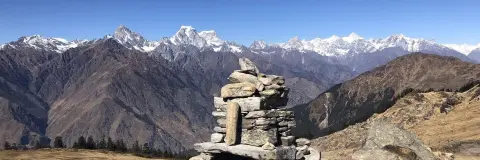
Bali Pass joins two valleys: the Har Ki Dun side, where the trek begins, and the Yamunotri valley, where it ends. You never walk the same ground twice. The route moves from walnut and deodar forest to the meadow of Devsu Thatch, the glacial lake of Ruinsara Tal, then moraine, scree and snow to the pass, where Swargarohini, Bandarpoonch and Kalanag (Black Peak) stand all around. This page is for experienced trekkers weighing up the crossing: who it suits, how hard each day is, and what the route asks of you.
Who should not attempt Bali Pass?
Trekkaro grades Bali Pass Difficult and takes only experienced trekkers. Do not book it if any of these apply:
- You have not trekked above 4,000 m. At least one earlier high-altitude trek above 4,000 m is required, whatever your age or fitness.
- You are under 16. That is the minimum age, because pass day is 8 to 9 hours on snow, rocky ridges and steep scree. Trekkers under 18 come with a parent or guardian.
- You cannot keep Day 9 free. Weather can push the crossing back by a day, and onward travel that depends on finishing on Day 8 forces rushed decisions.
- You cannot give 10 to 12 weeks to preparation. The hardest day comes after five days of effort at altitude.
If that rules you out for now, Sankri is also the base for Har Ki Dun and Kedarkantha, both graded Easy to Moderate. Neither goes above 4,000 m, so you would still need a higher trek before Bali Pass.
What are the Bali Pass trek facts?
| Detail | Bali Pass trek |
|---|---|
| Highest point | Bali Pass, 4,950 m / 16,241 ft |
| Trekking distance | About 59 km over 7 trekking days |
| Duration | 8 days, Dehradun to Dehradun, plus a Day 9 buffer |
| Grade | Difficult |
| Start | Sankri, 1,950 m / 6,400 ft (walk begins at Taluka, 2,107 m) |
| End | Janki Chatti, 2,650 m / 8,694 ft, near Yamunotri |
| High camps | Odari (4,100 m / 13,451 ft) and Bali Pass Base Camp (4,600 m / 15,092 ft) |
| Pickup | Dehradun Railway Station, 6:30 AM on Day 1 |
| Trekkaro price | ₹18,750 + 5% GST = ₹19,687.50 |
How hard is each day of the Bali Pass route?
| Day | Route | Distance and time | Sleep at | What makes it hard |
|---|---|---|---|---|
| 1 | Dehradun – Sankri (drive) | About 200 km, 8–9 hrs | 1,950 m | A full day on the road |
| 2 | Taluka – Seema | 12 km, 6–7 hrs | 2,560 m | Distance, not gradient |
| 3 | Seema – Devsu Thatch | About 6 km, 4–5 hrs | 3,000 m | A steep, humid forest climb |
| 4 | Devsu Thatch – Ruinsara Tal | About 8–9 km, 5–6 hrs | 3,500 m | Little; a forest descent and a gentle climb |
| 5 | Ruinsara Tal – Odari | About 6 km, 5–6 hrs | 4,100 m | Moraine, boulder fields and the first night above 4,000 m |
| 6 | Odari – Base Camp | About 5 km, 4–5 hrs | 4,600 m | Steep rocky moraine and loose scree |
| 7 | Base Camp – Bali Pass – Lower Dhamni | About 14 km, 8–9 hrs | 3,400 m | Snow slopes, a narrow ridge and a 1,550 m descent |
| 8 | Lower Dhamni – Janki Chatti, drive to Dehradun | About 8 km, 4–5 hrs, then about 200 km, 8–9 hrs | – | Tired legs on the descent, then a long drive |
Days 1 to 4: forest and meadow
Purola has the last reliable ATM on the drive, and Sankri is the last place with a stable signal, where only Jio works. On Day 2, carry a packed lunch and full bottles: there are few stop points. Day 3 opens onto Devsu Thatch, a wide meadow with a 180° view of Swargarohini, Kalanag and Bandarpoonch. Day 4 ends at Ruinsara Tal, a glacial lake believed to be linked with the Pandavas. Weather at the lake changes fast, so keep warm layers and rain gear on top of your pack.
Days 5 and 6: the high camps
The tree line falls behind on Day 5. Walk at a pace at which you can still talk, test loose rocks before you trust them, and tell the trek leader at once about any headache or nausea. On Day 6, kick small steps on the scree and follow the line of the person in front. Base camp weather is unpredictable; lay out your layers, gloves and bottle before you sleep.
Why is pass day the crux?
You leave base camp at 4:00 to 5:00 AM for safer snow and to clear the pass before the weather turns. The climb of about 350 m goes over snow slopes and rocky ridges to a narrow ridge at the top, where every foot placement counts and the trek leader sets the pace. Ice axes, microspikes and ropes are part of the team's equipment for this ground. From the pass the view runs a full 360°. Then comes a long, steep descent of about 1,550 m on scree and snow, through alpine meadow and forest, to the forest camp at Lower Dhamni. In all, about 14 km and 8 to 9 hours, after five days at altitude.
On Day 8 the trail down through oak and pine forest via Yamunotri is well marked. From Janki Chatti the drive to Dehradun takes 8 to 9 hours; accommodation in Dehradun that night is not included, so book onward travel after 11:00 PM or for the next day.
Is Bali Pass harder in May–June or September–October?
| Season | Temperatures (from the trek page) | On the route |
|---|---|---|
| May–June | Lower altitudes: day 10°C to 20°C, night around 5°C; much colder at the high camps | The snowier window: snow patches on the moraine and snow on the upper trail and the pass; wildflowers on Devsu Thatch |
| September–October | Day 5°C to 15°C; nights below 0°C at the high camps | Less snow on the trail, crisp skies and fresh snow on the peaks; the cold is part of the challenge |
Trekkaro's batches run from May to June and from September to October; see the trek page for live batch dates. No batch starts in the July–August monsoon or in winter.
How should you prepare for Bali Pass?
Trekkaro recommends 10 to 12 weeks of serious preparation: cardio, uphill walks with a loaded backpack, and leg strength for the long descents on Days 7 and 8. Walking days run 4 to 9 hours. Camps climb in steady steps, 2,560 m, 3,000 m, 3,500 m, 4,100 m and 4,600 m on successive nights, and that steady gain is what makes the crossing possible. Above 3,000 m, follow the Uttarakhand Health Department's health advisory for travellers going above 3,000 m: gain no more than 800 to 1,000 m a day, rest 5 to 10 minutes every hour, dress for cold, rain and sun, and go down rather than up if you feel unwell. Every camp has a first-aid kit, an oxygen cylinder and a stretcher.
What does the crossing cost, cabs and buffer day included?
| Item | Cost |
|---|---|
| Trek fee (stays, meals, permits, camping and technical gear, trek team) | ₹18,750 + 5% GST = ₹19,687.50 |
| EMI | EMI starts at ₹964 a month |
| Shared cab, Dehradun to Sankri and Janki Chatti to Dehradun | ₹1,000 per person each way (₹2,000 return), paid directly to the driver |
| Backpack offloading (optional, up to 9 kg) | ₹4,250 + 5% GST |
| Single tent (optional) | ₹2,000 + 5% GST |
| Buffer day, only if used | ₹2,100 + 5% GST, collected by the trek leader |
| Free Trekking Gear | ₹3,000 refundable deposit + ₹200 washing charge (+ GST) |
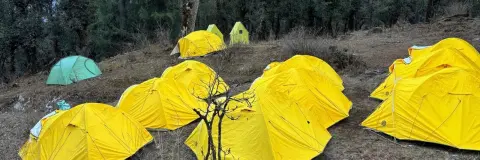
The fee includes the Sankri guesthouse or homestay, 3-person tents at six camps, vegetarian meals from Day 1 dinner to Day 8 breakfast, permits and forest camping fees, sleeping bags, ice axes and ropes, and the trek team. Transport is not included in the trek fee: we help the group book shared cabs at ₹1,000 per person each way, paid directly to the driver. Trek fee plus both cab rides comes to ₹21,687.50 per person.
What should you carry?
Free Trekking Gear covers Decathlon trekking shoes, a jacket rated to -10°C, trekking poles, gaiters and microspikes. You bring a backpack with a rain cover, thermals and two fleece or woollen layers, a balaclava and waterproof gloves for pass day, UV sunglasses against snow blindness, sunscreen, a headlamp with spare batteries, two 1 litre bottles, a power bank, one insulated bottle and a doctor-signed medical certificate. Carry your original photo ID and a photocopy for the forest check posts, and travel insurance that covers high-altitude trekking and emergency evacuation. Cards are not accepted on the trail, so carry cash for the cabs and the buffer-day charge.
See Bali Pass dates and book | Har Ki Dun trek guide | Kedartal trek difficulty
Frequently asked questions
Is the Bali Pass trek good for beginners?
No. It is graded Difficult, and you must have completed at least one trek above 4,000 m before joining. Beginners should start with an easier trek from Sankri.
What is the best time for the Bali Pass trek?
Trekkaro runs it in May–June and September–October. Pick early summer for a snow crossing, or autumn for clearer skies and colder nights.
Where does the Bali Pass trek start and end?
It starts at Sankri, about 200 km from Dehradun, and ends at Janki Chatti near Yamunotri, so it never retraces its steps. The shared cab leaves Dehradun Railway Station at 6:30 AM on Day 1.
Is there snow on the Bali Pass trek?
Yes. Expect snow patches on the moraine above Ruinsara Tal early in the season and snow slopes on pass day, with less snow after the monsoon. Gaiters and microspikes come with Free Trekking Gear.
How much does the Bali Pass trek cost with Trekkaro?
The fee is ₹19,687.50 per person including GST, and both cab rides add ₹2,000. The buffer day costs ₹2,100 + 5% GST only if the trek leader uses it.
How many days is the Bali Pass trek?
8 days from Dehradun to Dehradun, with 7 trekking days covering about 59 km. Day 9 is a buffer day, used only if weather or snow delays the crossing, and it costs ₹2,100 + 5% GST if used.
How high is Bali Pass?
Bali Pass is 4,950 m (16,241 ft), crossed on Day 7. The highest camp is Bali Pass Base Camp at 4,600 m (15,092 ft), and Odari, the night before, is at 4,100 m (13,451 ft).
What is the minimum age for the Bali Pass trek?
16 years, and trekkers under 18 must come with a parent or guardian. There is no upper age limit, but everyone needs at least one earlier trek above 4,000 m and a medical certificate signed by a doctor.
Is there mobile network or an ATM on the Bali Pass trek?
Purola has the last reliable ATM, and Sankri is the last place with a stable signal, where only Jio works. After Sankri there is no reliable network and cards are not accepted, so carry cash for the cabs (₹1,000 per person each way).
Can I leave extra luggage at Sankri on the Bali Pass trek?
No. The trek starts at Sankri and ends at Janki Chatti, so luggage left at the start cannot reach the finish. Leave extra bags with your hotel in Dehradun and carry one 50–60 L backpack.