Quick answer: Hampta Pass weather runs from cold and snowy in June to mild and clear in September. In June and early July, days at camp are 8 to 18°C and nights -4 to 0°C, with knee-deep snow on the pass. From mid-July to mid-August, days are 12 to 22°C, nights 2 to 6°C, with afternoon showers on the Kullu side and dry air on the Spiti side. From mid-August to September, days are 10 to 20°C, nights 0 to 4°C, and the skies are at their clearest. The pass closes under fresh snow from mid-October.
Hampta Pass is a crossing between two climates. The Kullu Valley side (Jobra, Chika, Balu Ka Ghera) sits in the monsoon and is green, wet and mild; the Lahaul and Spiti side (Shea Goru, Chhatru, Chandratal) is in the rain shadow and is dry, bare and cold at night. The pass itself, at 4,298 m (14,100 ft), is the one place on the trek where you can meet snow, sun, wind and sleet in the same hour. This guide gives the temperatures month by month and camp by camp, what the monsoon does on each side, and what to pack for each window.
Hampta Pass temperature month by month
| Month | Day at camp (°C) | Night at camp (°C) | Snow on the pass | Rain | Notes |
|---|---|---|---|---|---|
| June | 8 to 18 | -4 to 0 | Knee-deep in places; meltwater and slush on the upper trail | Pre-monsoon; mostly dry | Season opens; the snow-crossing month; wildflowers below the snowline; coldest nights of the season |
| Early July | 8 to 18 | -4 to 0 | Softening; patches on the approach and the pass | Monsoon arrives on the Kullu side | Wet lower trail, full streams, river crossings at their strongest |
| Mid-July to mid-August | 12 to 22 | 2 to 6 | Patches near the pass only | Afternoon showers or thunderstorms on the Kullu side; dry beyond the pass | Peak season. The most stable crossing and the sharpest green-to-brown contrast; Chandratal at its deepest colour |
| Mid-August to September | 10 to 20 | 0 to 4 | None in most years; a dusting on the pass after a cold front | Monsoon withdrawing; occasional bursts in late August, clear by September | Clearest mountain views of the year; crisp air; frost at Shea Goru by mid-September |
| October | 5 to 15 | -5 to 0 | Fresh snowfall from mid-month | Dry | No regular Trekkaro batches; pass becomes technical; Spiti road closes as winter sets in |
| November to May | Closed | Closed | Pass under several metres of snow | Snow | Not possible |
A cold front can drop fresh snow on the pass in any month of the season, which is why the trek leaders check conditions every morning before a crossing.
Temperature camp by camp
Height, not the calendar, decides how cold your night is. The figures below are the mid-July to mid-August range; in June and September take 3 to 5°C off the night figure.
| Camp | Altitude | Day | Night | What it feels like |
|---|---|---|---|---|
| Manali | 2,050 m / 6,700 ft | 18 to 25°C | 10 to 14°C | Warm, humid in the monsoon |
| Jobra / Chika | 3,000 to 3,170 m / 9,800 to 10,400 ft | 15 to 20°C | 5 to 8°C | Forest and meadow; mild; showers possible |
| Balu Ka Ghera | 3,720 m / 12,200 ft | 12 to 18°C | 2 to 5°C | Open valley below the pass; wind picks up by evening; frost on the tents in June |
| Hampta Pass | 4,298 m / 14,100 ft | 5 to 12°C | Not camped | Wind chill makes it feel below freezing; sun strong between clouds |
| Shea Goru | 3,600 m / 11,800 ft | 10 to 18°C | 0 to 4°C | Dry, bare, cold the moment the sun drops; the coldest night of the trek in most batches |
| Chhatru | 3,320 m / 10,900 ft | 12 to 20°C | 2 to 6°C | Dry Spiti air; clear, starry nights |
| Chandratal | 4,300 m / 14,100 ft | 8 to 15°C | Not camped | Cold wind off the lake even at midday; a jacket for the walk |
Monsoon on Hampta Pass: two sides, two climates
The question we get most is whether the monsoon ruins the trek. It does not, because the trek crosses out of it. The Kullu side gets the rain: from July, showers build in the afternoon at Chika and Balu Ka Ghera, streams run high and the river crossings on Day 2 are the day's main business. The Spiti side gets almost none: the Pir Panjal range stops the clouds, so Shea Goru and Chhatru are dry and sunny while Manali is wet. The crossing itself is timed for the morning, when the snow is firm and the weather is clearest; the group leaves Balu Ka Ghera at 5:30 to 6 AM and is over the pass before the afternoon build-up.
What this means for packing: a rain jacket and pack cover for Days 1 and 2, a windproof layer and warm gloves for the pass, and a proper warm jacket for the dry, cold nights at Shea Goru and Chhatru. On this trek the Free Trekking Gear is microspikes and gaiters, which matter in June and early July; trekking shoes, a jacket and poles are your own.
Which month should you choose?
- June: for snow. The pass is a true snow crossing and the meadows have just come out from under it. Coldest nights; the wettest, slowest crossing. Not for a first Himalayan trek.
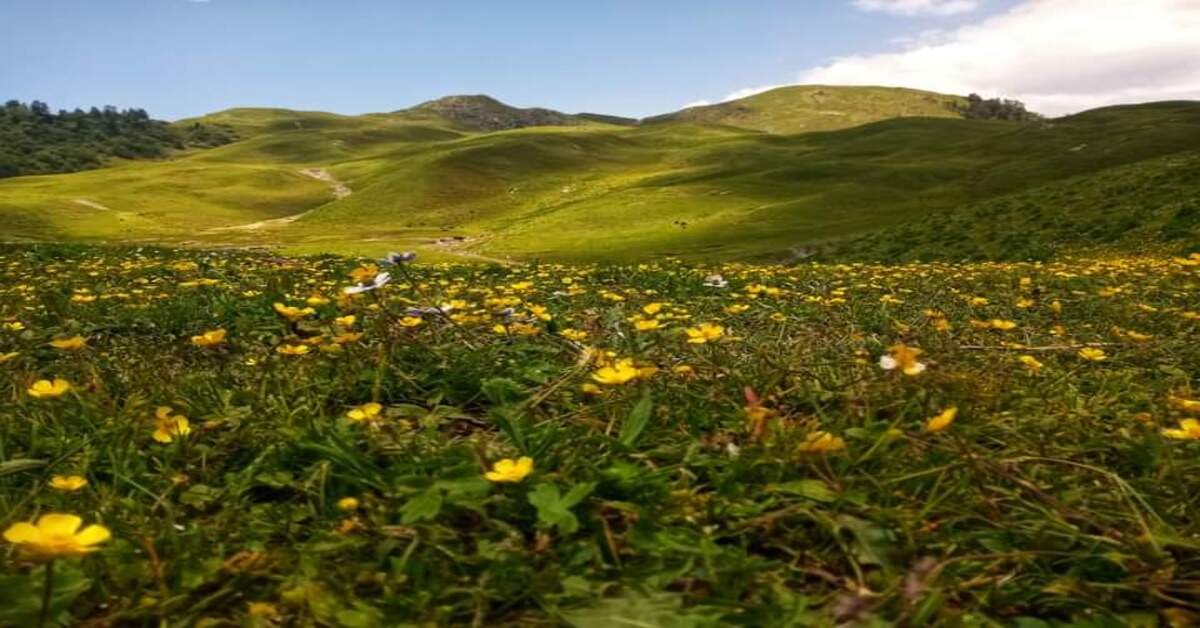
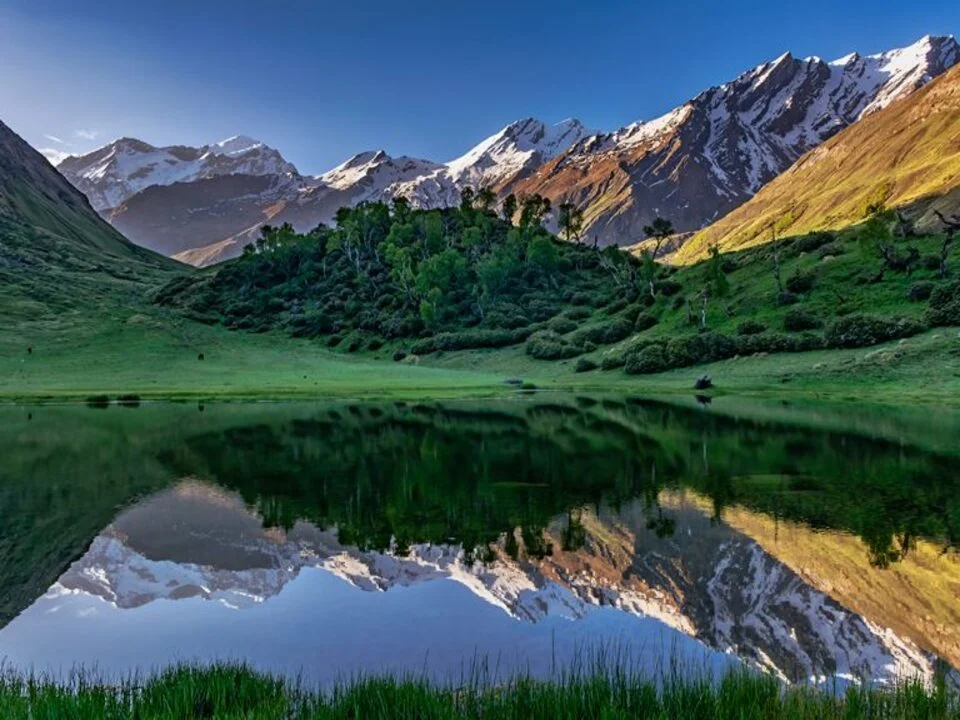
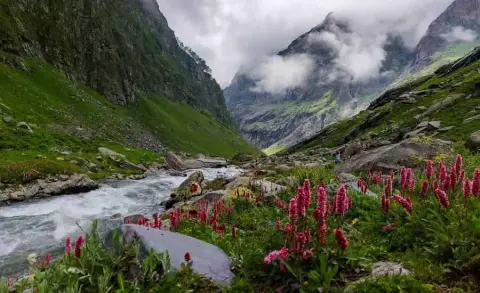
- Mid-July to mid-August: for the trek as it looks in the photographs. Stable snow, full streams, the sharpest contrast between green Kullu and bare Spiti, Chandratal at its bluest. Showers on the first two days are part of it.
- Mid-August to September: for views and comfort. Clearest skies of the season, dry trail, cool rather than cold, fewer people. If weather worries you more than snow excites you, this is the window.
Trekkaro runs Hampta Pass from mid-June to mid-September; the fee is ₹9,000 + 5% GST. Dates are on the Hampta Pass trek page; the full plan, network and closing date are in the Hampta Pass trek guide, and what the fee covers is in the package and cost guide.
See Hampta Pass dates and book | Complete guide | Package and cost | Treks in July | Treks in August | Monsoon treks
Frequently asked questions
How cold does it get at night on the Hampta Pass trek?
In the peak window, mid-July to mid-August, nights at camp are 2 to 6°C, with Shea Goru the coldest camp because it sits in the dry Spiti air at 3,600 m. In June and early July, nights drop to -4 to 0°C and tents carry frost at Balu Ka Ghera. By September nights are 0 to 4°C. A warm jacket, a fleece and a cap handle all three windows; tents and -20°C sleeping bags are provided.
Does it rain during the Hampta Pass trek in July and August?
Yes, on the Kullu side. From July, afternoon showers and the occasional thunderstorm reach Chika and Balu Ka Ghera, and the Day 2 stream crossings run high. The Spiti side beyond the pass, Shea Goru and Chhatru, sits in the rain shadow and stays dry and sunny. The pass is crossed in the morning before the clouds build. A rain jacket and pack cover for the first two days are enough; after the pass you will not need them.
Is there snow on Hampta Pass in July?
In early July, yes: soft snow on the approach from Balu Ka Ghera and on the pass itself, left over from June, when it is knee-deep. By mid-July it has consolidated or melted to patches near the top, which is why that is the most stable window for the crossing. Microspikes and gaiters come with the Free Trekking Gear on this trek and are used whenever the leaders find snow on the morning of the crossing.
Which is the best month for the Hampta Pass trek weather?
Mid-July to mid-August for the full experience: stable snow on the pass, warm days of 12 to 22°C, full streams and Chandratal at its deepest colour, with manageable afternoon showers on the Kullu side. Mid-August to September for the clearest skies and the driest trail, at the cost of cooler nights. June for a real snow crossing, with the coldest nights and the hardest walking.
When does Hampta Pass close for the season because of snow?
Fresh snowfall returns to the pass from mid-October, and the road to Spiti and Chandratal closes soon after as winter sets in, so Trekkaro does not run standard batches after October. From November to May the pass lies under several metres of snow and the trek is not possible. The season reopens in June, when the snow has melted enough to cross with microspikes and the Kullu meadows come into flower.
What is the temperature at Chandratal Lake in August on the Hampta Pass trek?
Chandratal sits at about 4,300 m in the dry Spiti air, so August days at the lake are 8 to 15°C with a cold wind off the water even at midday, and it feels colder than the number. The visit is a day trip from Chhatru on Day 4, so you do not sleep there. Carry your jacket, a cap and gloves for the 2 km walk to the lake; the sky is at its bluest and the lake at its deepest colour in August.
What should I pack for Hampta Pass weather in the monsoon?
Layers for both climates: a rain jacket and pack cover for the Kullu side, a windproof shell, warm gloves and a cap for the pass, and a warm jacket for the dry, cold nights at Shea Goru and Chhatru (tents and -20°C sleeping bags are provided), two quick-dry sets, spare socks in a plastic bag and trekking shoes with grip for wet rock. On this trek you bring your own shoes, jacket and poles; microspikes and gaiters come free.