This guide is about the Brahmatal Trek — dates, price, day-by-day itinerary and booking are on the trek page.
Quick answer: The Brahmatal trek itinerary is 6 days from Lohajung in Chamoli, Uttarakhand, rising to Brahmatal Top at 3,734 m (12,250 ft). You walk about 29 km over 4 trekking days via Bekaltal, Jhandi Top and the base camp. The season runs from October to March; see the trek page for live batch dates. Trekkaro charges ₹9,000 + 5% GST (₹9,450).
This page is the day-by-day plan: where you sleep each night, how far and how high you walk, what each day asks of you and which safety rules apply on that stretch. It is written for trekkers who have picked Brahmatal and now want to know exactly how the six days run before they book a batch or plan leave.
Brahmatal trek itinerary at a glance
| Day | Route | Distance and time | Night at |
|---|---|---|---|
| 1 | Rishikesh to Lohajung by road | About 250 km, 8–10 hours | Lohajung guesthouse, 2,316 m / 7,600 ft |
| 2 | Lohajung to Bekaltal | 6 km, 4–5 hours, about 480 m up | Bekaltal camp, 2,798 m / 9,180 ft |
| 3 | Bekaltal to Brahmatal Base Camp via Jhandi Top (about 3,600 m) | 7 km, 6–7 hours | Base camp, 3,106 m / 10,190 ft |
| 4 | Base camp to Brahmatal Top (3,734 m / 12,250 ft) and back | 6 km, 5–6 hours, about 630 m up | Base camp, 3,106 m |
| 5 | Base camp to Lohajung via Jhandi Top and Bekaltal | 10 km, 7–8 hours | Lohajung guesthouse |
| 6 | Lohajung to Rishikesh by road | About 250 km, 8–10 hours | Your own stay |
The trek fee covers 6 days, Lohajung to Lohajung (Day 1 and Day 6 are the drives from and to Rishikesh). Batches take a maximum of 20 trekkers, the minimum age is 7, and tents are shared by three, with men and women in separate tents.
Day-by-day Brahmatal itinerary
Day 1: Rishikesh to Lohajung (2,316 m / 7,600 ft)
About 250 km by road, 8 to 10 hours, via Devprayag, Rudraprayag and Karnaprayag. The shared cab leaves Jumping Heights, Tapovan, Rishikesh at 6:30 AM, so reach Rishikesh the evening before. Dewal, on the way, has the last reliable ATM. You collect Free Trekking Gear at Lohajung, and the evening brings dinner, the trek briefing and your baseline SpO2, pulse and blood pressure. Lohajung is the last place with a stable mobile signal: make your calls here.
Day 2: Lohajung to Bekaltal (2,798 m / 9,180 ft)
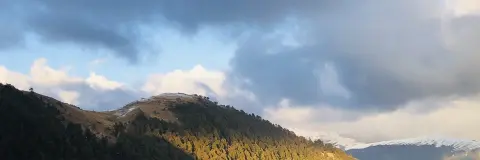
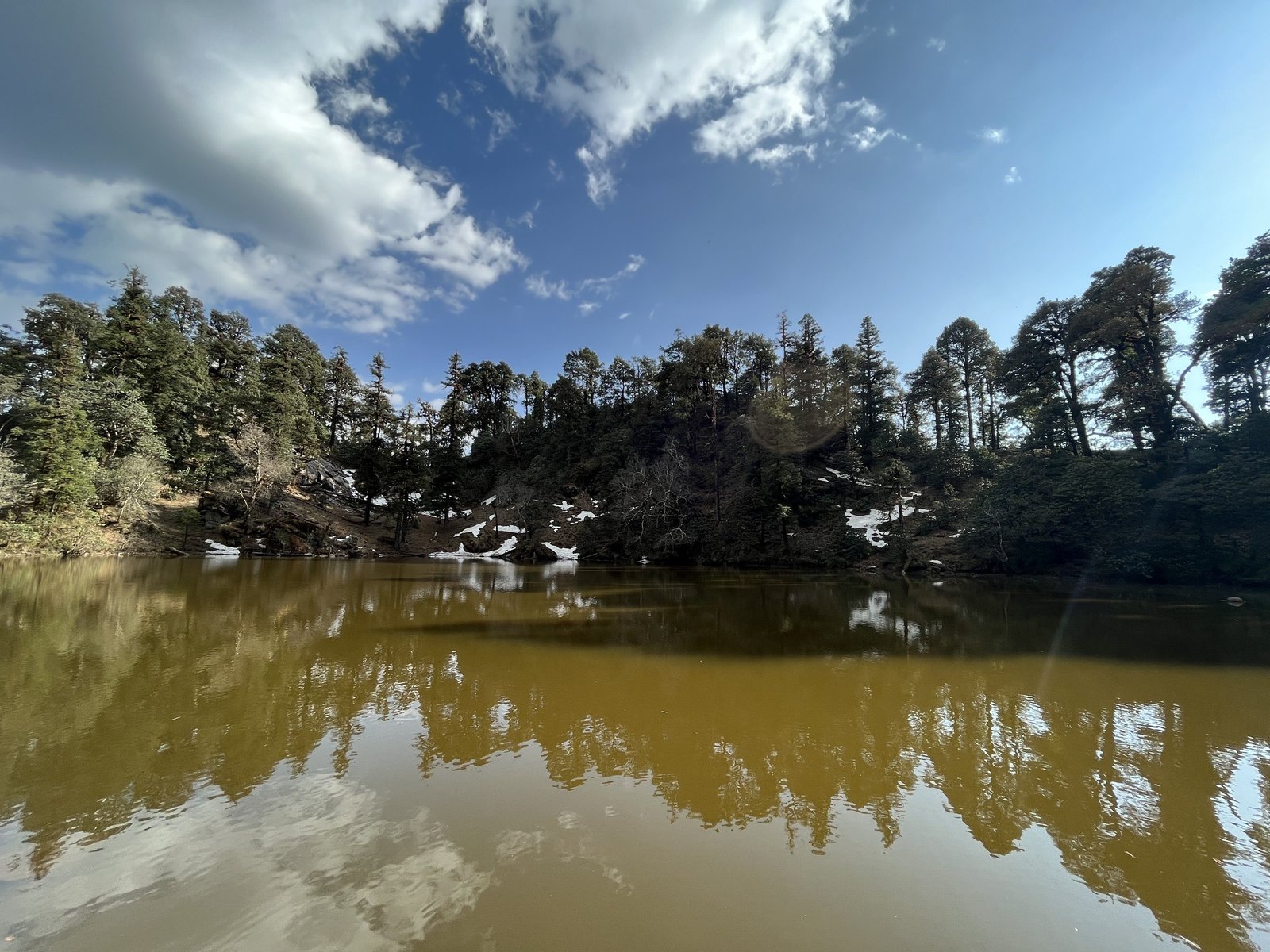
6 km, 4 to 5 hours, gaining about 480 m. The trail enters oak and rhododendron forest almost at once and climbs steadily. In winter the snow deepens with height, and in January the forest between Lohajung and Bekaltal is under two to four feet of snow. Camp is in a clearing beside Bekaltal lake, which is frozen from December to February. This is the first cold camp of the trek, so keep your water bottle inside the sleeping bag tonight.
Day 3: Bekaltal to Brahmatal Base Camp (3,106 m / 10,190 ft) via Jhandi Top
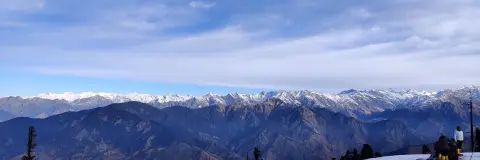
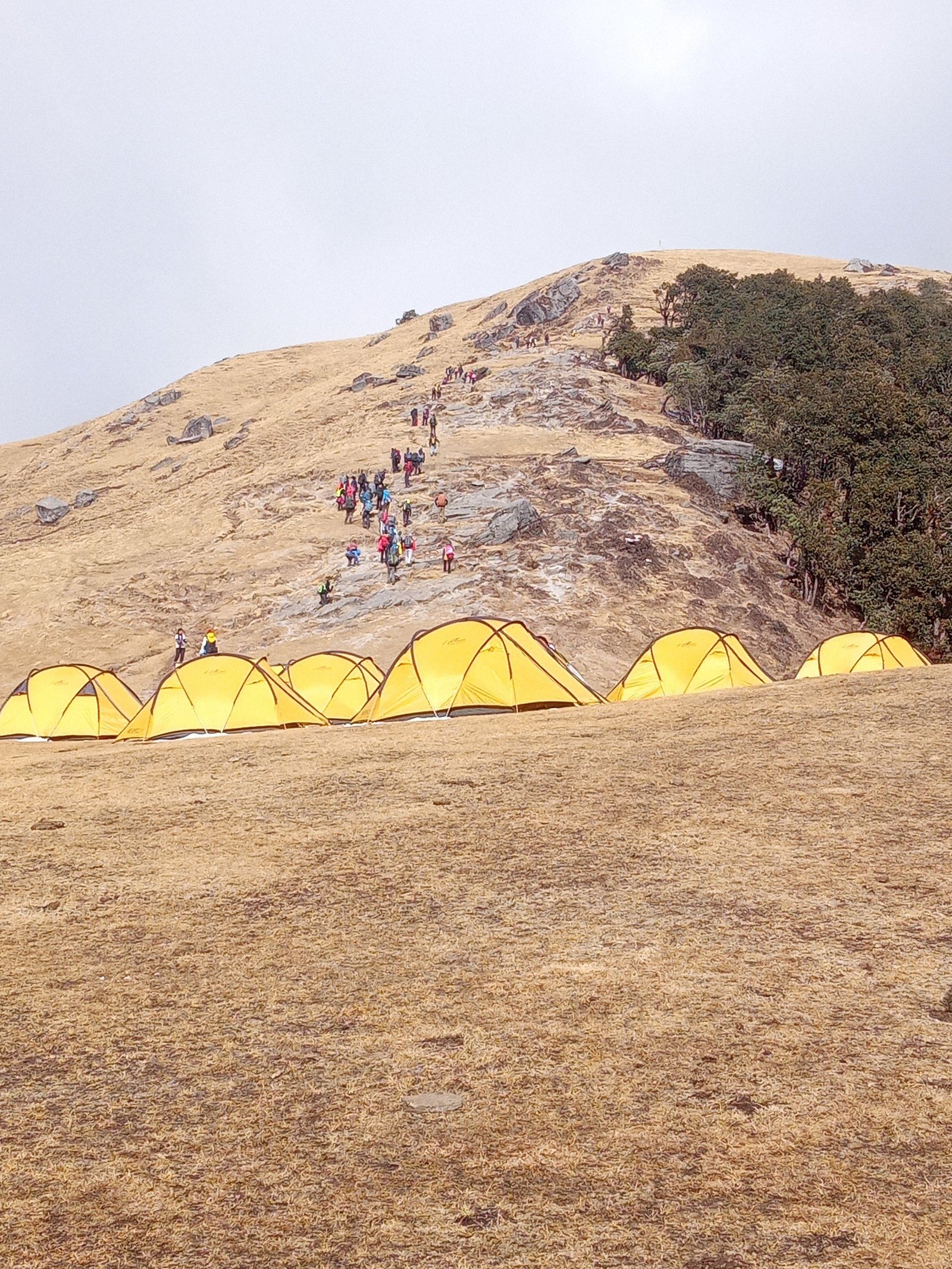
7 km, 6 to 7 hours. The steepest climb of the trek, up to the Jhandi Top ridge at about 3,600 m, with microspikes worn from the Bekaltal camp upward. From the ridge you get the first open view of Trishul (7,120 m) and Nanda Ghunti (6,309 m), with Kamet (7,756 m) on clear days. Then an open ridge walk and a descent to the base camp near Brahmatal Lake. An evening health check at base camp decides who goes up on Day 4. Be in your sleeping bag by 8 PM.
Day 4: Base camp to Brahmatal Top (3,734 m / 12,250 ft) and back
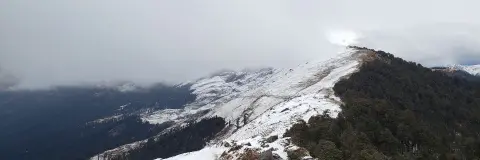
6 km round trip, 5 to 6 hours, gaining about 630 m. You start at 5:30 AM, in the dark, so carry a headlamp, and in winter this is the coldest part of the trek. Microspikes stay on from the first step out of camp on the compacted snow slope. You spend 45 to 60 minutes on top, then return to base camp by the same route by mid-morning. The afternoon is for rest, food and water, because Day 5 is long.
Day 5: Base camp to Lohajung via Jhandi Top and Bekaltal
10 km, 7 to 8 hours, the longest day. You climb back over Jhandi Top, then descend past Bekaltal and through the forest to Lohajung, which is about 790 m lower than the base camp. Use your poles and shorten your stride on the way down. The trek ends at Lohajung with completion certificates, a guesthouse bed and device charging.
Day 6: Lohajung to Rishikesh
About 250 km, 8 to 10 hours. The cab leaves Lohajung at 6:30 AM and is expected at Jumping Heights, Tapovan by 6:00 PM, so book a late-night train from Haridwar, an overnight bus or a flight for the next day.
How the route fits together
- Approach, Days 2 and 3. Forest to Bekaltal, then the ridge crossing at Jhandi Top that opens the big views.
- Summit, Day 4. A single objective: Brahmatal Top and back, with no camp shift that day.
- Return, Day 5. Back over Jhandi Top and past Bekaltal to Lohajung in one long day.
- Two lakes. Bekaltal at the Day 2 camp and Brahmatal near the base camp, both frozen in deep winter.
- Two nights at 3,106 m. You sleep at base camp before and after the summit, which is lower than Jhandi Top.
The structure has one weak point for some trekkers: Day 5 climbs back over Jhandi Top before the long descent, so tired legs meet a climb first. Keep something in reserve on summit day.
When can you follow this itinerary?
The trek page gives October to March as the season, with deep snow and frozen lakes from December to February. November brings the first snow, and March is the gentler late-winter option, with snow softening on the lower trail. See the trek page for live batch dates. Month-by-month weather is in our separate Brahmatal weather guide in the links below.
How hard is the itinerary?
Trekkaro grades Brahmatal Easy to Moderate: 6 to 10 km and 4 to 8 hours a day, harder on snow. The steepest climb is Day 3, the longest day is Day 5. Brahmatal Top is above 3,000 m, so read the Uttarakhand Health Department's advisory for travellers above 3,000 m: it advises no more than 800 to 1,000 m of height gain a day, a 5 to 10 minute rest for every hour of walking, and descending if you feel unwell. The team checks SpO2, pulse and blood pressure twice a day and carries a portable oxygen cylinder and a stretcher on every batch.
What does this itinerary cost?
The fee is ₹9,000 + 5% GST = ₹9,450; the trek page shows EMI from ₹463 a month. It covers two guesthouse nights at Lohajung, three nights in tents, meals from Day 1 dinner to Day 5 dinner, permits, -20°C sleeping bags and the trek team. Free Trekking Gear (Decathlon shoes, a -10°C jacket, poles, gaiters and microspikes) needs a ₹3,000 refundable deposit + ₹200 washing charge (+ GST on washing). Transport is not included in the trek fee: we help the group book shared cabs, paid directly to the driver and split among trekkers, about ₹6,500 one way per 5–6 seat vehicle. Backpack offloading is ₹1,500 + 5% GST and a single tent ₹2,000 + 5% GST.
What to bring for these six days
You bring your own backpack, two sets of thermals, two fleece or woollen layers, a waterproof shell, warm trousers, a woollen cap, a balaclava, two pairs of gloves, woollen socks, UV sunglasses, SPF 50+ sunscreen, a headlamp, a power bank and two 1 L water bottles, one of them insulated so the water does not freeze. There is no charging on the trail between Day 2 and Day 5.
Six things to know before you go
- Withdraw cash at Dewal or earlier. Dewal has the last reliable ATM and cards are not accepted on the trail, so carry small notes for your cab share.
- Make your calls at Lohajung. Beyond Lohajung the network is patchy to non-existent.
- Refill water only at sources the trek leader approves. Camp water is boiled or treated.
- Carry your papers. A government photo ID (original and a photocopy) and a medical certificate signed by a doctor. Travel insurance is mandatory and must cover high-altitude trekking and helicopter evacuation.
- Ask your doctor about altitude medicine before you leave, and carry your own.
- Book by the cut-off. Booking for a batch closes at 5 PM India time on the day before it starts.
See Brahmatal dates and book | Brahmatal weather and best time | Brahmatal difficulty and fitness | Brahmatal trek cost
Frequently asked questions
How many days does the Brahmatal trek take?
Six days in all. Days 2 to 5 are on foot and cover about 29 km, while Day 1 and Day 6 are the road journeys between Rishikesh and Lohajung.
How high is Brahmatal Top?
Brahmatal Top is 3,734 m (12,250 ft). The highest camp is the base camp at 3,106 m, so you climb to the top and sleep lower.
Which is the longest day on the Brahmatal trek?
Day 5, about 10 km in 7 to 8 hours from the base camp back to Lohajung. It starts with a climb over Jhandi Top before the long walk down through Bekaltal and the forest.
Where do you stay each night on the Brahmatal trek?
Two nights are in a Lohajung guesthouse (Day 1 and Day 5) and three are in tents: one at Bekaltal and two at the base camp. Tents are shared by three trekkers with -20°C sleeping bags and mattresses.
Can the Brahmatal itinerary be changed?
Minor changes are possible, but the completion date stays as scheduled. If something unforeseen happens on the trail, the trek leader suggests a suitable alternative plan.
How far is Lohajung from Rishikesh?
About 250 km by road, 8 to 10 hours, via Devprayag, Rudraprayag and Karnaprayag. The shared cab leaves Jumping Heights, Tapovan, Rishikesh at 6:30 AM on Day 1, and on Day 6 it leaves Lohajung at 6:30 AM and is expected back by 6:00 PM.
What is the distance from Lohajung to Brahmatal?
On foot, Lohajung to Bekaltal is 6 km (Day 2) and Bekaltal to Brahmatal Base Camp, near the lake, is 7 km over Jhandi Top (Day 3). Brahmatal Top is a 6 km round trip from the base camp on Day 4, and Day 5 brings you back to Lohajung in 10 km.
What time does summit day start on the Brahmatal trek?
At 5:30 AM on Day 4, in the dark, so carry a headlamp. The climb from the base camp (3,106 m) to Brahmatal Top (3,734 m) and back is 6 km in 5 to 6 hours, and the afternoon is for rest before the long Day 5.
How do I reach the Brahmatal trek from Delhi?
Reach Rishikesh the evening before Day 1: overnight buses from Delhi ISBT Kashmere Gate take 6 to 7 hours, trains run to Haridwar Junction about an hour away, and Jolly Grant Airport, Dehradun, is about 45 minutes from Rishikesh. Transport to Lohajung is not included in the trek fee; the shared cab is about ₹6,500 per 5–6 seat vehicle one way, split among trekkers.