Kashmir Great Lakes Trek
Inclusion:
Meals on the Trek
All Permits
Expert Trek Leader & Guide
Kashmir Great Lakes Trek — Guide, Dates & Cost
Region: Jammu and KashmirDistrict: Ganderbal
Duration: 7 Days
Difficulty Level: Moderate–Difficult
Highest Altitude: 4,206 m / 13,800 ft
Trekking Distance: 71 Kilometers
Temperature: Early Jul: Day 8°C to 18°C, Night -5°C to -2°C | Mid Jul-Aug: Day 14°C to 22°C, Night 2°C to 8°C | Late Aug-mid Sep: Day 10°C to 18°C, Night -1°C to 4°C
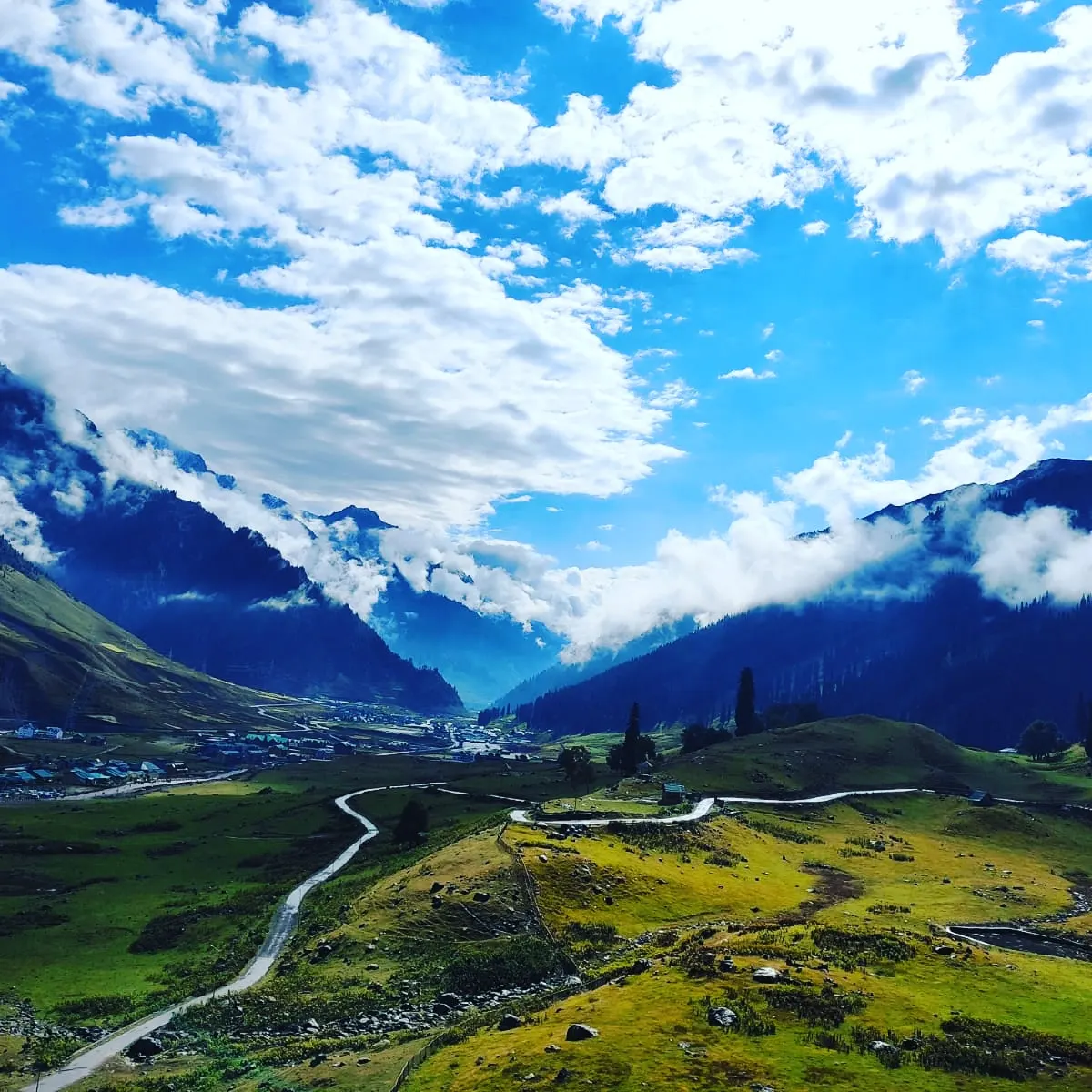
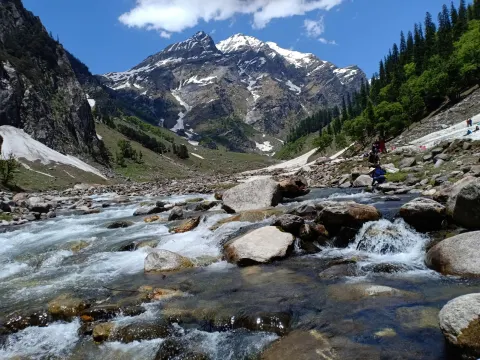
There are treks in India that are beautiful. And then there is the Kashmir Great Lakes – a route that stops experienced trekkers mid-stride. Seven high-altitude alpine lakes strung across a single valley, each one a different shade of blue, green, and turquoise. Meadows that feel engineered rather than natural. Mountain walls so close the scale stops making sense.
The Kashmir Great Lakes trek is the most visually spectacular trek in India. Vishansar and Krishansar – twin lakes at 13,500 feet. Gadsar at the foot of the highest pass on the circuit. Satsar, a chain of seven connected lakes unlike anything else in the Himalayas. And Gangabal with Nundkol beneath the south face of Harmukh Peak – what many experienced trekkers consider the finest campsite in the country. In seven days, Trekkaro takes you through all of it, from Sonamarg to Naranag, across passes, through meadows, and alongside the lakes that give this circuit its name. This is not a single-note adventure. It is the complete Himalayan experience.
The Kashmir Great Lakes trek is a high-altitude circuit in the upper Kashmir Valley, traversing from Sonamarg to Naranag across a sequence of seven distinct alpine lakes at altitudes between 11,000 and 13,800 feet. The route crosses the Nichnai Pass, the Gadsar Pass, and the ridgeline above the Gangabal basin, passing through some of the most dramatic and varied terrain in the entire Himalayan range. It has been called the most beautiful trek in India by experienced trekkers returning from routes across Uttarakhand, Himachal Pradesh, Ladakh, and Sikkim. That assessment, in our experience, is accurate.
The Seven Lakes – What Makes This Trek Unmissable
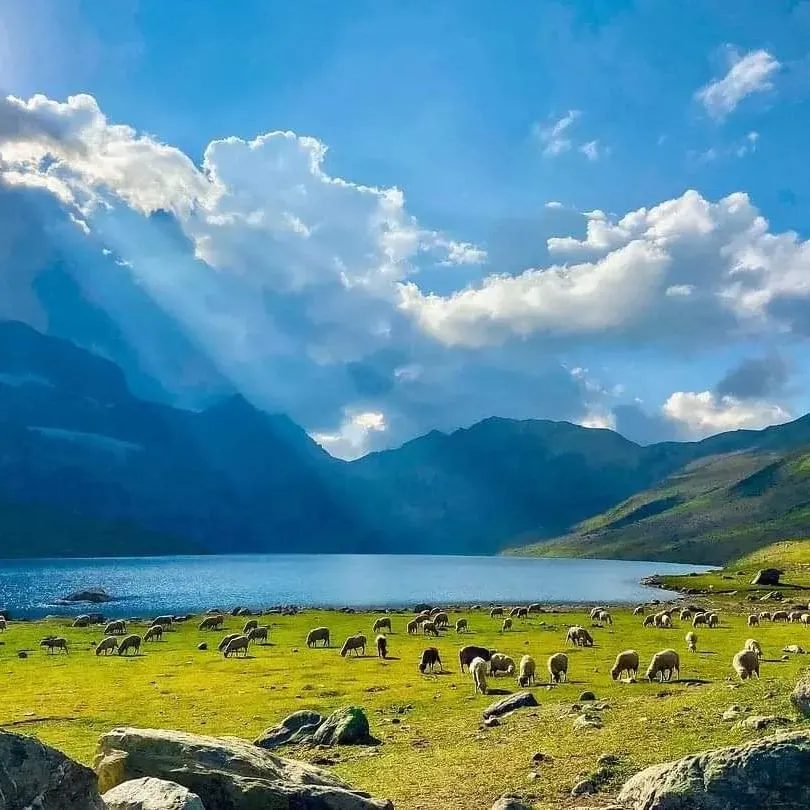
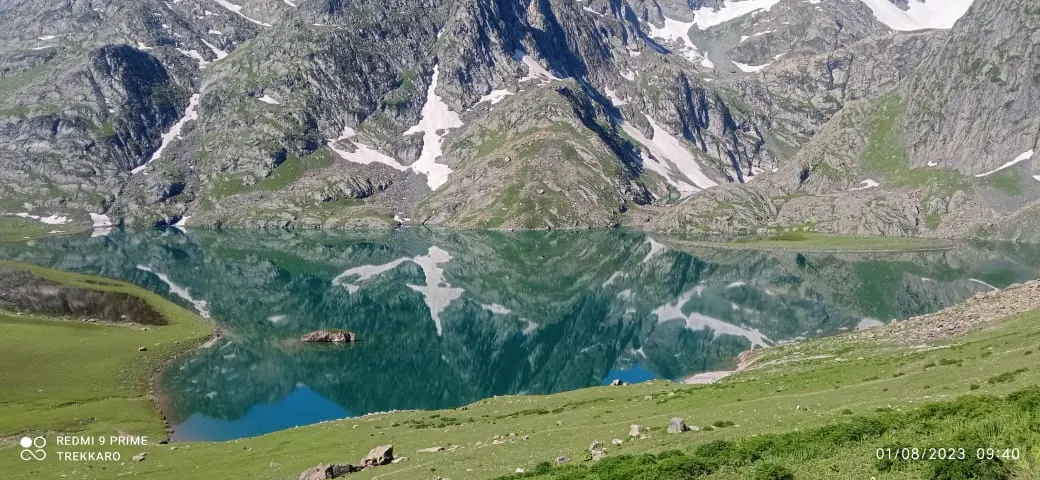
What distinguishes the Kashmir Great Lakes from every other Himalayan circuit is the lake sequence itself. Vishansar and Krishansar sit as twin lakes at the valley head at 13,500 feet, divided by a narrow ridge, both visible simultaneously from the Nichnai Pass, their surfaces shifting between cobalt and turquoise depending on the hour. Gadsar, the deepest lake on the route, sits at the foot of a moraine wall at 11,800 feet in a landscape so austere it feels geological rather than geographical. Satsar is not a single lake but a chain of seven smaller lakes connected by channels, a geological feature unique to this valley. Gangabal and Nundkol, the final pair, sit beneath the south face of Harmukh Peak (5,142 m) in a glacial cirque that constitutes what many experienced trekkers consider the single finest view in the Indian Himalayan trekking repertoire. You arrive at Gangabal with time remaining in the afternoon. You sit at the edge of the water. You watch the mountain above reflect in the surface below. Very little else needs to happen.
The Valley Itself
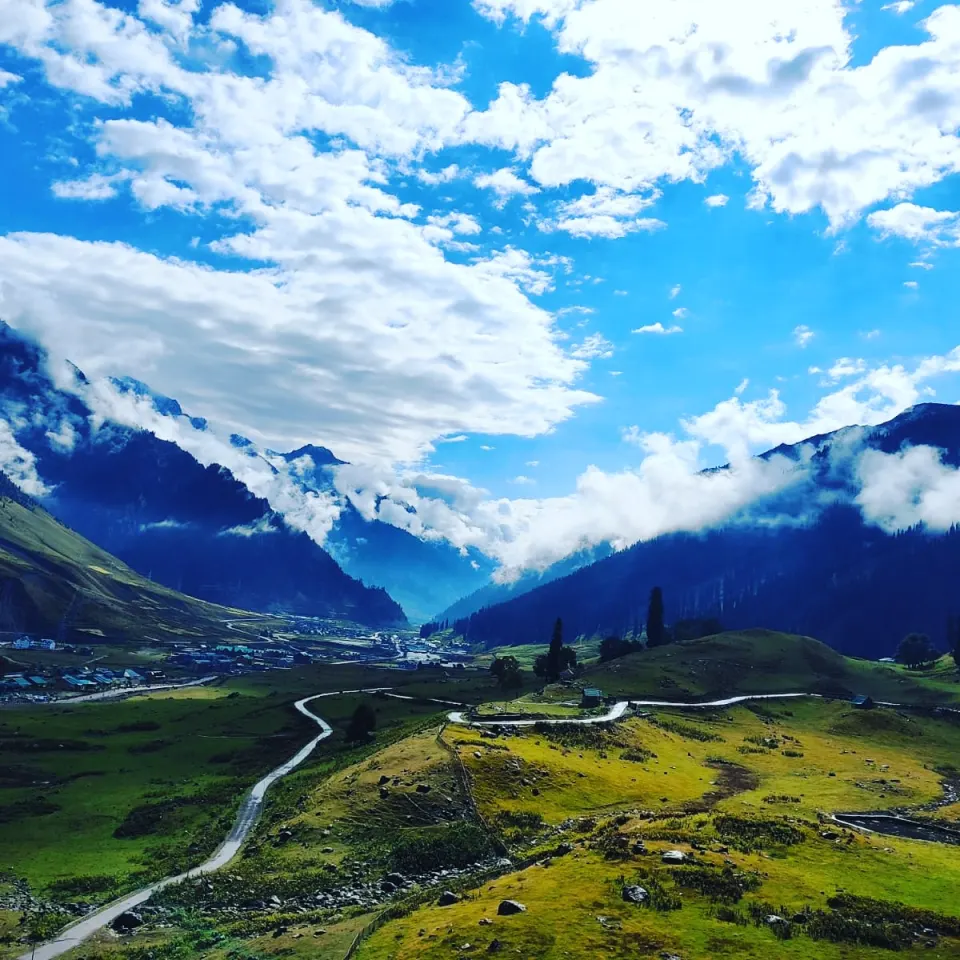
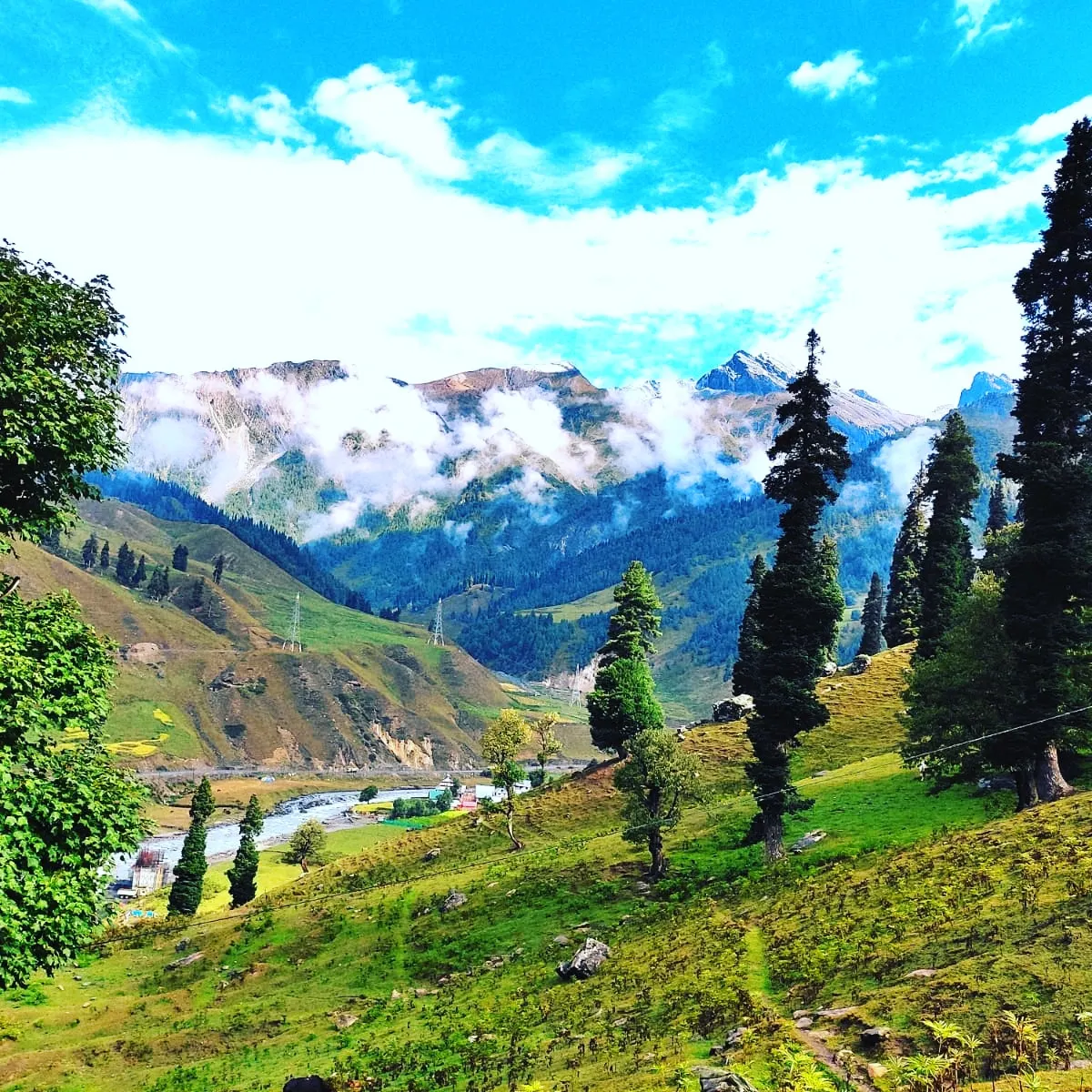
The route traverses the upper Kashmir Valley from Sonamarg to Naranag, crossing high passes, descending into hidden basins, and following ridgelines with simultaneous views of the Himalayan and Karakoram ranges. The landscape shifts constantly: from the pine and birch forests of the lower approach through the open alpine meadows of the middle altitudes to the bare rock, snow, and glacial moraines of the upper passes and basins. This variety, combined with the lake circuit, makes the Kashmir Great Lakes trek unlike any other route in the country.

Who Is This Trek For?
The Kashmir Great Lakes trek is graded Moderate to Difficult. It is not suited to someone on their first Himalayan trek; the daily distances are significant (8-14 km per day), the altitude gain is sustained, and the passes require physical confidence on steep terrain. We recommend this trek for trekkers who have completed at least one previous Himalayan trek at a similar altitude or who have a strong cardiovascular fitness base and are willing to commit to a serious preparation programme in the 8-10 weeks before departure. Minimum recommended age: 14 years. Above 60: depends on fitness (with a doctor's fitness certificate for trekkers with any pre-existing health condition). Daily trekking hours: 4-8 hours. Season: July to September only.
Key Highlights of the Kashmir Great Lakes Trek
- Seven distinct high-altitude alpine lakes across one continuous circuit – Vishansar, Krishansar, Gadsar, Satsar, Gangabal, and Nundkol
- Gadsar Pass at 13,800 ft – the highest point of the route, with panoramic views into Kashmir and Ladakh on clear days
- Gangabal Lake beneath Harmukh Peak (5,142 m) – widely considered the finest campsite in Indian trekking
- Satsar – a chain of seven interconnected lakes, a unique geological feature of the Kashmir Valley
- Twin lakes view: Vishansar and Krishansar visible simultaneously from the Nichnai Pass ridge at 13,100 ft
- Naranag temple ruins (8th century) on the final descent – a rare historical landmark on a natural landscape route
- Full circuit trek Sonamarg to Naranag – not an out-and-back; every day brings new terrain
- Certified trekkaro trek leader & guides, twice-daily health monitoring
Best Time to Visit Kashmir's Great Lakes
The Kashmir Great Lakes trek has one of the narrowest operating windows of any major Himalayan circuit — approximately 10 to 11 weeks from early July to mid-September. The Nichnai and Gadsar passes remain snowbound before July and are reclosed by fresh snowfall from mid-October. Within this window, each part of the season delivers a distinctly different experience.
Early July - Opening Season (Snow on the Passes)
Early July is the opening of the Kashmir Great Lakes route. The passes still hold significant snow, and the Nichnai Pass approach and Gadsar Pass crossing both involve snow sections that require microspikes. But this is also the time when the Kashmir alpine meadows are at their most extraordinary: immediately post-snowmelt, the margs are carpeted in wildflowers at their peak density and colour — purple primula, blue Himalayan poppy, and yellow potentilla in layers so dense they cover every square metre of ground. The lakes are at maximum depth, fed from all directions by snowmelt, and the colours are at their most intense. For trekkers who want the full snow-crossing experience and the peak wildflower display, early July is a justified and rewarding choice.
- Temperatures: Day: 8°C to 18°C | Night at camp: -2°C to -5°C
- Trail conditions: Snow on both passes. Peak wildflower meadows. Fast glacial streams.
- Best for: Snow crossings, wildflower photography, and lakes at maximum depth and colour.
Mid-July to August – Peak Season (Most Recommended)
This is Trekkaro's most recommended window for the Kashmir Great Lakes. The passes are fully clear, all seven lakes are accessible at their best conditions, the meadows remain vivid green, and the weather follows a reliable Himalayan summer pattern: clear, warm mornings with occasional afternoon cloud and the possibility of brief rain. The lake colours in this window are extraordinary – Vishansar at cobalt blue on a clear morning, Gangabal reflecting Harmukh in conditions of perfect stillness, and Gadsar catching the afternoon light in shades of deep green. The trek looks exactly as spectacular as the photographs that first made you want to do it.
- Temperatures: Day: 14°C to 22°C | Night at camp: 2°C to 8°C
- Trail conditions: Passes fully clear. All lakes are accessible. Best overall conditions.
- Best for: Best overall experience, vivid lake colours, and ideal conditions on all seven lakes.
Late August to Mid-September - Post-Monsoon Season (Crystal Visibility)
Late August through mid-September is an underrated and beautiful window for the Kashmir Great Lakes. The monsoon weakens, the atmosphere clears, and mountain visibility reaches its sharpest of the year — peaks that are hazy in July stand in hard-edged clarity in September. Harmukh above Gangabal is particularly dramatic in this light. Crowds are lighter than in peak July, trails are well-defined, and nights at camp are cool and clear. The lakes retain their colour through to mid-September. Nights become noticeably colder from early September, and the transition to autumn is visible in the changing light on the upper valley ridges.
- Temperatures: Day: 10°C to 18°C | Night at camp: -1°C to 4°C
- Trail conditions: Clear trails, sharpest visibility, fewer trekkers, cooler nights.
- Best for: Crystal mountain views, quiet trails, and dramatic post-monsoon light on the lakes.
October Onwards – Closing Season
From mid-October, winter reasserts itself over the upper Kashmir Valley, and fresh snowfall closes the passes without warning. Trekkaro does not operate standard Kashmir Great Lakes batches after mid-September. If your travel window falls in this period, contact our team to check current pass conditions and availability.
Trekkaro Recommendation
For the full Kashmir Great Lakes experience, book a mid-July to August batch. For the peak wildflower display with snow crossings, choose early July. For the sharpest mountain visibility and quieter trails, late August to mid-September is our top post-monsoon pick.
📅 Best months for the Kashmir Great Lakes Trek: July to September. Still choosing dates? Compare all treks in July, treks in August and treks in September.
🏃 Am I ready for the Kashmir Great Lakes Trek? Take the free 2-minute fitness test and get your readiness score and a personal training plan.
Take the test →Trek Itinerary
Transportation will be arranged from the Tourist Reception Centre (TRC), Srinagar, at 12:00 PM. The cost of the cab is ₹8,500 per vehicle (round trip), which needs to be paid directly to the driver. This cost is shared among trekkers in the same vehicle (5–6 seats).
If used, trekkers will need to bear the additional cost of ₹2,500 per person per day (including meals, accommodation & staff expenses).
Day 1: Srinagar to Shitkadi
Route Details:
Drive: Srinagar → Shitkadi (~85 km, ~3 hours) | Altitude: 5,200 ft → ~8,530 ft | Activity: Short orientation walk, camp setup, health baseline
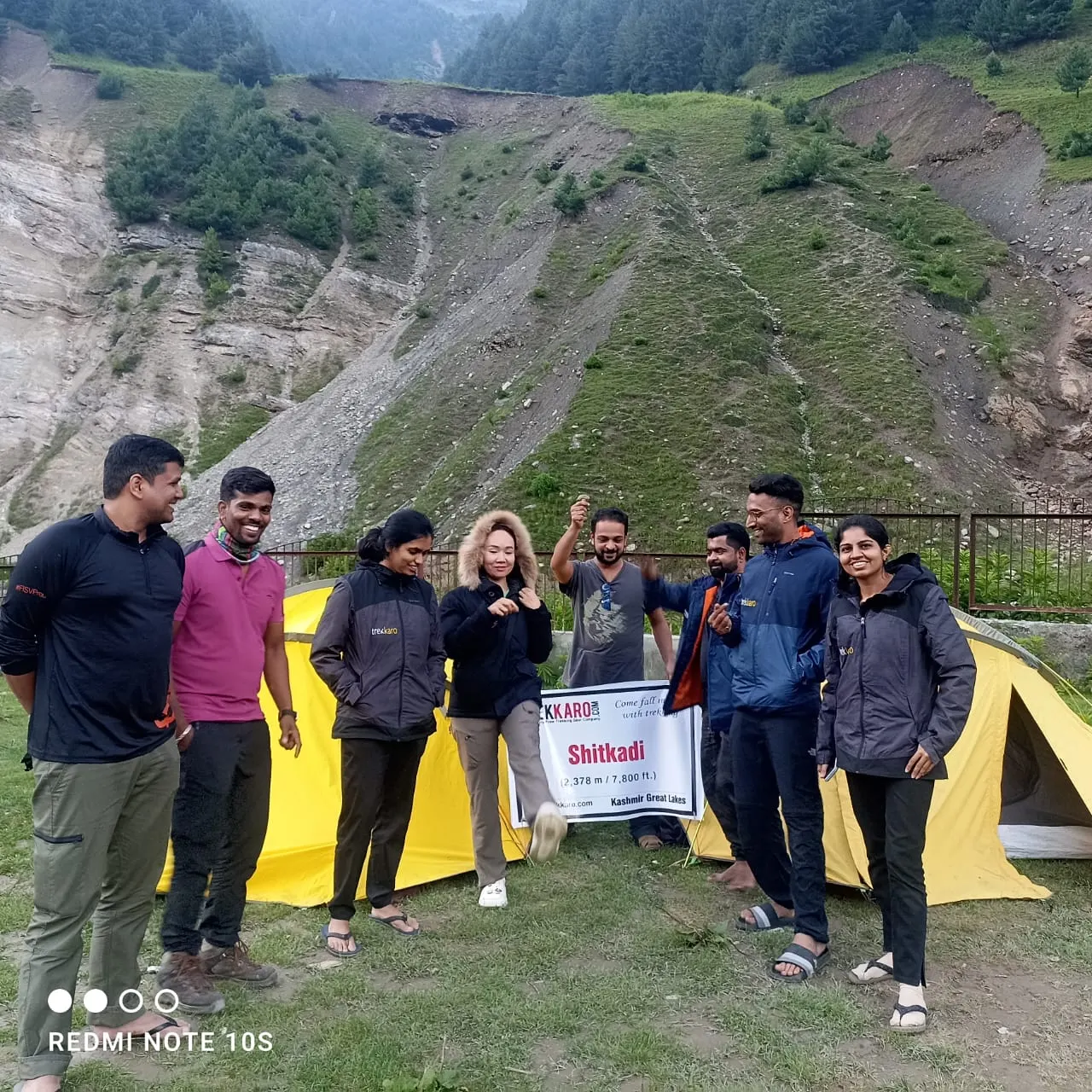
Day 1 of the Kashmir Great Lakes circuit is an arrival day. The drive from Srinagar to Shitkadi moves quickly through the outskirts of the city and into the lower mountain terrain above the valley floor. Shitkadi sits at approximately 8,530 feet, already a meaningful altitude for trekkers arriving from the plains, and the trailhead itself is positioned at a point where the city noise falls away and the character of the upper Kashmir landscape begins to assert itself. Pine forest, the sound of a stream nearby, and the temperature already a few degrees cooler than it was at the Srinagar assembly point.
The afternoon at Shitkadi is structured around preparation rather than distance. The trek leader conducts the first health baseline SpO₂, pulse rate, and blood pressure for every trekker, recorded as the reference point against which all subsequent daily readings will be compared. The trek briefing follows: route overview, daily structure, health monitoring protocol, AMS awareness, and a review of what to expect on Days 2 and 3.
Tonight is the first of six nights in the Kashmir high mountains. Sleep at Shitkadi's altitude begins the acclimatisation process in a measured way, high enough to initiate adaptation but not so high as to stress the body before the circuit's more demanding days arrive. Eat a full dinner, hydrate well, and be in your sleeping bag by 9:00 PM. Tomorrow, the trail begins in earnest.
What to Expect:
- Drive from the Srinagar assembly point to the Shitkadi trailhead (~8,530 ft)
- Health baseline: SpO₂, pulse, and blood pressure recorded for every trekker – Day 1 reference point
- Trek briefing: route overview, AMS awareness, daily structure, and safety protocols
- Orientation walk (optional) in the forest around Shitkadi camp before dinner
- Overnight: Shitkadi camp (~8,530 ft) - first night of altitude acclimatisation
Day 2: Shitkadi to Nichnai
Route Details:
Altitude: ~8,530 ft → ~11,500 ft | Distance: ~10 km | Duration: 4–5 hrs | Terrain: Mixed forest, alpine scrub, open meadow approach
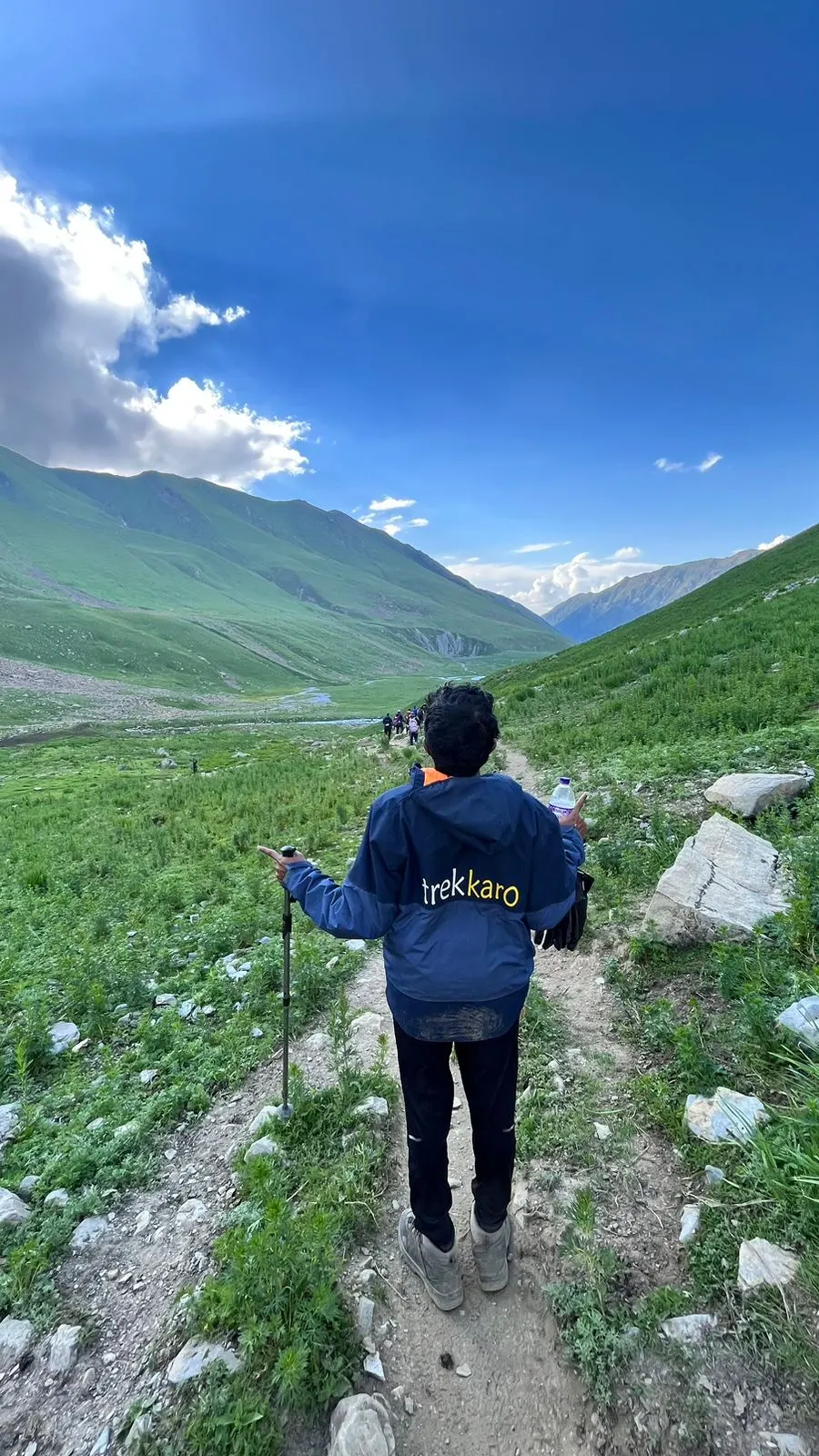
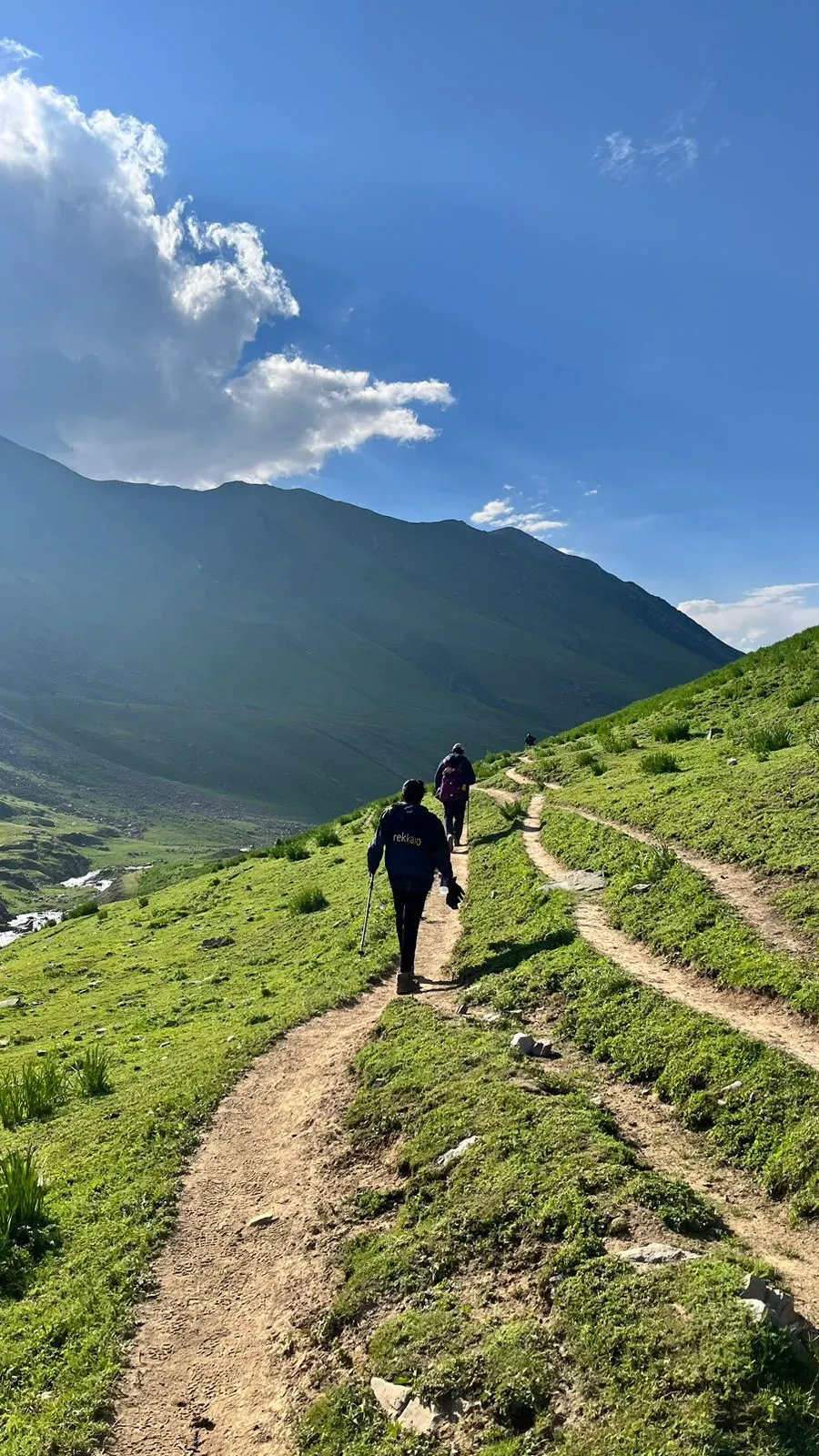
Day 2 is the circuit's first true walking day, and it establishes the rhythm and character of what follows. The trail from Shitkadi climbs steadily through mixed pine and birch forest before transitioning to open alpine terrain as the treeline retreats. The Sindh Valley basin is visible below and behind in the early sections, its cultivated floor and poplar-lined roads shrinking progressively as altitude increases. Above the treeline, the trail moves through a landscape that has no equivalent at lower elevations: wide, open, and immediately expansive, with the ridgelines framing a sky of the particular deep blue that only exists above 10,000 feet.
The path to Nichnai follows the Nichnai stream in its upper reaches, the water cold and fast from the snowfields above. First-time trekkers find their fundamental rhythm on this day, learning how their legs respond to sustained uphill movement at reduced oxygen, how their breathing adjusts to the thinner air, and how the pace that felt comfortable at Shitkadi requires recalibration above 10,000 feet. Experienced trekkers use Day 2 to verify gear fit, calibrate layering to the changing temperature across altitude bands, and absorb the specific character of the Kashmir alpine landscape that no photograph fully conveys.
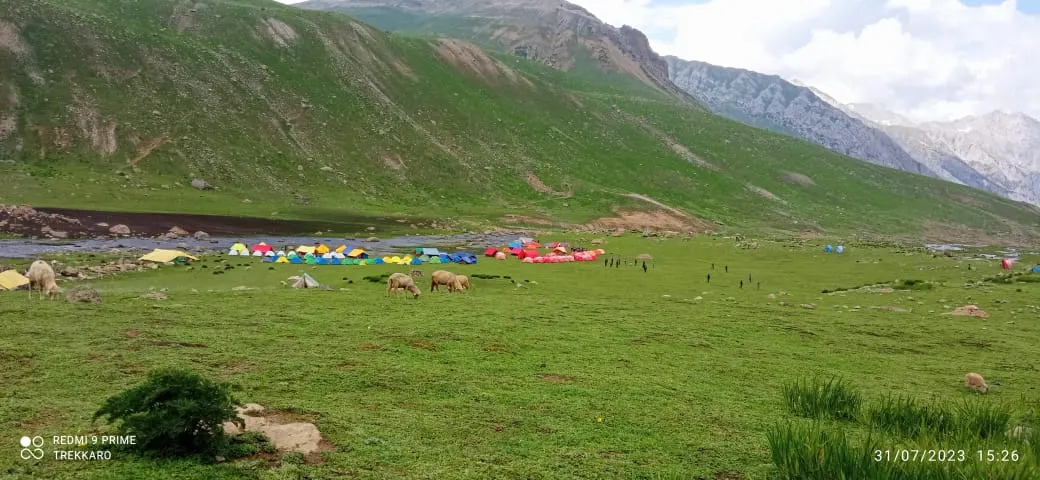
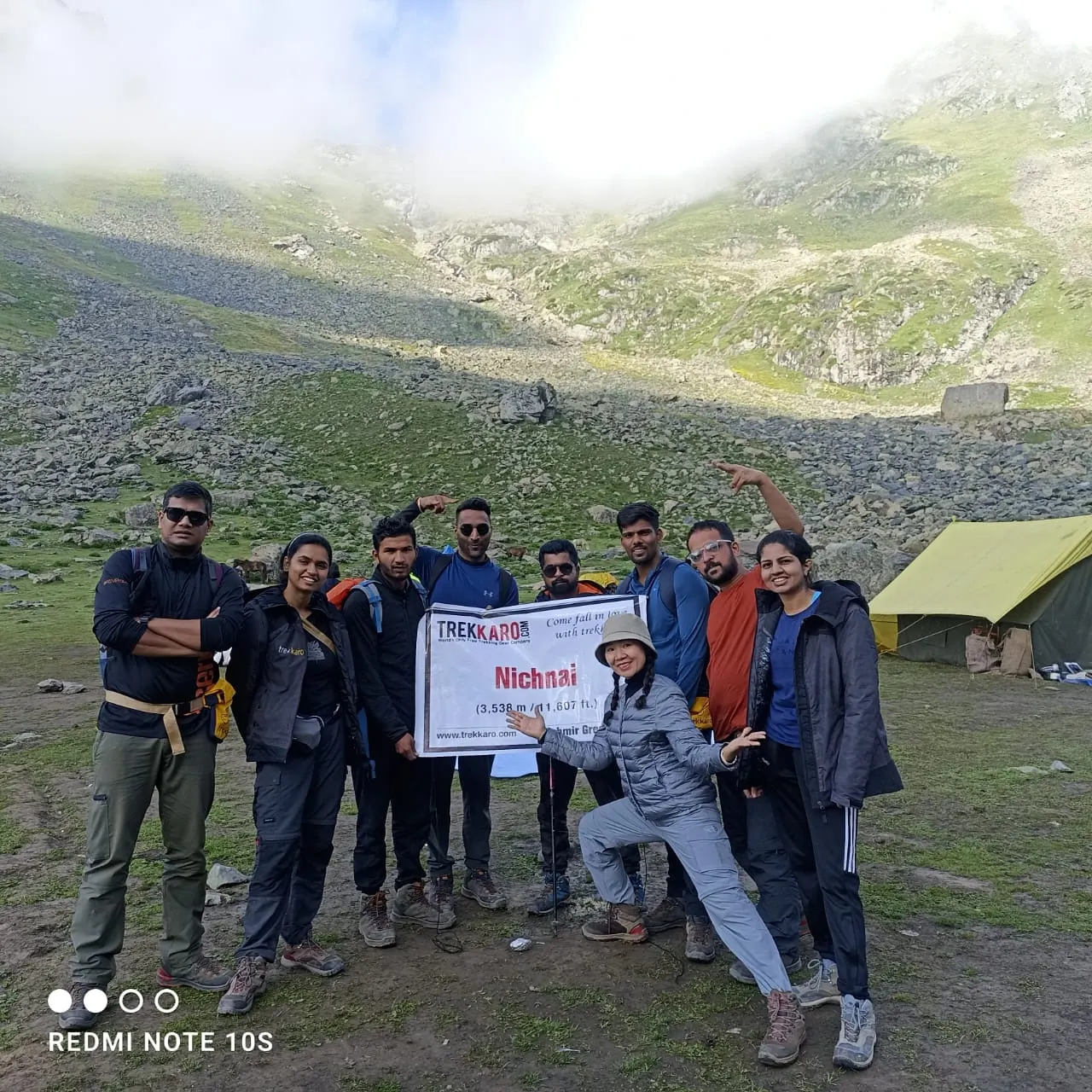
Nichnai Meadow at 11,500 feet is a broad, open basin surrounded by ridgelines that catch the last of the day's light in a sequence of gold, amber, and deep grey. The campsite is large enough that the tents look small against the surrounding terrain. The stream is audible from every part of the camp. In July and early August, wildflowers grow in dense clusters at the stream margins. Tonight, the circuit has properly begun, and tomorrow brings the first pass and the first lake.
What to Expect:
- First full trekking day – ~10 km, 4–5 hrs, ~3,000 ft altitude gain from Shitkadi to Nichnai
- Forest transition to open alpine terrain as the treeline retreats above 10,000 ft
- Nichnai stream alongside the upper trail – cold glacial water, increasingly audible as you climb
- Views back over the Sindh Valley and Srinagar basin below as altitude increases
- Wildflowers in peak density at Nichnai meadow in July and early August
- Overnight: Nichnai Meadow Camp (11,500 ft)
Day 3: Nichnai to Vishansar Lake via Nichnai Pass
Route Details:
Altitude: 11,500 ft → Nichnai Pass (~13,100 ft) → Vishansar Lake (~13,386 ft) | Distance: ~12 km | Duration: 6–7 hrs | Terrain: Rocky ascent, snow sections, pass ridge, descending lakeshore approach
Day 3 delivers the Kashmir Great Lakes circuit's first defining visual moment. The route climbs from Nichnai to the Nichnai Pass at approximately 13,100 feet, ascending through open rockfield and snowpatches, the extent of which depends on the season, with increasingly wide views over the Kashmir Valley as altitude is gained. The ascent is sustained but well-graded. The pass ridge, when you reach it, presents one of the most immediately arresting views in Himalayan trekking: two lakes visible simultaneously in the basin below.
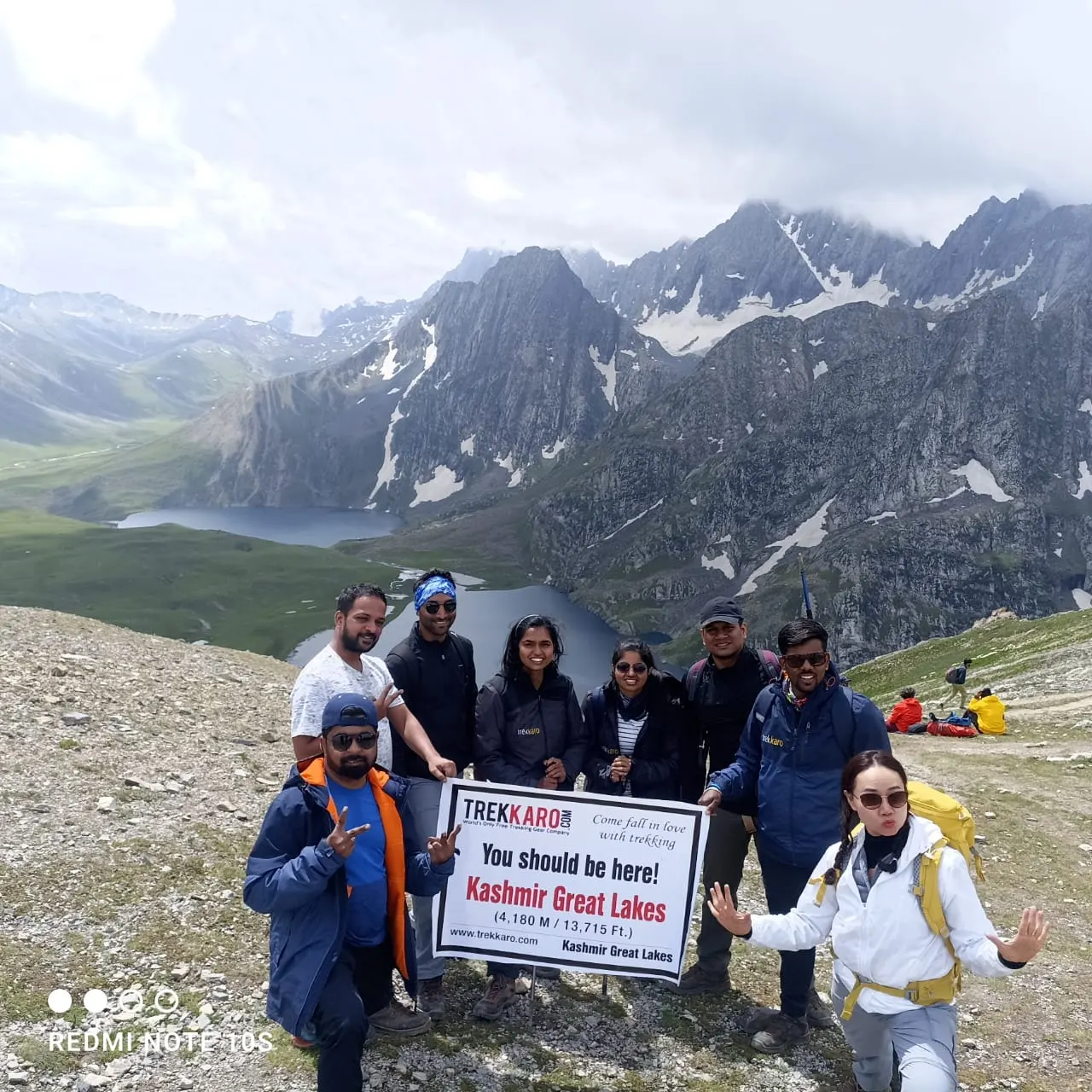
Vishansar and Krishansar are twin lakes separated by a narrow ridge at the upper valley head. From the Nichnai Pass, both are in view simultaneously, Vishansar in the near basin at approximately 13,386 feet, and Krishansar just beyond the dividing ridge and slightly higher. Vishansar's colour on a clear morning is a deep, saturated cobalt, unlike anything at lower elevation. Krishansar reflects the surrounding snowfields in its surface. The composition of both lakes visible from one ridge, framed by the valley behind them, constitutes the circuit's first extraordinary visual sequence. It is sufficient on its own terms to justify the previous two days of effort.
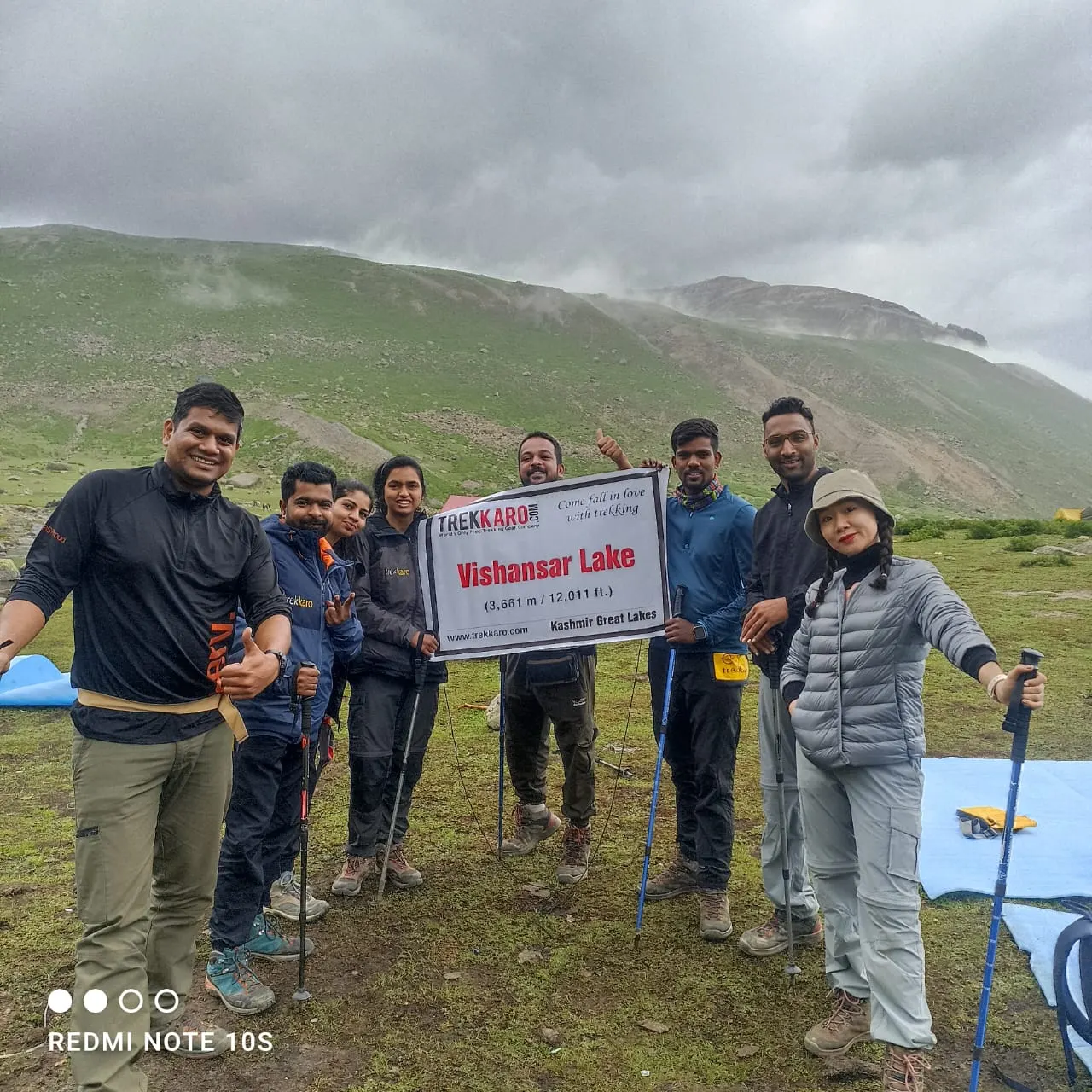
Camp is set on the Vishansar lakeshore, one of the finest campsites in the Indian Himalayan trekking circuit. The lake's colour shifts throughout the afternoon as the light angle changes: cobalt at the morning, turquoise by midday, and a pale jade-green where shallows catch the late afternoon sun. If you arrive before 3:00 PM, walk the lake perimeter before dinner. The circuit takes approximately 45 minutes, and each angle presents a different relationship between water, shore, sky, and the surrounding ridge. Tonight, the circuit is fully underway.
What to Expect:
- Climb to Nichnai Pass (~13,100 ft) – snow sections in July; microspikes in use if conditions require
- First view of twin lakes: Vishansar and Krishansar are both visible simultaneously from the pass ridge
- Vishansar Lake (~13,386 ft): deep cobalt shifting to turquoise and jade throughout the afternoon
- Lakeshore camp – one of the finest campsites on the circuit
- Afternoon perimeter walk of Vishansar Lake (~45 min, flat terrain) before dinner if time allows
- Overnight: Vishansar Lakeshore Camp (~13,386 ft)
Day 4: Vishansar Lake to Gadsar Lake via Gadsar Pass
Route Details:
Altitude: ~13,386 ft → Gadsar Pass (~13,800 ft) → Gadsar Lake (~11,800 ft) | Distance: ~14 km | Duration: 7–8 hrs | Terrain: Snow ascent, exposed pass ridge, long scree and boulder descent
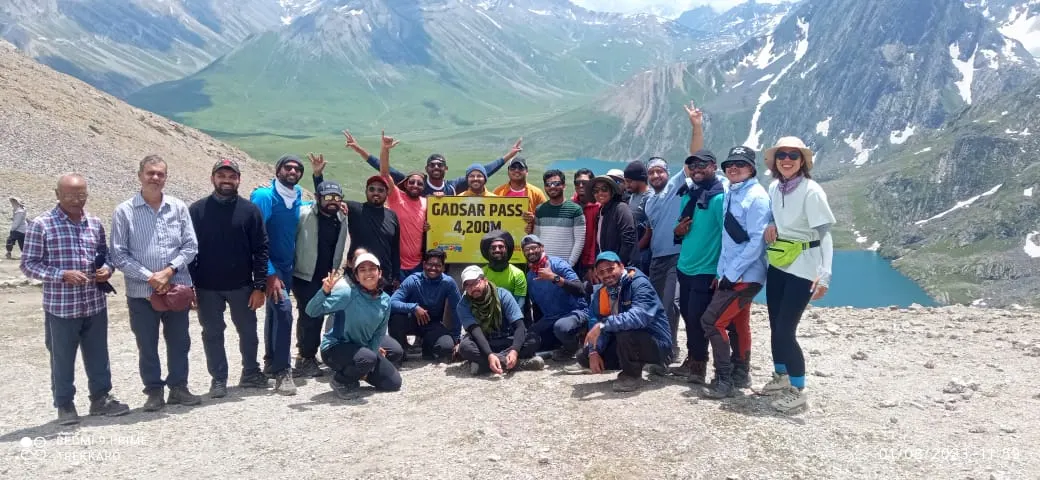
Day 4 is the hardest day of the circuit and the most rewarding. The Gadsar Pass at approximately 13,800 feet is the highest point of the entire Kashmir Great Lakes route, higher even than the Nichnai Pass, and the crossing is the physical and visual centrepiece of the trek. Departure from Vishansar camp is early, by 5:30 AM, to take advantage of firmer snow conditions in the morning and to ensure the group clears the pass and completes the descent before afternoon cloud and wind build up on the upper ridge.
The ascent from Vishansar gains altitude steadily across open rocky terrain and snowfields before the final steepened approach to the Gadsar Pass itself. Trekkaro's technical team installs fixed ropes on the steepest section of the pass approach before the trekking group departs, providing a continuous handline through the crux, converting what would otherwise be a genuinely exposed snow traverse into a confidently manageable climb. Every trekker uses the rope. The guide leads from the front. The group move through one by one.
The Gadsar Pass ridge delivers a panoramic view that experienced trekkers consistently cite as among the finest in Indian Himalayan trekking. To the south and west, the Kashmir Valley in full depth, forested ridges, the valley floor, and the Kashmir Himalaya on the horizon. To the north and east on clear days: the Ladakh and Zanskar ranges as a white wall of peaks at the edge of visibility. The border between Kashmir's green ecosystem and Ladakh's high-altitude desert is visible as a literal ecological line from the pass ridge. Two worlds. One ridge. You stand between them.
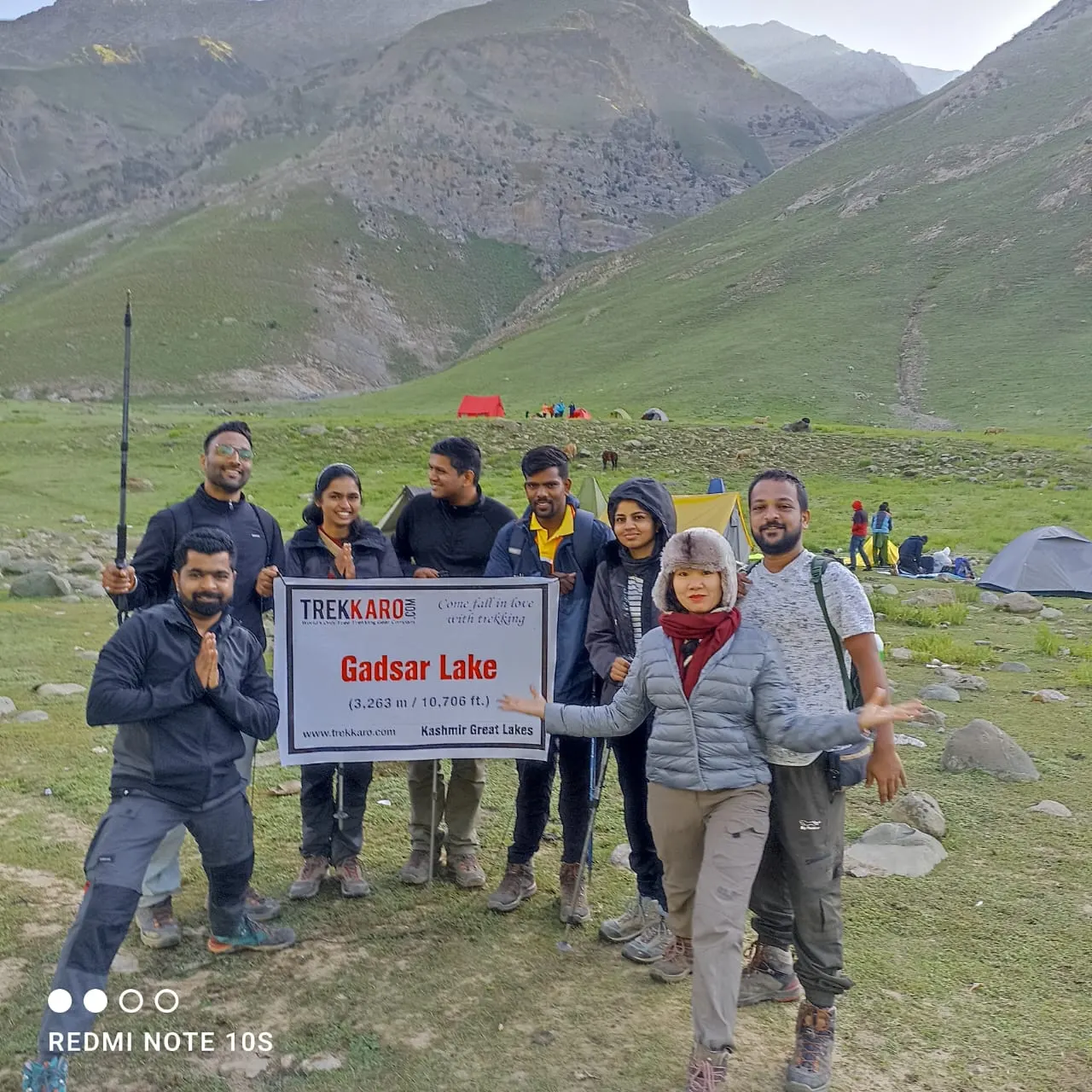
The descent from Gadsar Pass to Gadsar Lake is long and demanding, with approximately 2,000 feet of scree, boulder, and occasional snow before the valley floor levels out. Gadsar Lake at approximately 11,800 feet sits at the foot of a moraine wall in an enclosed basin: its surface the deepest blue of all seven lakes, its surroundings stripped of all vegetation, its silence of a quality more absolute than anything on the Vishansar side. The Gadsar camp is the most remote night of the circuit. The darkness here, away from any human light source, is complete. Sleep well. The hardest day is behind you.
What to Expect:
- Early 5:30 AM departure – firm snow conditions and pre-afternoon weather window
- Gadsar Pass (~13,800 ft) – highest point of the circuit, hardest climbing of the eight days
- Fixed ropes installed by the Trekkaro technical team on the steepest snow section below the pass (if needed)
- Panoramic pass views: Kashmir Valley and Ladakh/Zanskar ranges visible simultaneously on clear days
- Long descent (~2,000 ft) of scree and boulder to Gadsar Lake – trekking poles essential
- Gadsar Lake (~11,800 ft): the deepest blue of the circuit, the most remote and austere campsite
- Overnight: Gadsar Valley camp – complete darkness, complete silence, complete isolation
Day 5: Gadsar Lake to Satsar Lake
Route Details:
Altitude: ~11,800 ft → Satsar (~12,400 ft) | Distance: ~10 km | Duration: 5–6 hrs | Terrain: Open tundra valley, gentle undulation, meadow approach to Satsar chain
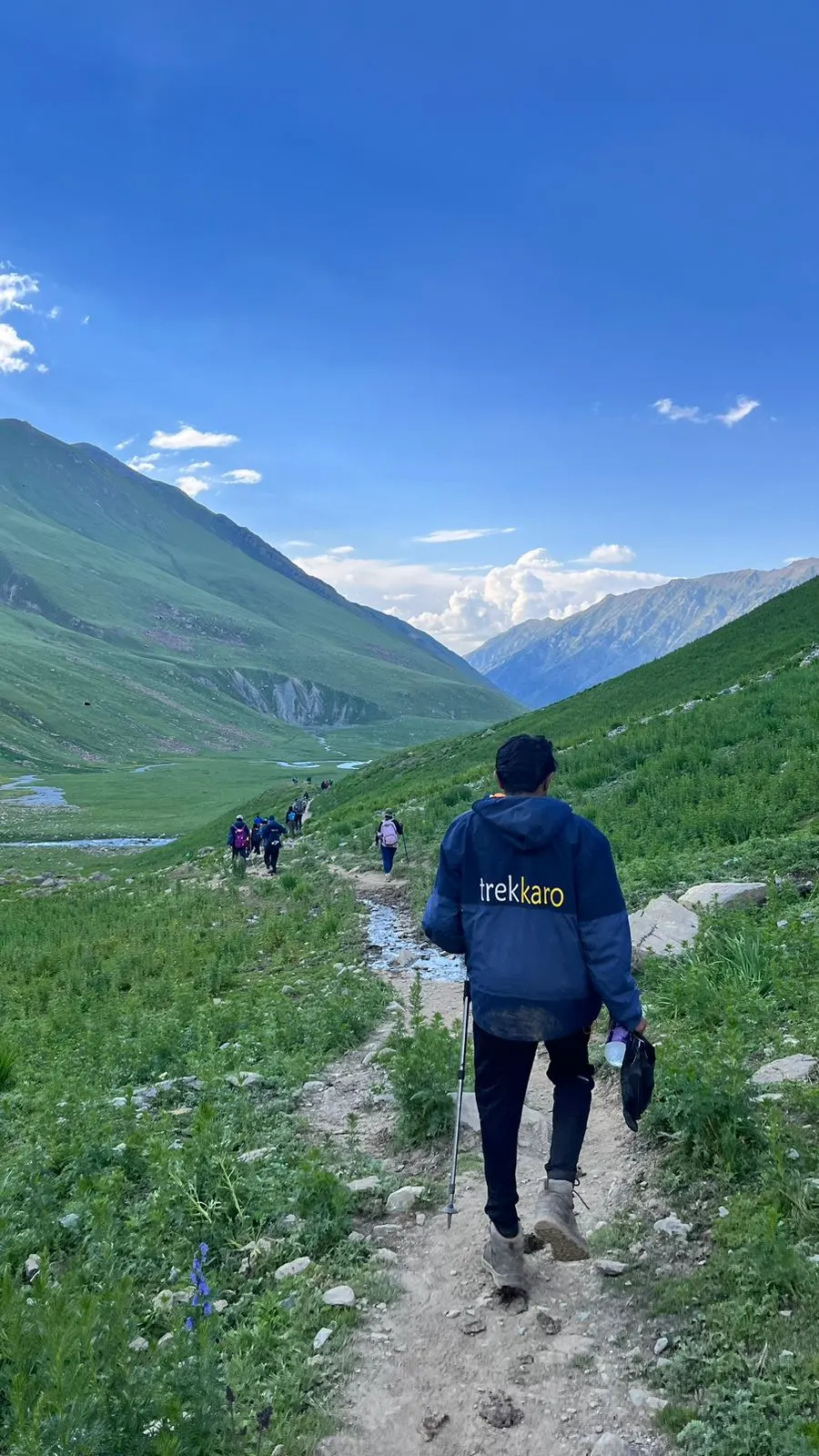
After the enormous physical and psychological investment of Day 4, Day 5 offers the circuit's most measured and meditative stage. The trail from Gadsar to Satsar follows the open valley eastward through tundra terrain with a moderate, unhurried gradient. The body, now fully acclimatised to altitude and to the cumulative rhythm of multi-day trekking, moves differently on this day with a confidence and ease in the terrain that Days 1 and 2 did not yet contain.
The landscape continues to reward: wide valley floors with the ridgelines framing a sky that at this altitude carries a quality of blue impossible at sea level. There are no trees, no traffic sounds, and no human noise beyond the group. The silence on this section of the circuit is among the more disorienting and clarifying experiences the route provides. Many trekkers use this day to process what the circuit has given them so far, the twin lakes, the pass crossing, and the Gadsar basin, and to prepare, both physically and psychologically, for the Zaj Pass and Gangabal that await on Day 6.
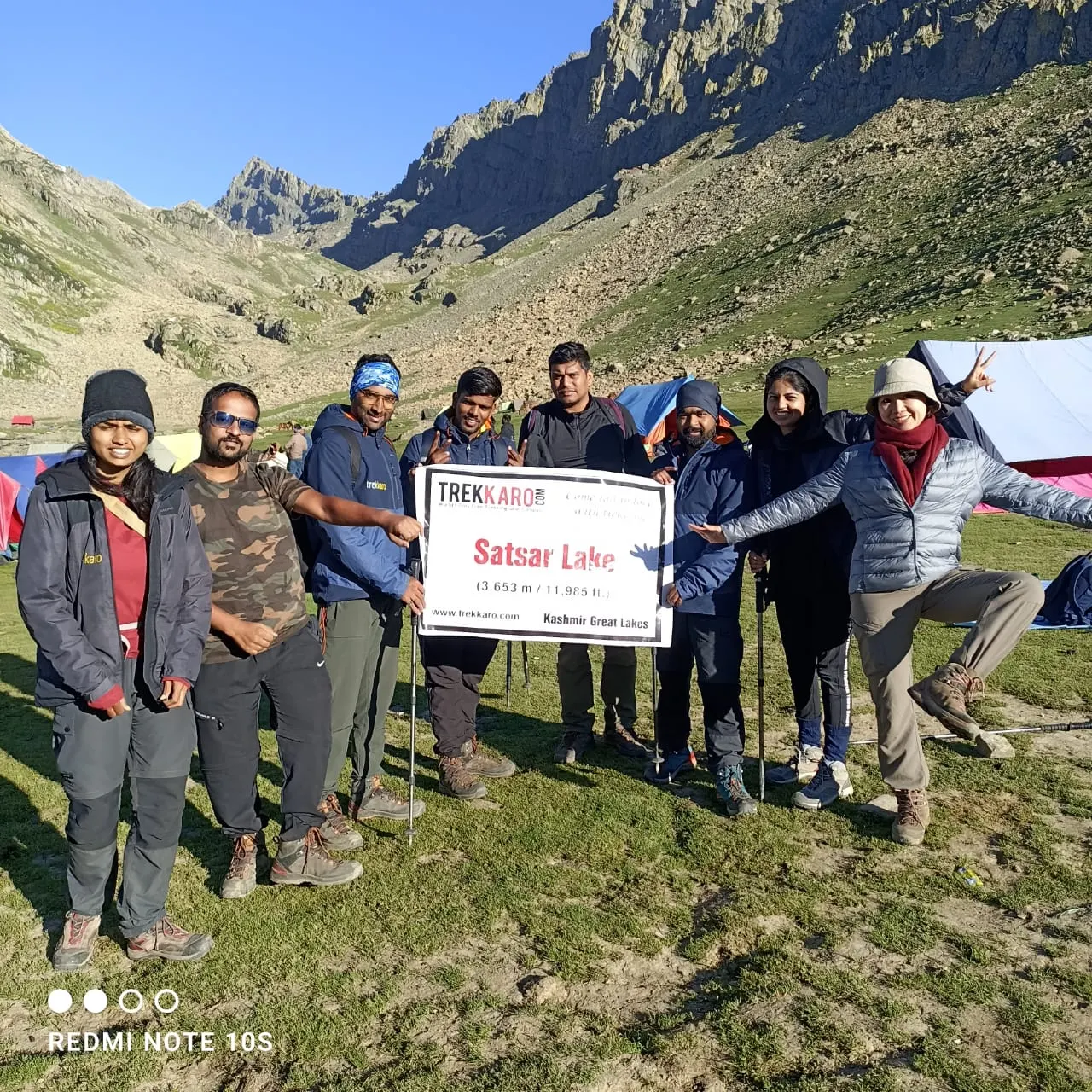
Satsar is not a single lake but a chain of seven smaller lakes connected by channels and separated by meadow ridges, a geological feature formed by the interaction of glacial moraine and the valley's drainage pattern, unique to this part of the Kashmir Himalayas. Walking through the Satsar sequence gives a different experience from the dramatic single-lake moments of earlier days: a slower, more intimate engagement with water and landscape at the same altitude. Each of the seven is distinct in size, colour, and character. The campsite at the main Satsar lake sits in a broad, flat meadow with peaks on all sides and the sound of moving water at the meadow margins.
What to Expect:
- Measured recovery day – gentle gradient after Gadsar Pass, body settling into the circuit's rhythm
- Open tundra walking with wide valley views and sustained mountain silence
- Satsar chain: seven interconnected alpine lakes – a unique geological feature of the Kashmir Valley
- Each lake is distinct in size, depth, colour, and character as you walk through the sequence
- Overnight: Satsar Meadow Camp (~12,400 ft) with surrounding peak views on all sides
Day 6: Satsar Lake to Gangabal Lake via Zaj Pass
Route Details:
Altitude: ~12,400 ft → Zaj Pass → Gangabal Lake (3,501 m / 11,486 ft) | Distance: ~10 km | Duration: 5–6 hrs | Terrain: Pass ascent, rocky ridge, descent to lake basin
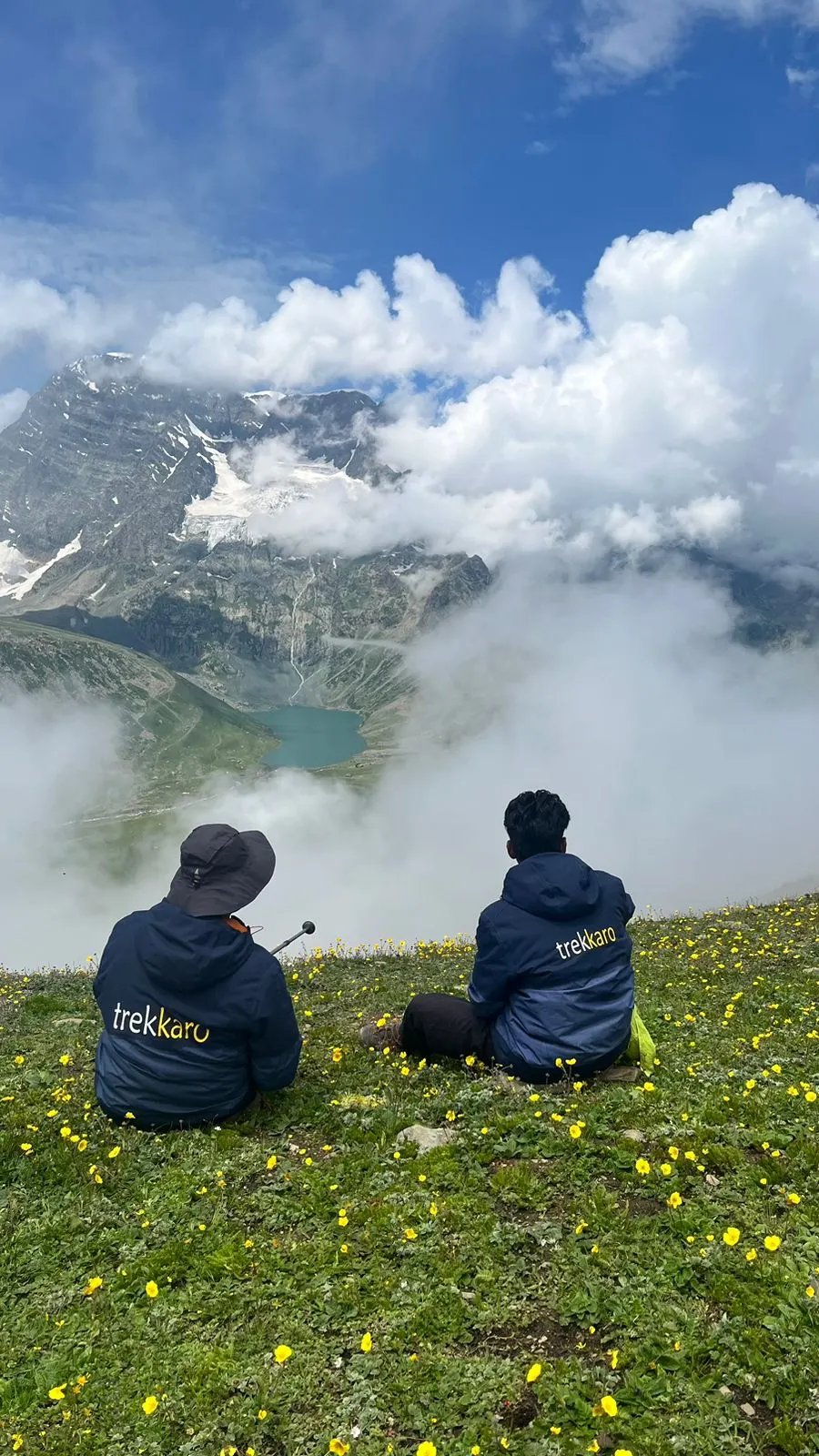
Day 6 delivers the circuit's emotional and visual climax. The route crosses the Zaj Pass before descending into the Gangabal basin, a glacial cirque formed beneath the south face of Harmukh Peak (5,142 m), one of the significant summits of the Kashmir Himalayas. The Zaj Pass is less technically demanding than the Gadsar Pass but no less rewarding: from the ridge, the view opens into the Gangabal basin below, the two lakes visible in the cirque floor, and Harmukh rising as an unbroken wall of rock and ice directly behind them.
Gangabal Lake sits at 3,501 metres (11,486 feet) in the floor of the cirque, its surface occupying the full width of the enclosed basin. Nundkol Lake sits immediately adjacent at a slightly higher elevation, separated by a short moraine ridge that takes approximately 10 minutes to cross. The two lakes together, with Harmukh rising directly above them, constitute what experienced trekkers consistently describe as the single finest view in the Indian Himalayan trekking repertoire. The mountain reflects in Gangabal's surface on calm mornings with a mirror-clarity that makes the reflection appear more substantial than the rock itself. Trekkers routinely arrive at Gangabal and stop mid-step. Not from fatigue. From the view.
Day 6 is a shorter walking day, approximately 10 km, 5 to 6 hours, designed to ensure arrival at Gangabal with time remaining in the afternoon. Two hours at the Gangabal lakeshore before dinner is time that earns itself many times over: walk the perimeter, cross the moraine ridge to Nundkol, sit at the water's edge with Harmukh in full view, and be unhurriedly present with one of the most extraordinary places the Himalayas contain. The evening at Gangabal tends to be quiet. The conversation, when it happens, tends to be the kind that only occurs at places like this.
What to Expect:
- Zaj Pass crossing – third and final major pass of the circuit, with views into the Gangabal basin below
- Descent to Gangabal Lake (3,501 m / 11,486 ft) – the visual and emotional climax of the circuit
- Gangabal + Nundkol: two adjacent lakes beneath Harmukh Peak (5,142 m) in a glacial cirque
- Harmukh reflects in Gangabal's surface on calm mornings – widely considered the finest view in Indian trekking
- Shorter walking day (~10 km, 5–6 hrs) to ensure afternoon time at the lakeshore
- Cross the moraine ridge to Nundkol – 10-minute walk from Gangabal, different perspective of the cirque
- Overnight: Gangabal Lakeshore Camp (3,501 m / 11,486 ft) - most memorable night of the circuit
Day 7: Gangabal to Naranag & Drive to Srinagar
Route Details:
Altitude: 3,501 m (11,486 ft) → Naranag (7,200 ft) | Distance: ~11 km | Duration: 5–6 hrs | Then: Drive Naranag → Srinagar (~55 km, ~2 hrs)
The morning after Gangabal has a quality different from every other morning on the circuit. You are at 3,501 metres, above the treeline, in the complete silence of the cirque, with Harmukh visible above the camp in the early light and the lake's surface reflecting the sky at a colour it only holds for approximately 20 minutes at dawn before the sun angle changes. Most trekkers are outside before the guide calls for breakfast. Not because there is anything to do. Because the view has earned a proper farewell.
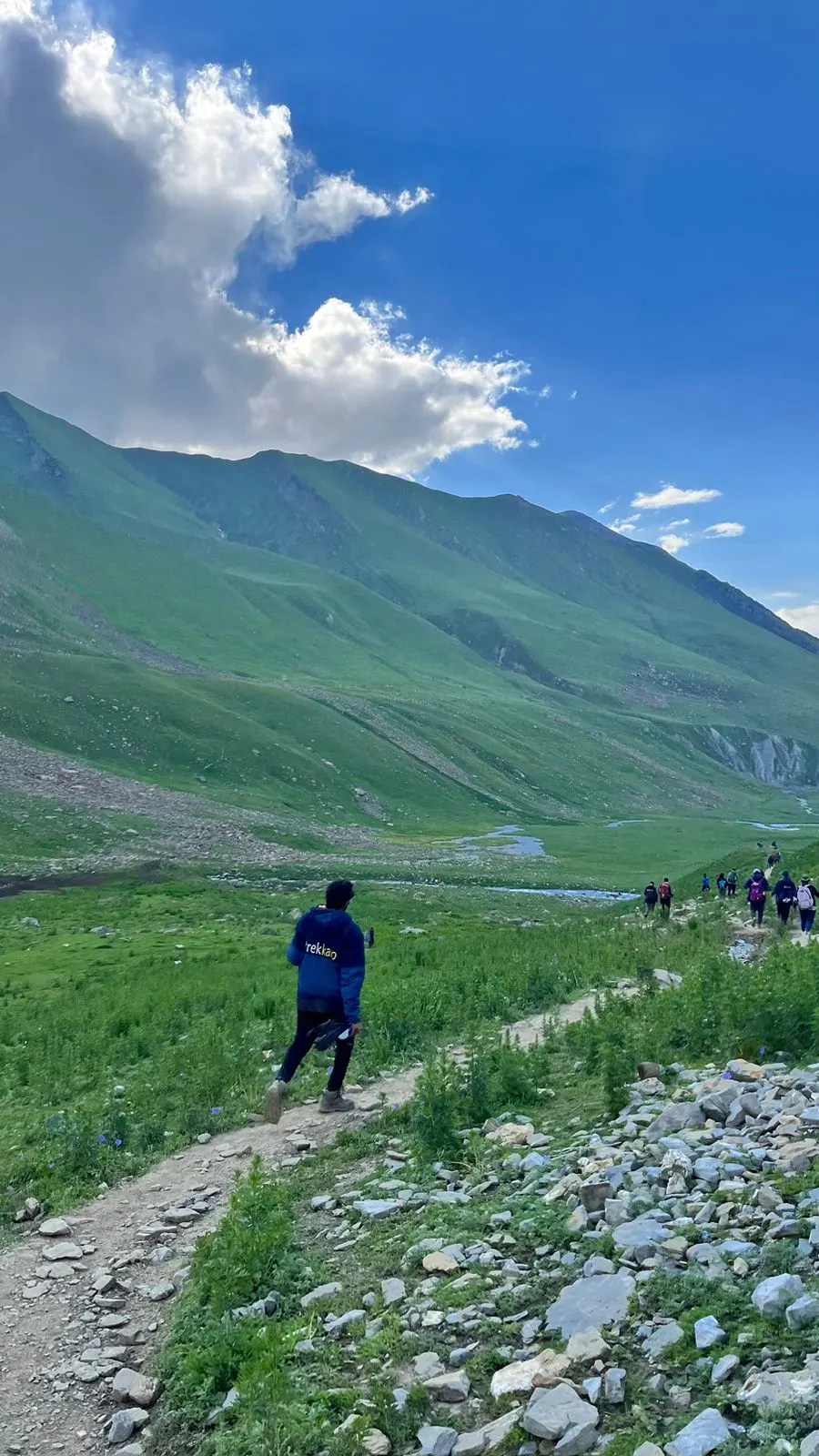
The descent from Gangabal to Naranag follows the Wangath stream downward through progressively denser forest. The landscape transformation on this descent mirrors Day 2 in reverse: the open alpine terrain of the high camp gives way to rhododendron scrub, then birch and pine, then the dense conifer forest of the lower valley. The air warms incrementally. Birds return. The stream grows louder and more visible. You are re-entering the world below, and the forest receives you in the same unhurried way it released you at Shitkadi five days ago.
At approximately 7,600 feet, the trail passes through the Naranag temple complex, a group of stone structures and ruins dating to the 8th century CE, positioned at the confluence of two mountain streams. The ruins are among the few significant historical sites on the Kashmir Great Lakes route, and their presence at the end of a circuit defined entirely by natural landscape gives the final descent an unexpected dimension. You are descending not just from altitude but from one world into a much older one. Naranag village at 7,200 feet marks the end of the trek. Trekkaro vehicles collect the group here for the 2-hour drive back to Srinagar.
What to Expect:
- Final dawn at Gangabal – Harmukh reflected at first light, 20-minute window before the angle changes
- 11 km descent from 3,501 m to Naranag (7,200 ft) through changing forest zones
- Wangath stream alongside the trail for much of the descent – sound and temperature warm with altitude loss
- Naranag temple ruins (8th century CE, ~7,600 ft) – rare historical landmark on the final approach
- Trekkaro vehicles collect the group at Naranag village – the trek officially ends here
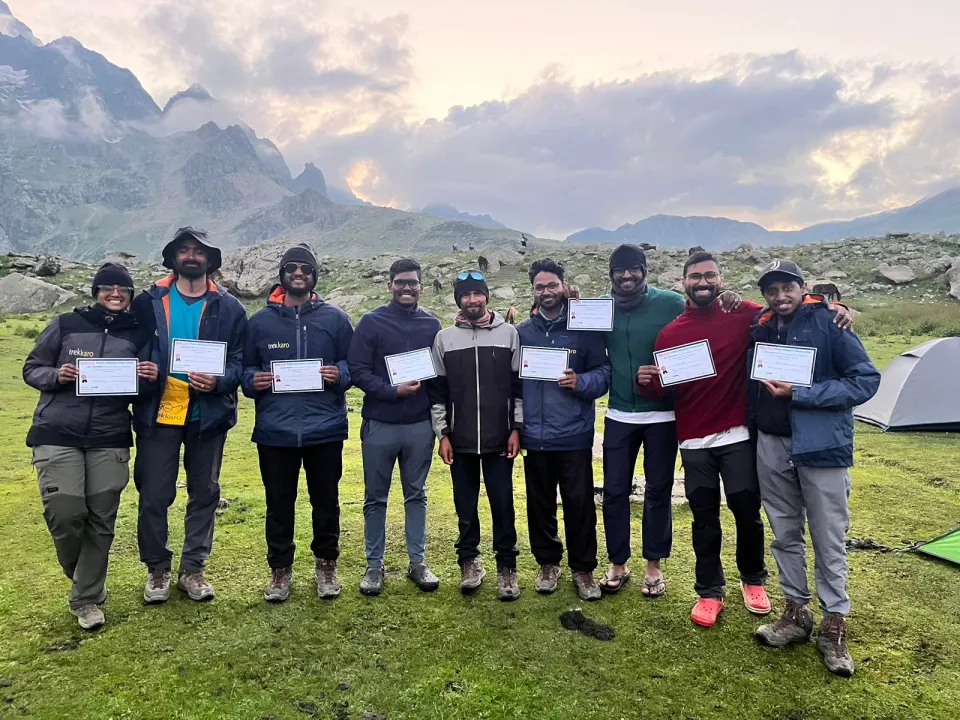
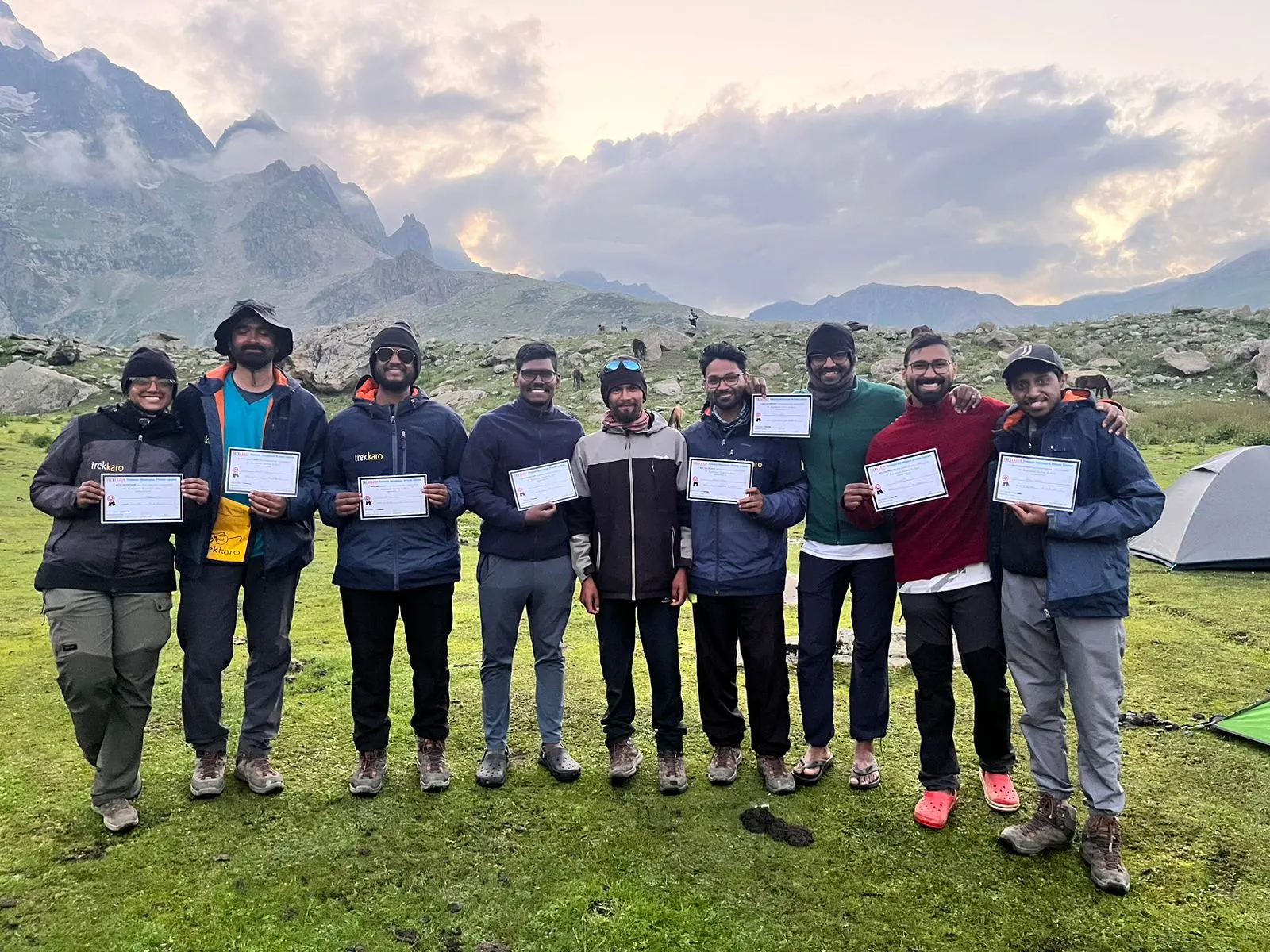
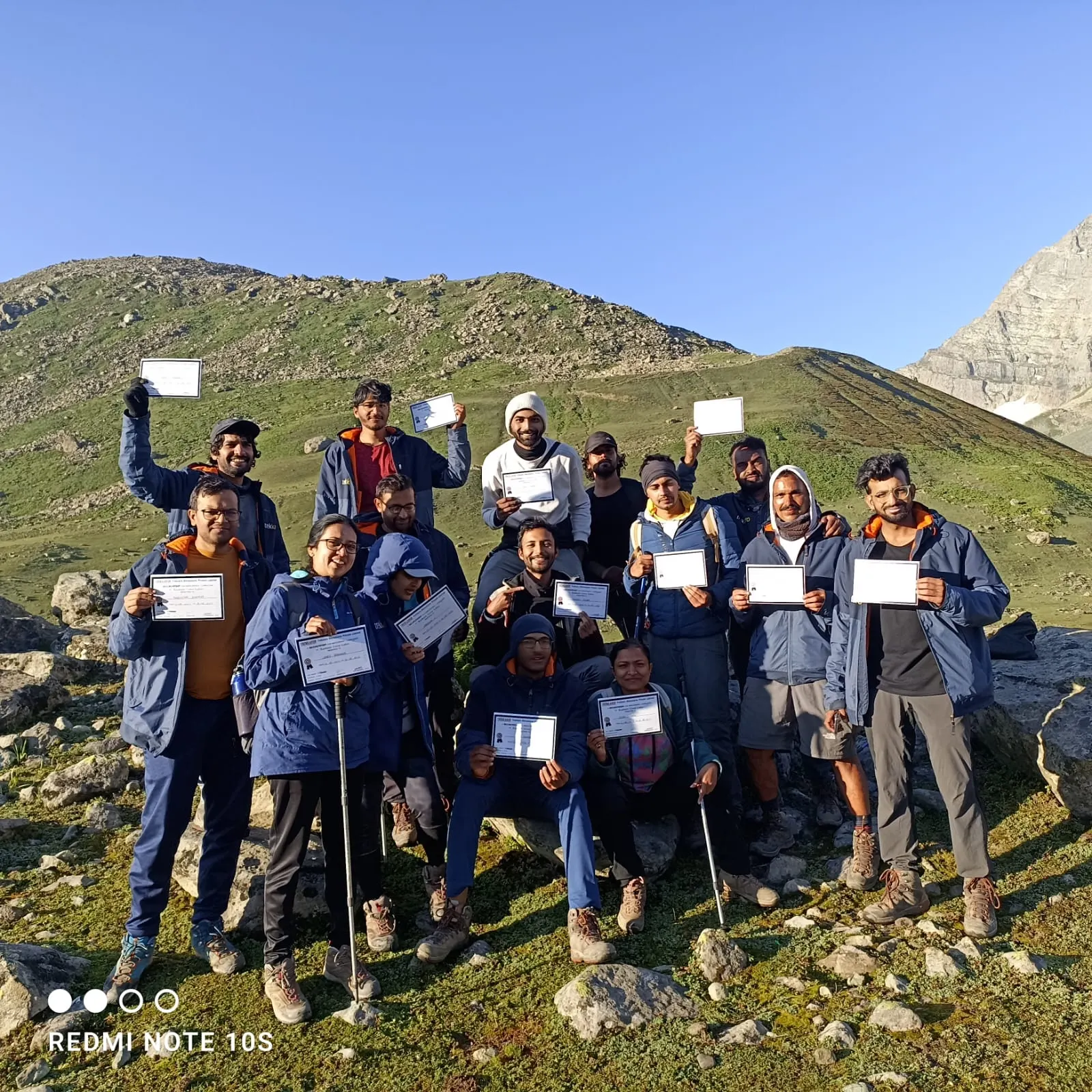
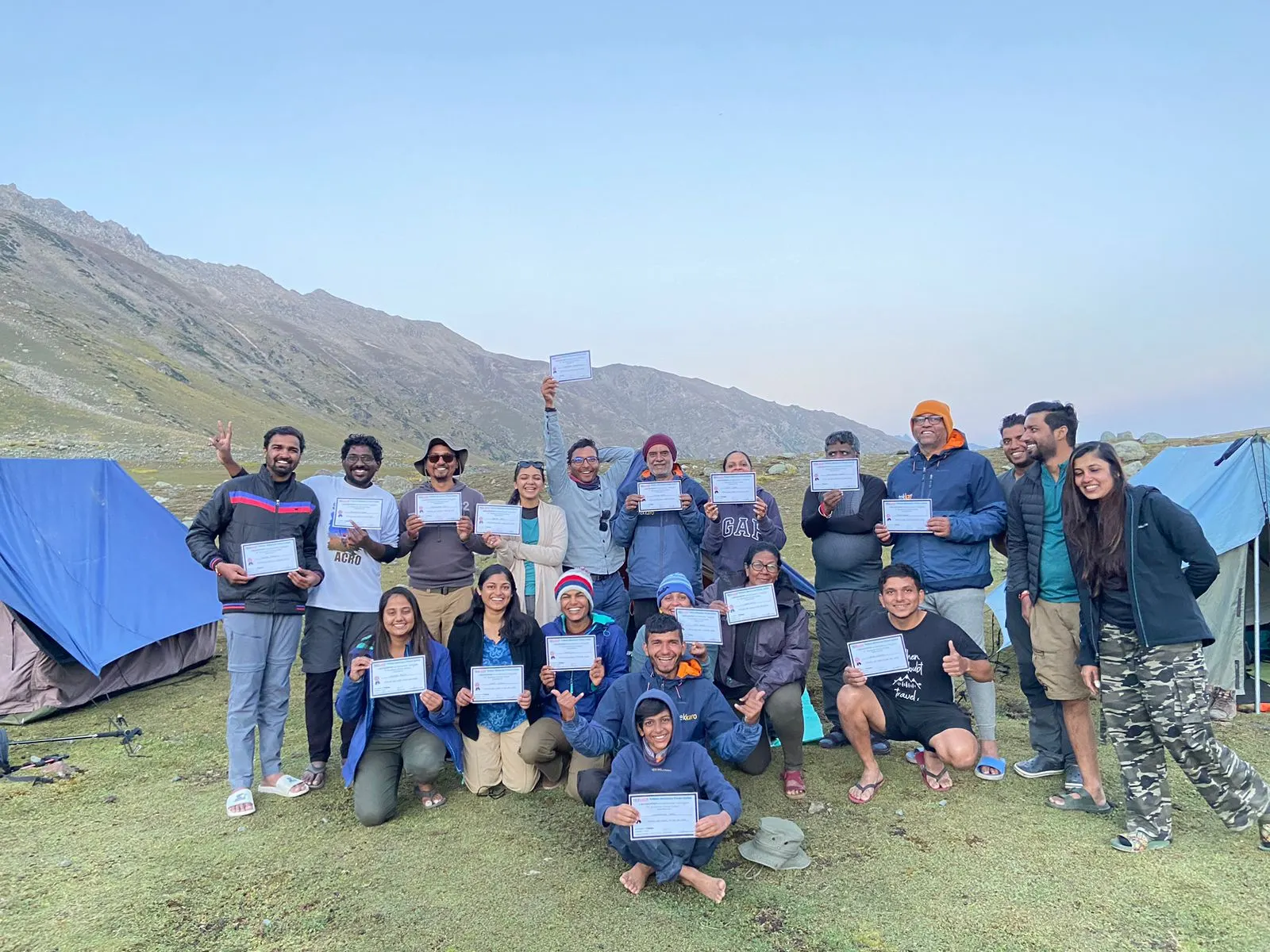
- Drive to Srinagar: ~55 km, ~2 hrs. Arrival late afternoon. Trek completion certificates issued.
Day 8: Buffer Day
Why Keep a Buffer Day on the Kashmir Great Lakes Trek?
The Kashmir Great Lakes trek is one of India's most breathtaking high-altitude adventures, but its remote Himalayan terrain demands smart planning. What is one of the most important things seasoned trekkers and travel experts recommend? Build in a buffer day at the end of your trek.
What Is a Buffer Day, and Why Does It Matter?
A buffer day is a flexible extra day built into your itinerary as a safety net. On a trek like Kashmir Great Lakes, where you're navigating altitudes above 4,000m through some of the most dynamic mountain terrain in the subcontinent, that flexibility isn't a luxury; it's essential trip planning.
Here's why:
Unpredictable Mountain Weather The Kashmir Himalayas are known for sudden weather shifts. Heavy rainfall, unexpected snowfall, or trail-blocking landslides can delay your group's progress with little to no warning. A buffer day absorbs these disruptions without throwing your entire return journey into chaos.
Safe Acclimatisation: Every trekker's body responds differently to altitude. If your group needs an extra day to acclimatise properly and avoid altitude sickness, a buffer day ensures you never have to choose between your health and your schedule.
Protecting Your Onwards Travel: Missing a connecting flight or transport out of Srinagar is a stressful and costly experience. A buffer day gives you a reliable window between the end of your trek and your return journey, so you arrive at the airport calm, not panicked.
What If You Don't Need the Buffer Day?
Good news – an unused buffer day is never wasted in Kashmir. Spend it soaking up. Srinagar's legendary beauty:
- Glide across Dal Lake on a traditional shikara
- Stroll through the stunning Mughal gardens — Shalimar Bagh, Nishat Bagh, and Chashme Shahi
- Explore the old city's architecture, craft bazaars, and spice markets
Buffer Day Cost
If the buffer day is used due to trek delays, an additional charge of ₹2,500 per person per day applies, covering meals, accommodation, and staff expenses. If unused, there's no extra cost.
Important Travel Advisory: When booking your return tickets from Srinagar, always account for this buffer day. If your schedule is tight, opt for flexible or refundable travel tickets for your return journey. Rigid bookings on high-altitude treks are a risk not worth taking.
Smart trekkers plan for the unexpected. The mountains run on their own schedule – your itinerary should too.
How To Reach
Nearest airport: Srinagar International Airport (SXR), with direct flights from Delhi (about 1 hr 20 min) and other metros. Fly in at least a day before the trek, so a delayed flight does not make you miss the 12:00 PM departure from the TRC.
From Srinagar to Shitkadi: 85 km, about 3 hrs by road. Transportation is arranged from the Tourist Reception Centre (TRC), Srinagar, at 12:00 PM; the cab costs ₹8,500 per vehicle (round trip), paid directly to the driver and shared among the trekkers in the same vehicle (5–6 seats).
Return: On the last day you trek 11 km (5–6 hrs) from Gangabal Lake down to Naranag, then drive 55 km (about 2 hrs) to Srinagar, so expect to reach Srinagar by evening. Book your flight home for the next day.
Nearest railway station: Srinagar. Since June 2025, Vande Bharat trains run between Shri Mata Vaishno Devi Katra and Srinagar (about 3 hrs), so you can now come all the way by rail: reach Katra (or Jammu Tawi) by train from Delhi, then continue to Srinagar. Plan to arrive in Srinagar the day before the trek.
- Delhi → Katra or Jammu Tawi – trains from New Delhi and Hazrat Nizamuddin, including overnight trains; check current timings.
- Katra → Srinagar – Vande Bharat, about 3 hrs; check current timings and book ahead.
From Srinagar to Shitkadi: 85 km, about 3 hrs by road. Transportation is arranged from the Tourist Reception Centre (TRC), Srinagar, at 12:00 PM; the cab costs ₹8,500 per vehicle (round trip), paid directly to the driver and shared among the trekkers in the same vehicle (5–6 seats).
Return: On the last day you trek 11 km (5–6 hrs) from Gangabal Lake down to Naranag, then drive 55 km (about 2 hrs) to Srinagar, so expect to reach Srinagar by evening. Book your train home for the next day.
By road: Delhi to Srinagar is about 876 km on NH44 via Pathankot, Jammu, Udhampur and the Banihal tunnel – a long 2-day journey, not a single overnight drive. The practical way is Delhi to Jammu overnight by bus or train, then on to Srinagar the next day by cab or by the Katra–Srinagar train. Weather can close the highway, so confirm the road status before you leave.
From Srinagar to Shitkadi: 85 km, about 3 hrs by road. Transportation is arranged from the Tourist Reception Centre (TRC), Srinagar, at 12:00 PM; the cab costs ₹8,500 per vehicle (round trip), paid directly to the driver and shared among the trekkers in the same vehicle (5–6 seats).
Return: On the last day you trek 11 km (5–6 hrs) from Gangabal Lake down to Naranag, then drive 55 km (about 2 hrs) to Srinagar, so expect to reach Srinagar by evening. Book onward travel from Srinagar for the next day.
Things To Carry
The Great Lakes route crosses two high passes and many streams over 7 days in July–August, so bring well-tested gear of your own.
- Trekking shoes (bring your own) – waterproof, with ankle support and good grip, broken in before the trek; 7 days of rocky, wet and sometimes snowy trail are hard on new shoes.
- Trekking poles (bring your own) – a pair, for stream crossings, the Gadsar Pass descent and the long last-day descent to Naranag.
- Gaiters – for snow patches on the pass approaches and loose ground on the descents.
- Backpack (50–60 L) – with a rain cover; line the inside with a plastic bag as well.
- Day pack (20–30 L) – needed if you offload your main backpack; carries water, rain jacket and snacks on pass days.
- Two water bottles (1 L each) – one of them insulated for the cold early starts.
- Headlamp – with spare batteries, for the 5:30 AM start on Gadsar Pass day and for camp at night.
- Lunch box – reusable and leak-proof, for packed lunch on the long days.
July–August brings rain showers on the trail and cold nights at the high lake camps, so plan on 3 warm layers plus full rain protection.
- Padded or down jacket (bring your own) – your main warm layer for Gadsar Pass (13,800 ft) and the evenings at Satsar and Gangabal.
- Thermal inners – top and bottom, 2 sets, synthetic or merino; avoid cotton at altitude.
- Fleece jacket – a 200–300 gsm mid layer for rest stops and cold mornings.
- Rain jacket and rain pants (or a poncho) – essential in July–August, for rain on the approach, the pass crossings and early departures.
- Trek pants x2 – quick-dry, no jeans; add warm fleece-lined trousers for camp.
- Quick-dry collared T-shirts x3 – full sleeves protect from sun and wind.
- Socks x4 pairs – synthetic or woollen trekking socks, plus a woollen pair kept dry for the night; waterproof socks help at stream crossings.
Sun and wind are strong on the passes and around the lakes, and rain can arrive quickly, so keep these within easy reach.
- Sun cap – wide brim or neck flap.
- Woollen cap – covering the ears; needed above 12,000 ft and on Gadsar Pass.
- Buff or neck gaiter – wind protection on the exposed pass ridges.
- Gloves – fleece liners plus a waterproof outer pair; you need both on Gadsar Pass day.
- UV sunglasses – category 3–4, against glare from snow patches and the high-altitude sun.
- Sunscreen SPF 50+ and lip balm – reapply every 2 hours on all 7 days.
- Quick-dry towel and toiletries – biodegradable soap, toothbrush and paste; no wet wipes, as they are not biodegradable.
- Plastic or ziploc bags – 4–5, for wet clothes, electronics and your waste.
There is no charging on the trail for 7 days and cards do not work in the mountains, so sort these out in Srinagar.
- Personal medical kit – your regular medicines, blister plasters, pain relief and ORS; consult your doctor before the trek, including about Diamox.
- Snacks and electrolytes – nuts, dry fruit, energy bars, dark chocolate and electrolyte sachets, especially for Gadsar Pass day.
- Power bank – enough capacity for 7 days without charging.
- Cash – in small notes; ATMs are very few in the hills and cards are not accepted in the mountains, so withdraw in Srinagar and keep your share of the cab fare ready.
- Camp slippers or sandals – light, for camp and inside the tent.
- Waste bag – Trekkaro follows a zero-waste policy; carry all your packaging back out in the Swachh Bharat bag.
- Earplugs – optional, useful in shared tents.
- Government photo ID – original and a photocopy (Aadhaar card, passport, voter ID or driving licence).
- Passport – for international trekkers, needed for forest entry permits and any medical evacuation.
- Medical fitness certificate – signed by a doctor (strongly recommended).
- Travel insurance – policy document with emergency evacuation cover (mandatory).
- Disclaimer form – signed, with your emergency contact details filled in.
- Trekkaro booking confirmation – e-ticket / tax invoice.
Frequently Asked Questions
Kashmir Great Lakes Trek is a 7-day moderate–difficult trek in Ganderbal, Jammu and Kashmir, reaching 4,206 m (13,800 ft). It covers about 71 km on foot and starts at Shitkadi and ends at Naranag. Best time: July to September. Trekkaro price: ₹19,500 per person + 5% GST. Next batch: 3 Jul 2027 (22 upcoming batches).
Updated
The Kashmir Great Lakes trek is in Ganderbal district, Jammu and Kashmir. It starts at Shitkadi, an 85 km (about 3 hour) drive from Srinagar, and ends at Naranag, 55 km (about 2 hours) from Srinagar.
On the way it crosses three passes and camps beside a chain of high alpine lakes, from Vishansar to Gangabal.
The Kashmir Great Lakes trek takes 7 days from Srinagar to Srinagar and covers about 71 km, with Day 8 kept as a buffer day if needed.
- Day 1: drive from Srinagar to Shitkadi (85 km, about 3 hours)
- Days 2–6: 10–14 km a day via Nichnai, Vishansar, Gadsar, Satsar and Gangabal
- Day 7: 11 km down to Naranag, then a 2-hour drive to Srinagar
- Longest day: Day 4 over Gadsar Pass, 14 km in 7–8 hours
The highest point of the Kashmir Great Lakes trek is Gadsar Pass at 4,206 m (13,800 ft). The trek starts at Shitkadi (2,600 m / 8,530 ft) and ends at Naranag (7,200 ft).
- Nichnai Pass: 3,990 m (13,100 ft)
- Highest camp: Vishansar Lake, 4,080 m (13,386 ft)
- Other camps: Nichnai 3,510 m, Gadsar 3,600 m, Satsar 3,780 m and Gangabal 3,501 m
The Kashmir Great Lakes trek is graded Moderate–Difficult. It is long (7 days, about 71 km) and crosses three passes, with steep ascents and descents, snow sections and many stream crossings.
- Gadsar Pass day: 14 km in 7–8 hours, with a 5:30 AM start and fixed ropes on the steepest snow if needed
- Descents: about 2,000 ft of scree and boulders down to Gadsar Lake, and 11 km down to Naranag on the last day
- Weather: rain showers in July and August make the trail wet
The Kashmir Great Lakes trek is not the easiest first trek, but fit beginners can complete it with proper preparation. It runs for 7 days, with 4–8 hours of walking a day and two passes above 13,000 ft.
If this is your first Himalayan trek, start training well in advance and keep the buffer day free in your travel plans.
For the Kashmir Great Lakes trek you need a good level of fitness: you should be able to walk 4–8 hours a day for six days in a row, climb steep slopes and be comfortable at high altitude.
- Training: prepare physically and mentally in the weeks before the trek, with regular walks, stairs or uphill hikes
- Hardest day: Gadsar Pass, 14 km with snow and a long descent
- Fitness test: take the free 2-minute Am I Ready? test on the Trekkaro website
The Kashmir Great Lakes trek runs from July to mid-September. Days are pleasant at 10–20°C, but nights at the lake camps get cold.
- July: snow sections remain on Nichnai Pass, and wildflowers peak at Nichnai meadow from July to early August
- August: rain showers are common, so carry full rain gear
- September: colder nights, and snowfall becomes common in September and October
Yes. In July the Kashmir Great Lakes trek has snow sections on Nichnai Pass and on the climb to Gadsar Pass, where microspikes are used if conditions require.
- Gadsar Pass: a snow ascent, with fixed ropes on the steepest section if needed
- Gaiters: useful for snow patches on the pass approaches
- Late season: snowfall is common in September and October
On the Kashmir Great Lakes trek, days are pleasant at about 8°C to 22°C, but nights get cold fast: -5°C to -2°C in early July, 2°C to 8°C from mid-July to August, and -1°C to 4°C from late August to mid-September.
- Layers: 3 warm layers: thermals, a fleece and a padded or down jacket
- Coldest points: Gadsar Pass (13,800 ft) and the evenings at Satsar and Gangabal
- Rain: a rain jacket and rain pants, as showers are common in July and August
On the Kashmir Great Lakes trek you see Vishansar, Krishansar, Gadsar, the Satsar chain, Gangabal and Nundkol lakes, with Harmukh Peak (5,142 m) above the last two.
- Vishansar and Krishansar: twin lakes, both visible from the Nichnai Pass ridge
- Gadsar: deep blue water at the most remote campsite of the circuit
- Satsar: a chain of seven connected alpine lakes
- Gangabal and Nundkol: two lakes beneath Harmukh Peak, which reflects in Gangabal on calm mornings
- Gadsar Pass: views of the Kashmir Valley and the Ladakh and Zanskar ranges on clear days
The Kashmir Great Lakes trek covers mixed forest, open alpine meadows, rocky and snowy pass climbs, scree and boulder descents and open tundra valleys.
- Day 2: forest giving way to alpine scrub and meadow above 10,000 ft
- Days 3–4: rocky, snowy climbs to Nichnai and Gadsar passes, then long scree descents
- Day 5: gentle open tundra to Satsar
- Day 7: an 11 km descent through changing forest beside the Wangath stream
Yes, there is a risk of altitude sickness on the Kashmir Great Lakes trek: you sleep at 8,530 ft on Day 1, gain about 3,000 ft on Day 2, and spend the Day 3 night at 13,386 ft.
- Health checks: SpO2, pulse and blood pressure are recorded for every trekker on Day 1 as a baseline
- Briefing: the Day 1 briefing covers AMS awareness and safety protocols
- Medicine: consult your doctor before the trek, including about Diamox
The Kashmir Great Lakes trek is not recommended for senior citizens or anyone with health issues, because of its high altitude and steep ascents and descents. If you are above 58, in good physical condition and have high-altitude trekking experience, you may be able to do it.
Consult your doctor and the Trekkaro team before booking, and bring a medical fitness certificate signed by a doctor.
The Kashmir Great Lakes trek starts from Srinagar: the group leaves the Tourist Reception Centre (TRC) at 12:00 PM on Day 1 for the 85 km drive to Shitkadi.
- By air: Srinagar International Airport (SXR) has direct flights from Delhi (about 1 hour 20 minutes); fly in a day early
- By train: reach Katra or Jammu Tawi, then take the Vande Bharat from Katra to Srinagar (about 3 hours)
- By road: Delhi to Srinagar is about 876 km, a 2-day journey via Jammu
- Return: you reach Srinagar by evening on Day 7, so book onward travel for the next day
No, transport is not included in the Kashmir Great Lakes trek fee. A cab is arranged from the TRC, Srinagar, at 12:00 PM on Day 1 and costs ₹8,500 per vehicle for the round trip, paid directly to the driver.
- Sharing: the fare is split among the trekkers in the same vehicle (5–6 seats)
- Return: vehicles collect the group at Naranag on Day 7 for the 2-hour drive to Srinagar
- Cash: keep your share of the cab fare ready in small notes
On the Kashmir Great Lakes trek you stay 6 nights in tents at camps beside meadows and lakes: Shitkadi, Nichnai, Vishansar Lake, Gadsar Lake, Satsar and Gangabal Lake.
Tents are shared, so earplugs can help. Plan to reach Srinagar the day before the trek starts.
Kashmir Great Lakes batches have a maximum of 20 trekkers, and a fixed departure needs at least 6. Each batch is led by a trek leader trained in Wilderness First Aid, with a support team.
The Trekkaro technical team also fixes ropes on the steepest snow section below Gadsar Pass if conditions need it.
Yes, women can join the Kashmir Great Lakes trek alone: women trekkers share tents only with other women, and the trek leader and support staff stay with the group throughout.
As with any trip to the region, check the current security situation before you travel, and keep your valuables secure.
The Kashmir Great Lakes trek serves simple, nutritious vegetarian meals at camp, with packed lunches on the long trekking days.
- Lunch box: bring a reusable, leak-proof one
- Snacks: nuts, dry fruit, energy bars, dark chocolate and electrolyte sachets, especially for Gadsar Pass day
Yes. On the Kashmir Great Lakes trek the water comes from cold glacial streams, and to be safe it is boiled or treated with chlorine tablets at the camps.
- Bottles: two 1 L bottles, one of them insulated for the cold early starts
- Electrolytes: add ORS or electrolyte sachets on long days
Yes. Free Trekking Gear is not offered on the Kashmir Great Lakes trek, so bring well-tested gear of your own for 7 days of rocky, wet and sometimes snowy trail.
- Trekking shoes: waterproof, with ankle support and good grip, broken in before the trek
- Trekking poles: a pair, for stream crossings and the long descents
- Padded or down jacket: your main warm layer for Gadsar Pass and the lake camps
- Rain jacket and rain pants: essential in July and August
- Backpack: 50–60 L with a rain cover, plus gaiters and a headlamp
Yes, backpack offloading on the Kashmir Great Lakes trek costs ₹3,000 + 5% GST for one backpack of up to 9 kg, carried by a porter for the whole trek.
- Day pack: carry a 20–30 L day pack with water, rain jacket and snacks
- Weight: keep the offloaded bag within 9 kg
No, a doctor does not join the Kashmir Great Lakes trek, but your health is tracked from Day 1, when SpO2, pulse and blood pressure are recorded for every trekker.
- Trek leaders: trained in Wilderness First Aid, with a full first-aid kit
- Your kit: your regular medicines, blister plasters, pain relief and ORS
- Fitness certificate: a doctor-signed certificate is strongly recommended
For the Kashmir Great Lakes trek, carry an original government photo ID with a photocopy and a travel insurance policy with emergency evacuation cover, which is mandatory.
- ID: Aadhaar card, passport, voter ID or driving licence
- International trekkers: passport, needed for forest entry permits and any medical evacuation
- Medical: a doctor-signed fitness certificate (strongly recommended)
- Forms: the signed disclaimer form and your Trekkaro booking confirmation
Mobile network on the Kashmir Great Lakes trek is very limited: only postpaid connections work, and you may get a weak signal at a few points, but it is not reliable. There are no charging points on the trail.
- Power: carry a power bank (or a portable solar charger) with enough capacity for 7 days
- Cash: withdraw in Srinagar, as ATMs are very few in the hills and cards do not work in the mountains
Yes. On the Kashmir Great Lakes trek you can leave extra luggage at the base camp in Shitkadi on Day 1, and you collect it at Naranag at the end of the trek on Day 7.
The trek is one way, from Shitkadi to Naranag, and your bag will be waiting for you at the finish. Keep it to a minimum and do not leave valuables; Trekkaro is not responsible for any damage to items left behind.
The Kashmir Great Lakes trek keeps Day 8 as a buffer day. If it is used, each trekker pays an extra ₹2,500 per day, which covers meals, accommodation and staff expenses.
To be safe, plan your onward travel from Srinagar with this extra day in mind.
Free Trekking Gear is not offered on this trek. Bring trekking shoes with good grip and ankle support, a warm jacket rated to about -10°C and trekking poles; they can also be rented at the base town.
Book the Kashmir Great Lakes trek at least 1–2 months in advance, especially for peak-season dates, as the season runs only from July to mid-September.
Booking early also gives you time to find flights or trains to Srinagar and to train for the trek.
The minimum age for the Kashmir Great Lakes trek is 14 years, because of the long days and two passes above 13,000 ft. Trekkers under 18 must come with a parent or guardian.
There is no fixed upper age limit, but trekkers above 58 need good fitness and high-altitude experience, and should consult a doctor before booking.
Terms & Conditions
1. Accommodation
- Day 1 to Day 6: camping at the designated campsites (6 nights), on a triple-sharing basis
2. Meals
- All meals from Day 1 dinner to Day 7 breakfast: breakfast, lunch, evening snacks and dinner
3. Permits & Camping Fees
- Forest permits and all Kashmir Great Lakes route entry fees
4. Camping & Safety Equipment
- Double-wall, rain-rated tents and -20°C sleeping bags at every campsite
- Trekking mattresses or sleeping pads at every campsite
- Daily SpO2, pulse and blood-pressure checks at every campsite
- Portable oxygen cylinder and emergency stretcher on every batch
5. Trek Team
- Certified trek leader and guide for all 7 days
- Mountain kitchen staff, camp helpers, and a local horse and mule support team
- Trek completion certificate when you complete the full circuit to Naranag
1. Transport
- Not included: Tourist Reception Centre (TRC), Srinagar, to Shitkari Basecamp via Sonmarg, and Naranag back to Srinagar. Trekkaro can arrange a shared cab at approximately ₹8,500 round trip per 5–6 seat vehicle, paid directly to the driver and split among the trekkers in it.
- Travel to and from Srinagar (flights, trains or buses), arranged by you
2. Food During Transit
- Meals on the drives from Srinagar to Shitkari and from Naranag back to Srinagar
3. Backpack Offloading (optional)
- ₹3,000 + 5% GST for the entire trek
- Maximum weight: 9 kg; no suitcases, trolleys or duffel bags
- Charges may be higher for last-minute requests made at Shitkari
4. Single Tent Occupancy (optional)
- ₹2,000 + 5% GST per tent for the entire trek
5. Personal Equipment
- Your clothing, backpack, sunglasses and other personal gear
- Trekking shoes, jacket and poles are not provided; bring your own
6. Trek Insurance
- Travel insurance is mandatory and not included. It must cover high-altitude trekking and helicopter evacuation.
7. Anything Not Mentioned Under Inclusions
- Accommodation in Srinagar before or after the trek
- Personal expenses such as tips, calls, laundry and extra snacks
- Costs from an early exit, evacuation, or an itinerary change due to weather or medical reasons
We know that cancelling a trek can be genuinely disappointing. Plans change, life intervenes, and sometimes the mountains have to wait. That is why Trekkaro has designed one of the most trekker-friendly cancellation policies in the industry — to reduce the financial impact on you and give you real options when things do not go as planned.
Important: Bookings made on trekkaro.com are cancelled online from My Bookings. Bookings made offline with our team must be cancelled in writing by e-mail by the person who originally booked the trek. Requests over the phone, via WhatsApp, or through third parties are not accepted.
How to Cancel Your Trek
Booked online on trekkaro.com:
- Log in and open My Bookings.
- Choose Cancel Booking on the trek you want to cancel.
- Pick a refund (as per the charges below) or Get TrekCash Voucher instead — the voucher is issued instantly and appears under My TrekCash Vouchers.
Booked offline with our team:
- Compose an e-mail from the registered e-mail ID used at the time of booking.
- Attach a copy of your tax invoice to the e-mail.
- Send both to info@trekkaro.com.
- Your cancellation is effective from the date Trekkaro receives and acknowledges your e-mail.
How to Reschedule Your Trek (Free)
- Once per booking, to another batch of the same trek, free of charge. A request we decline doesn’t count.
- Up to 7 days before departure — both your current and new batch must be at least 7 days away.
- Subject to seat availability for every trekker on the booking.
- Not available for bookings paid fully or partly with a TrekCash Voucher.
- No fee or price difference; add-ons and the number of trekkers stay as booked.
Booked online: My Bookings → Reschedule free → pick a batch. Our team confirms by e-mail and your booking moves once approved. Booked offline: e-mail info@trekkaro.com.
Cancellation Charges
| Cancellation Timeline | Refund | Details |
|---|---|---|
| 30 days or more before departure | 70% Refund | 30% cancellation charge |
| 15 to 29 days before departure | 50% Refund | 50% cancellation charge |
| Within 14 days / No-Show | No Refund | Free rescheduling (once per booking), transfer of booking, or a TrekCash Voucher (100% value, 1-year validity) — available until 7 days before departure |
Free rescheduling or a 100% voucher instead of a refund. At any time from the date of booking until 7 days before departure, you can reschedule to another batch free of charge (once per booking, subject to seat availability), transfer your booking to another trekker, or take a TrekCash Voucher worth 100% of the amount paid, valid for 1 year — whichever refund slab would otherwise apply. Online bookings take the voucher themselves from My Bookings → Cancel Booking (issued instantly); offline bookings request it by e-mail to info@trekkaro.com.
Cancellation of Voucher-Based Bookings
- The standard cancellation policy applies to voucher-based bookings in the same way it applies to direct bookings.
- Any remaining balance after the applicable cancellation charge has been deducted will be credited back to your Trekkaro account as a new voucher.
- If your voucher has already expired at the time of cancellation, no refund, credit, or extension will be issued under any circumstance.
- If a voucher is set to expire on a Sunday or public holiday, it must be redeemed before the expiry date.
Additional Terms
- Free Rescheduling: Switching to a different batch of the same trek is free of charge once per booking, up to 7 days before departure, subject to seat availability. Not available for bookings paid with a TrekCash Voucher. See “How to Reschedule Your Trek” above.
- Trek Transfers: Transferring your booking to another person is permitted, subject to Trekkaro's eligibility criteria. The new trekker must meet the fitness, age, and documentation requirements for that particular trek.
- No Refund Post-Commencement: Once the trek has commenced from Day 1 of your confirmed itinerary, no refunds or TrekCash Vouchers will be issued for any reason, including early exit, illness, or dissatisfaction with services.
- Policy Changes: Trekkaro reserves the right to amend or withdraw this cancellation policy at any time without prior notice. The version in effect at the time of your booking confirmation governs your booking.
Early Exit or Removal from Trek
A trekker may be required to leave the trek before completion for health concerns (AMS, hypertension, cardiac symptoms, or fitness that poses a safety risk), rule violations (alcohol or non-prescribed drugs on trail, smoking in prohibited zones, reckless behaviour, or misconduct), or by their own decision. In all cases of early exit or removal, no refund, partial refund, or TrekCash Voucher will be provided, and any additional transport or exit expenses are the trekker's responsibility. The trek leader's decision on health and safety grounds is final.
If Trekkaro Cancels Your Trek
In rare circumstances beyond our control — natural disasters (extreme snowfall, avalanche, floods, landslides, earthquakes) or unforeseen civil events (government curfews, lockdowns, political unrest) — Trekkaro will issue a TrekCash Voucher for the full trek fee paid, valid for 12 months on any trek listed on Trekkaro.com. If the new trek costs more, the difference is payable by the trekker. The voucher is sent to your registered e-mail within 10 working days and may be transferred to another person who meets Trekkaro's eligibility requirements.
Refund Processing
Refunds are processed within 10 working days of cancellation approval and credited to the original payment method only (credit card, debit card, net banking, UPI, or wallet). Your bank may take another 3–5 business days. Office hours: Monday to Saturday, 10:00 AM to 7:00 PM IST.
The full policy is part of our Terms & Conditions (Section 09).
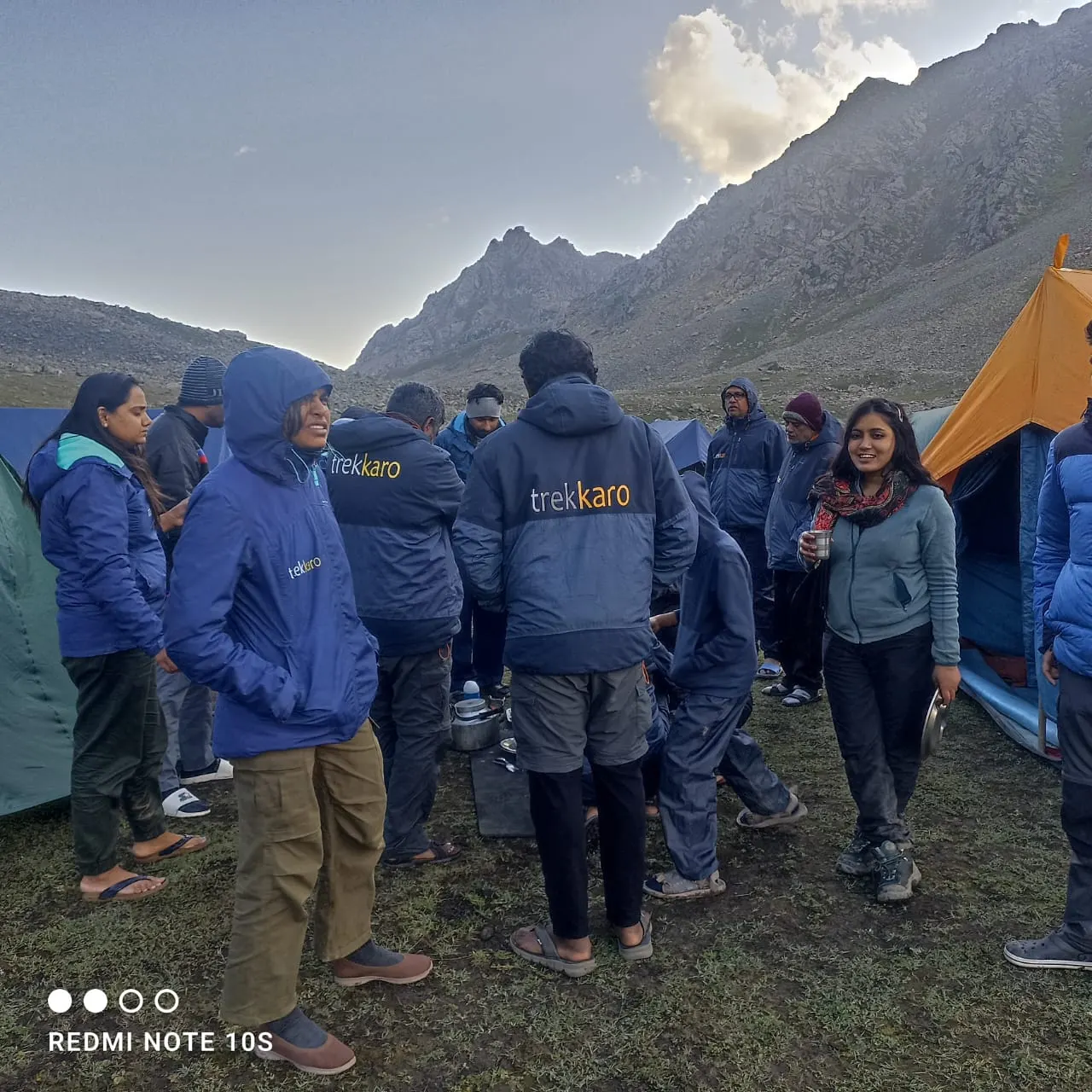
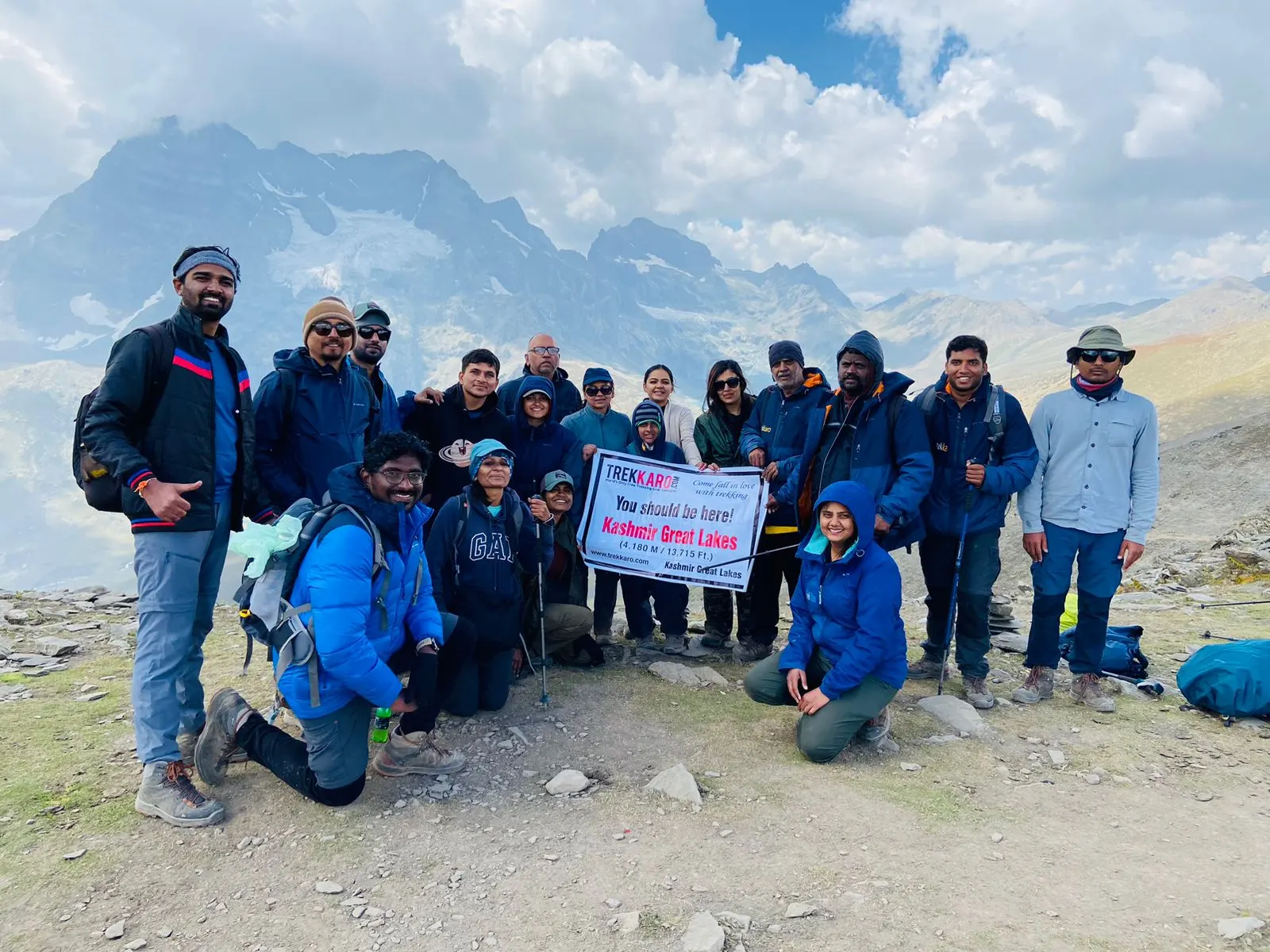
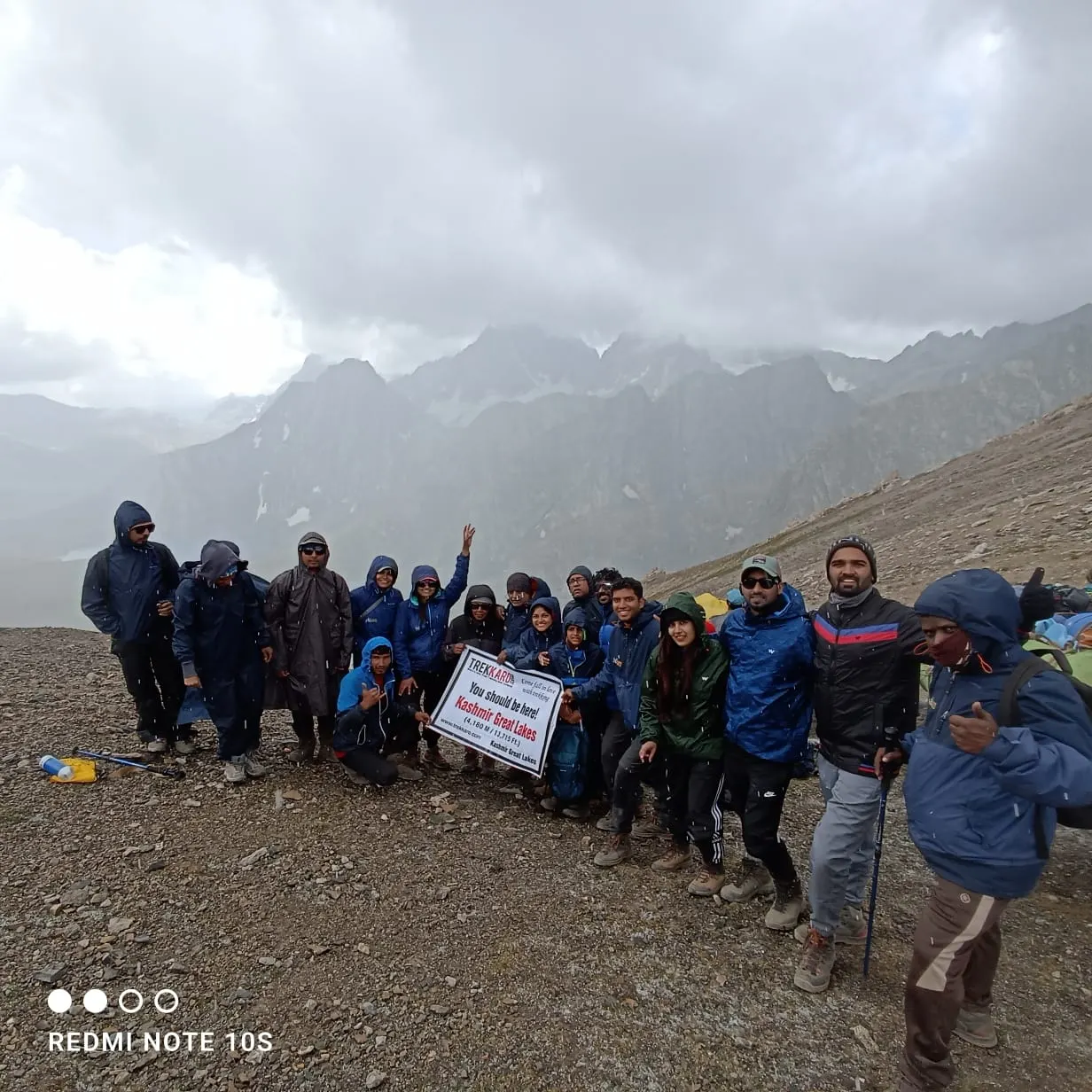
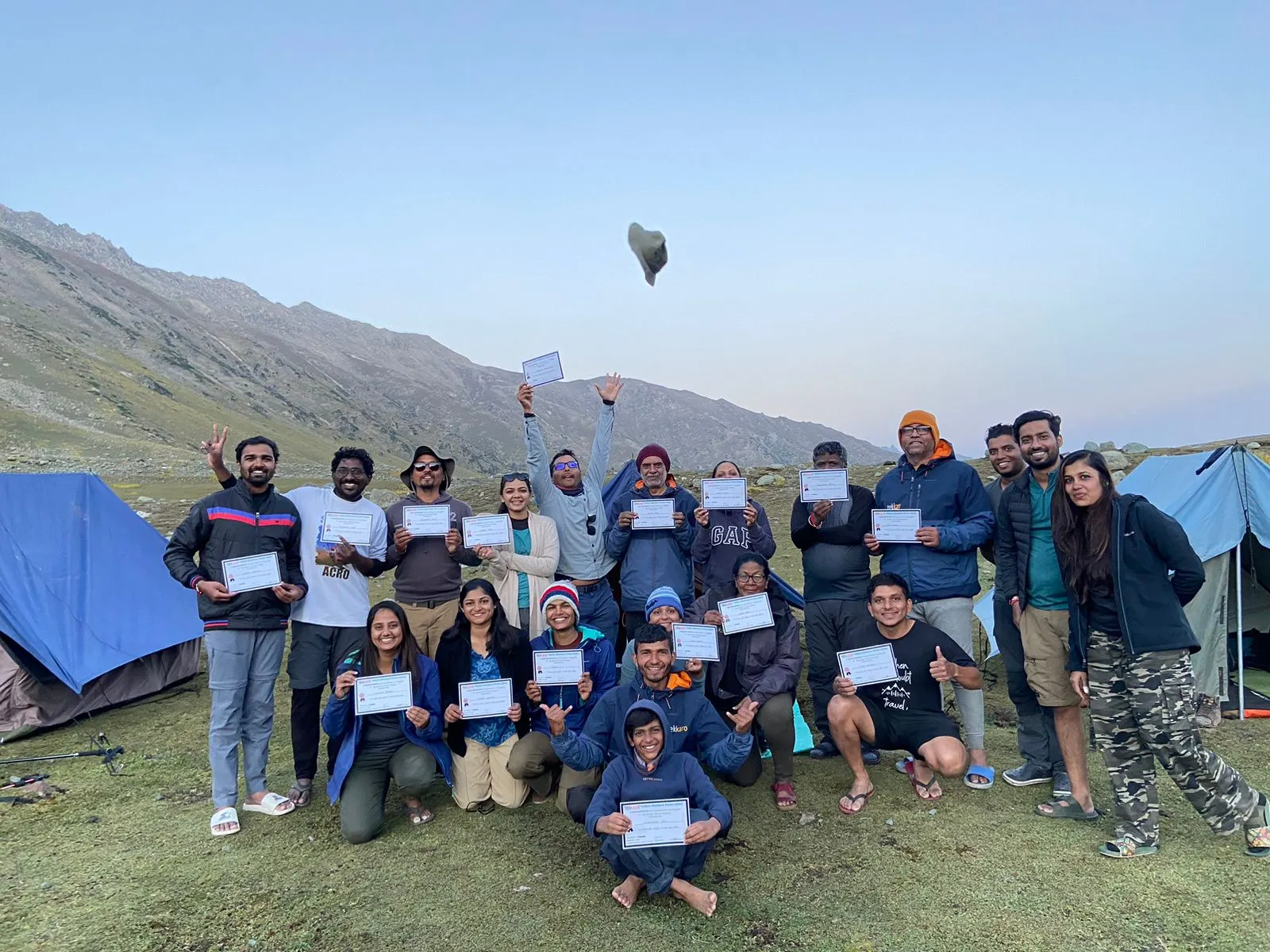
Gallery
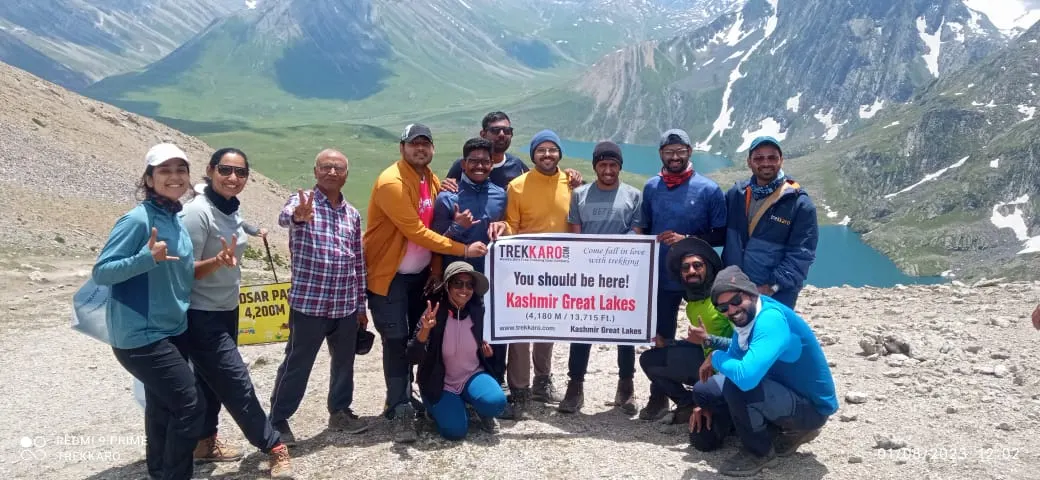
Oxygen, first aid, daily SpO₂ checks, trained leaders — tap to read
1. Trained Trek Leaders
- Trek leaders hold NIM (Nehru Institute of Mountaineering) certification or an equivalent qualification
- Their training covers casualty assessment, high-altitude medical response, rope work and evacuation
2. Daily Health Checks
- Blood oxygen (SpO2) and pulse are checked for every trekker every day
- A falling SpO2 reading is acted on early, before it turns into Acute Mountain Sickness (AMS)
- If you are not fit to continue, the trek leader will ask you to rest or descend; the trek leader’s decision on health and safety is final
3. Emergency Equipment
- Portable oxygen cylinders carried with the group
- First-aid and medical kit with the trek team
- Stretchers at every campsite for emergency evacuation
- Radio communication across the trek team, as mobile signal is not reliable on the trail
4. Proper Trekking Gear
- Free Trekking Gear is not offered on this trek: bring your own broken-in trekking shoes with good grip, a warm jacket and trekking poles (see Things To Carry)
5. Tents and Sleeping Bags
- Tents and sleeping bags rated from -5°C to -20°C, for a warm and dry night in the cold
6. Snow and Steep Sections
- On snow, ice or exposed ground, the trek team fixes ropes and cuts steps where needed and helps you across
7. Risks on the Kashmir Great Lakes Trek
- Highest point: 4,206 m (13,800 ft)
- Gadsar Pass day: 14 km in 7–8 hours, with fixed ropes on the steepest snow if needed
- Steep scree and boulder descents, including about 2,000 ft down to Gadsar Lake
- Many stream crossings, and rain showers in July and August
8. Your Part
- Build your fitness before the trek with running, cycling or swimming
- Tell the trek leader about any medical condition and the medicines you carry before Day 1
- Report a headache, nausea, dizziness or breathlessness to the trek leader at once
- Carry travel insurance that covers high-altitude trekking and emergency evacuation
What a day on the trek feels like — tap to read
1. What You Can Expect From Us
- Safety first on the Kashmir Great Lakes trek: daily SpO2 and pulse checks, oxygen cylinders and a stretcher with the group
- Personal attention: batches of up to 20 trekkers, so the trek leader knows each trekker’s health and pace
- NIM-certified trek leaders (Nehru Institute of Mountaineering, or an equivalent qualification), with local guides who know the Kashmir Great Lakes route, its weather and its campsites
- An itinerary planned for altitude, with daily distance and height gain set so your body can adjust
- Clear pricing: everything included and excluded is listed under Terms & Conditions, with the price of each optional add-on
2. What We Expect From You
- A willing attitude: cold nights, steep climbs and sudden weather changes are part of the mountains
- Physical preparation: you do not need to be an athlete, but train before the trek so the longest day feels comfortable
- Trust in your trek leader: follow their calls on route, pace, start times and turning back, as they are made for the group’s safety
Last ATM and phone network on the route — tap to read
1. Last ATM
- Sonamarg has the last reliable ATM before Shitkadi
- There are no ATMs anywhere on the trek route
- Carry small notes: cards are not accepted on the trail
2. Mobile Network
- Shitkadi is the last point with a stable network, on postpaid SIMs only
- Beyond Shitkadi you may get a weak signal at a few points, but it is not reliable
- Make your important calls and tell your family about the limited connectivity before you leave the base
Reviews
Route Map & Altitude Profile
Follow the Kashmir Great Lakes Trek route on the map: from Shitkadi (2,600 m) to Gadsar Pass (4,200 m), about 1,600 m of climbing. Press Walk the trail and follow the hiker camp to camp, or tap a day to jump to its camp.
Satellite imagery with a topographic map option. The trail is drawn from mapped footpaths and the Trekkaro route (625 points); it is for orientation, not a navigation map. Your trek leader walks the trail with you.
Camps and altitudes on the Kashmir Great Lakes Trek
- Day 1 Shitkadi · 2,600 m / 8,530 ft Base — Camp near Sonamarg
- Day 2 Nichnai · 3,500 m / 11,483 ft Camp — Meadow camp
- Day 3 Nichnai Pass · 3,990 m / 13,091 ft Pass — First pass
- Day 3 Vishansar Lake · 4,080 m / 13,386 ft Lake — Twin-lake camp
- Day 4 Gadsar Pass · 4,200 m / 13,780 ft Pass — Highest point of the trek
- Day 4 Gadsar Lake · 3,600 m / 11,811 ft Lake — Camp below the lake
- Day 5 Satsar Lake · 3,780 m / 12,402 ft Lake — Seven-lake camp
- Day 6 Zaj Pass · 4,100 m / 13,451 ft Pass — Last pass
- Day 6 Gangabal Lake · 3,501 m / 11,486 ft Lake — Camp under Harmukh
- Day 7 Naranag (trek end) · 2,190 m / 7,185 ft Base — Road head; drive to Srinagar
Related Treks You May Like
Kashmir Great Lakes Trek Guides

What Our Trekkers Say
Recent reviews left on trekkaro.com by trekkers who booked with us.
"It was an amazing experience, the trek guides were so friendly and made difficult paths so easy, no problems in eating too, I usually do not write reviews but this trek made me do so… Thank you Laxman and TK Team"
"Well managed with experienced trek leaders. Provides safe but at the same time adventurous trekking experience. The food provided is tasty, especially considering the location and geography of campsites."
"It was nicely managed by trek leader Laxman Sir."
"When I went with Trekkaro I wasn't sure what to expect. My parents are Indian but I have lived my entire life in the UK and my grasp on Hindi is not great. However, the hikes ended up being one of the best experiences of my entire life. I has a lot of fun, got to meet a lot of great people, and left with great memories. I highly recommend it."
"Trekking with Trekkaro will remain one of the most memorable experiences of my life. We were part of a group that trekked Kashmir Great Lakes trek. Trekkaro did a fantastic job of managing the logistics at a very high altitude. They were also environmentally conscious and educated the group on sustainable trekking. Can not wait to trek again with this passionate organisation!"
"It was one of the most amazing experiences I've ever had. The trek was well-planned, organized, and Trekkaro provided all the necessary resources for a successful journey. The scenery was breathtaking and I would highly recommend Trekkaro's services to anyone looking to explore this beautiful region."
Why Trekkaro?
Leaders in providing Free Trekking Gear for 8+ years — redefining the way everyone must trek.

Up to 7 days before departure, reschedule to another batch for free or take a TrekCash Voucher worth 100% of your amount — valid for 1 year on any future trek.

Rated 4.9/5 on Facebook & 4.7/5 on Google — India's most trusted trekking company by thousands of happy trekkers.

We keep you safe from the moment you book to the moment you head home — certified leaders, first aid & emergency support.

Well-planned itineraries balanced with the freedom to make the experience your own — no matter the trek difficulty.

Every decision we make is guided by our commitment to making trekking a force for good — for people and the planet.
Welcome to Trekkaro
Login or create an account to manage your bookings and profile
Login Create AccountTalk to an Expert
Enter your number — we'll call you back shortly.
*Free to use on the trek, returned after · refundable deposit
AI can make mistakes · don’t share personal details · Talk to a person